Being Followed by a Shadow Figure in a Dream: Casting Light on the Pursuit of Shadows in the Night

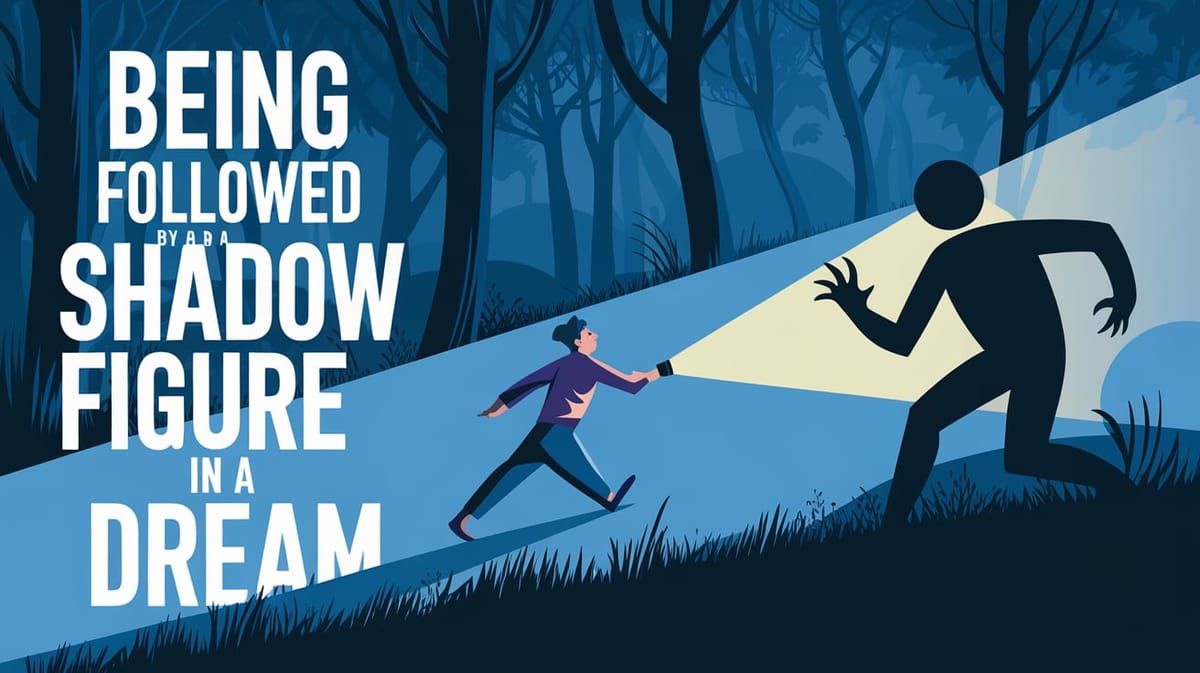
Quick answer: A shadow figure following you in a dream usually represents the Jungian "shadow" — repressed emotions, denied traits, or unresolved fears your subconscious is pushing you to confront. The figure follows because the issue hasn\'t been faced, not because danger is near.
Waking from a dream where a dark, shapeless figure trails behind you is one of those experiences that lingers long after the alarm sounds. I\'ve heard this theme more than almost any other from readers — the cold awareness of being watched, pursued, yet never quite caught. What makes it so powerful is that the pursuer isn\'t random. It\'s made of you.
What Does a Shadow Figure Represent in Dreams?
Shadow figures in dreams most often symbolize the parts of ourselves we\'ve pushed out of awareness — fears we won\'t name, emotions we\'ve buried, or personality traits we\'d rather not claim. Being followed by one signals that these hidden elements are not dormant; they are actively seeking recognition.
In many spiritual traditions, darkness in dreams isn\'t evil — it\'s unknown. The shadow figure pursues you because it wants something: acknowledgment, integration, or simply to be seen.
The Jungian Psychology Behind Shadow Figure Dreams
Carl Jung coined the term "shadow" to describe the unconscious repository of traits the ego rejects. When you dream of a figure following you through dark corridors or empty streets, Jung would say you are meeting your own shadow archetype — the sum of everything your waking identity refuses to accept.
In my research into recurring dream patterns, I\'ve found that people who report shadow-figure dreams are often going through a period of suppressed stress, identity conflict, or denied emotion. The dream is the psyche\'s way of staging a confrontation the waking mind keeps postponing.
Freud, by contrast, would frame the pursuer as a displaced fear or repressed complex — a wish or impulse so threatening to the ego that it\'s been forced underground and now expresses itself symbolically through pursuit.

What Do Different Shadow Figure Scenarios Actually Mean?
The details of your dream shift the interpretation significantly:
\n\n| Scenario | Likely Meaning |
|---|---|
| You try to run but can\'t escape | Avoidance of a problem that keeps returning; denial not working |
| You turn and confront the figure | Readiness for self-examination; courage to face hidden fears |
| The figure speaks or communicates | Subconscious delivering a specific message; unvoiced inner conflict |
| The figure disappears or transforms | Integration, resolution, or growing acceptance of a difficult truth |
| You recognize the figure as someone you know | That person\'s influence, or a trait of theirs you\'ve absorbed and suppressed |
| You feel calm or unafraid | High self-awareness; readiness to explore shadow aspects without resistance |
| The figure is static and doesn\'t move | A dormant fear or unaddressed issue — present but not yet urgent |
Related reading: being chased by your own shadow in a dream explores the even more intimate version of this experience.
Spiritual Meanings of Being Followed by a Shadow Figure
Across spiritual frameworks, shadow figures carry layered significance:
- Jungian shadow work: A direct call to integrate rejected aspects of the self — the core spiritual task of becoming whole.
- Christian tradition: May represent spiritual warfare, unconfessed sin, or a prompting toward examination of conscience.
- Islamic interpretation: Dark following figures are sometimes read as warnings to guard one\'s thoughts or as reminders of spiritual accountability.
- Shamanic traditions: A shadow pursuer can represent a lost soul fragment that is trying to reattach — a piece of the self split off through trauma or fear.
- General spiritual view: The figure follows because it belongs to you. Turning to face it — metaphorically — is the beginning of integration.
What Life Circumstances Trigger Shadow Figure Dreams?
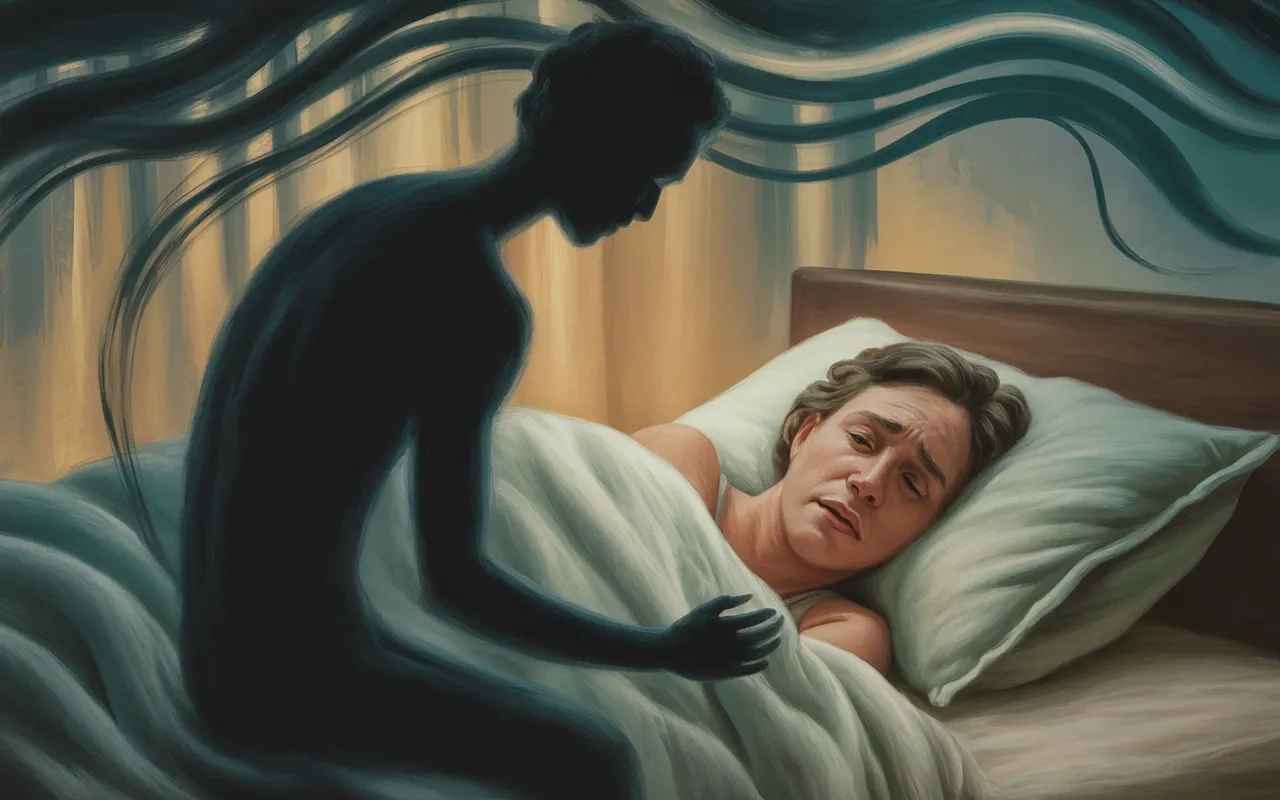
These dreams tend to cluster around specific psychological and situational triggers:
- Suppressed emotions — prolonged anger, grief, or shame that has no outlet in waking life
- Identity transitions — career changes, relationship breakdowns, major life decisions
- Periods of high stress — when the ego is stretched thin and the unconscious grows louder
- Sleep disorders — hypnagogic hallucinations at sleep onset can manifest as shadow figures with a vivid, real quality
- Trauma processing — the brain revisiting difficult memories during REM sleep
If you also experience being unable to run when in danger in a dream, this combination often signals accumulated stress the body is holding.
What Does Neuroscience Say About Shadow Figure Dreams?
During REM sleep, the brain\'s limbic system — responsible for fear and emotional memory — stays highly active while the prefrontal cortex (rational judgment) is largely offline. This creates ideal conditions for threat figures to appear without logical filtering.
Shadow figures specifically may arise from the brain\'s pattern-recognition system misfiring in low-light dream imagery, producing the perception of a humanoid outline that the emotional brain immediately codes as "threat." The pursuit element reflects the amygdala\'s fight-or-flight activation within the dream state.
Research into threat simulation theory suggests recurring pursuit dreams serve an adaptive function — rehearsing escape from danger in a safe context, keeping the fear-response system calibrated.
How to Reduce or Transform Shadow Figure Dreams
The pattern I keep seeing is that people who engage with shadow figure dreams — rather than dismissing them — experience fewer recurrences and often report meaningful personal insights.
Practical approaches:
- Dream journaling: Write down the dream immediately on waking, noting emotions, colors, and any familiar elements. Over time, patterns become clear.
- Shadow work exercises: Identify one trait you strongly dislike in others — this often mirrors a denied aspect of yourself. Acknowledging it consciously reduces its dream intensity.
- Lucid dreaming practice: Train yourself to recognize you\'re dreaming, then turn and ask the shadow figure: "What do you want?" The answers can be illuminating.
- Reduce REM-disruptors: Alcohol, late eating, and inconsistent sleep schedules intensify vivid pursuit dreams. Stabilizing sleep hygiene often reduces frequency.
- Therapy: If these dreams cause significant distress or occur alongside daytime anxiety, a therapist trained in Jungian or somatic approaches can guide productive shadow work.
Also see: being chased in a dream — a broader look at pursuit dream symbolism.
Frequently Asked Questions
What do shadows represent in dreams?
Shadows in dreams typically represent the unconscious — specifically the parts of the self that are hidden, denied, or not yet understood. They are rarely literal threats; more often they symbolize something internal trying to surface.
What does it mean to dream of a tall black figure?
A tall dark figure in a dream often amplifies the sense of an overwhelming or long-suppressed force. The height can reflect how much psychological weight you\'ve assigned to whatever the figure represents — a fear, a grief, or a denied aspect of identity.
What is a shadow dream in Jung\'s psychology?
In Jungian psychology, a shadow dream brings the unconscious "shadow" archetype into direct view — the collection of personality traits, impulses, and emotions the ego has rejected. These dreams are considered significant and are often an invitation for integration work.
Does dreaming of a shadow figure predict danger?
No. Shadow figure dreams are symbolic, not prophetic. They reflect internal psychological states rather than external events. The "danger" they signal is usually an unaddressed emotional or psychological issue, not a real-world threat.
Why does the shadow figure follow but never catch me?
The endless pursuit without capture mirrors the way unresolved issues persist in the psyche — always present, never resolved, until consciously faced. The dream is staging the avoidance pattern itself.
What does it mean if the shadow figure speaks to me in a dream?
A communicating shadow figure is the unconscious becoming unusually direct. Pay close attention to any words spoken — they often carry specific messages about fears, needs, or truths the waking mind is avoiding. Journaling the exact words immediately on waking is valuable.
Can shadow figure dreams become recurring nightmares?
Yes, especially when the underlying issue — suppressed emotion, unresolved conflict, identity struggle — remains unaddressed. The repetition is the psyche\'s way of escalating, not punishing. Engaging with the material through journaling, therapy, or shadow work typically reduces recurrence.
What emotion does the shadow archetype represent?
The shadow contains whatever emotions the conscious self has deemed unacceptable — often shame, rage, grief, or fear. It isn\'t a single emotion but a container for all denied emotional content. The dream figure gives that container a face.
What Shadow Figure Dreams Are Really Telling You
Being followed by a shadow figure isn\'t a warning from outside — it\'s a message from within. The figure follows because it\'s part of you: a suppressed fear, an unacknowledged feeling, or a denied aspect of your personality that is ready, finally, to be integrated.
The most productive response isn\'t to run faster. It\'s to slow down, turn around, and ask what\'s there. Shadow work — whether through journaling, therapy, or quiet self-reflection — transforms these nocturnal pursuers from threats into guides. The darkness in the dream isn\'t the enemy. It\'s the part of you that\'s been waiting to be brought into the light.