Dream About an Empty Birdcage: What It Really Means

I still remember the first time someone described this dream to me — they woke up with a strange ache in their chest, unsure why an image of an old birdcage could leave them feeling so hollow. The cage sat on a windowsill, door hanging open, not a feather left inside. Nothing dramatic happened in the dream. But something about that emptiness stuck.
Since then, I\'ve heard versions of this dream more times than I can count. Sometimes the cage is ornate and antique, sometimes it\'s a cheap wire thing from a pet shop. Sometimes the dreamer feels relief; more often, they feel loss. That gap between the cage and what used to live in it — that\'s where the meaning hides.
In my research into recurring object dreams, empty containers consistently rank among the most emotionally loaded symbols in the subconscious. An empty birdcage is one of the most specific, and one of the most telling.
Quick answer: Dreaming of an empty birdcage typically reflects a recent loss of freedom, a relationship that has ended or changed, or a part of yourself that has been suppressed or released. The emotional tone of the dream — grief, relief, or unease — points to whether you feel the departure as loss or liberation.
What Does an Empty Birdcage Symbolize in Dreams?
The birdcage is one of those objects that carries its symbolism openly. Even waking, we understand what a cage means — confinement, ownership, control. But the bird inside is the part that matters most. Birds in dreams almost universally represent freedom, voice, spirit, and aspiration. They\'re the thing that wants to soar.
So when you dream of a cage and the bird is gone, your subconscious is presenting you with the aftermath of something. The question isn\'t just "where did the bird go?" but "how do you feel about the fact that it\'s gone?"
Across the dream accounts I\'ve studied, empty birdcage dreams tend to cluster around a few core symbolic areas:
- Freedom unexpectedly gained or lost — A significant life change has altered the structure you were used to
- A voice that has gone quiet — Creative expression, personal truth, or self-expression you once had access to feels absent
- The end of a relationship or role — Something or someone you cared for is no longer where they used to be
- Grief without a visible cause — You may not know consciously what you\'re mourning, but the dream knows
- Potential that slipped away — An opportunity, plan, or version of yourself that didn\'t develop as hoped
The cage itself — its condition, size, and setting — adds another layer. An ornate Victorian cage in a dusty room suggests something long-standing and precious. A small wire cage near a window suggests something kept close but never truly free. Your memory of the cage\'s appearance is rarely accidental.
What Do Different Empty Birdcage Dream Scenarios Mean?
\n\n| Scenario | What It Often Means |
|---|---|
| You find the cage empty and the door is open | Something has been set free — willingly or not. Relief and grief may coexist. |
| You find the cage empty and the door is closed/locked | Loss without agency — something or someone left, but the circumstances feel unclear or unjust. |
| You open the cage and it\'s already empty | You\'ve discovered a departure you didn\'t witness; a realization about a relationship or situation. |
| You\'re cleaning or holding the empty cage | Processing grief; caring for memory; a transition you\'re trying to manage consciously. |
| The cage is broken and empty | A collapse of something that once held something precious — security, a relationship, a belief system. |
| You\'re watching feathers settle after the bird has gone | You\'ve just missed something — the aftermath of a transition you couldn\'t stop. |
| Someone else put the cage there | External forces affected your freedom or the freedom of someone you care about. |
| You feel relief that the cage is empty | A burden has lifted. You may have been holding something — or someone — back without realizing it. |
What Does Psychology Say About Empty Birdcage Dreams?
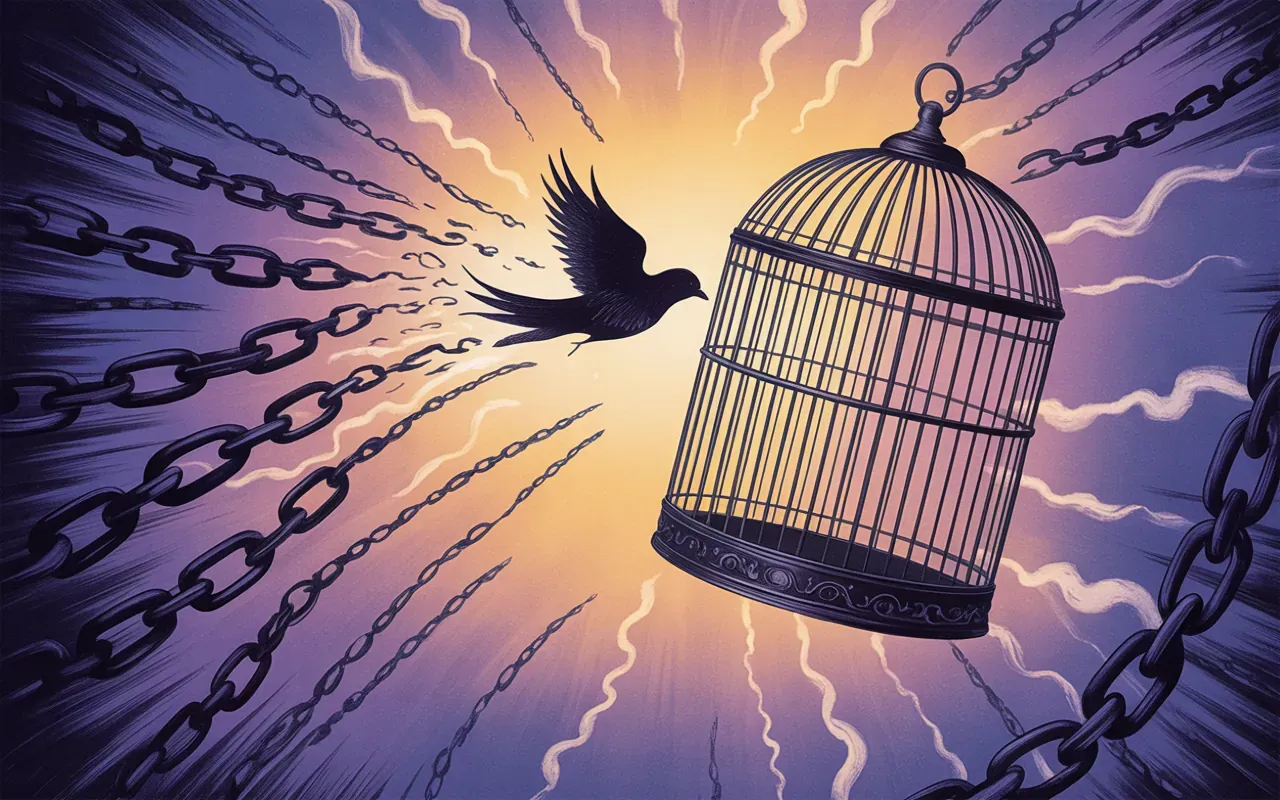
From a psychological standpoint, dreaming of empty containers is a well-documented phenomenon tied to what Carl Jung called the "loss of the anima" — the loss of a vital inner quality. The bird in the cage is often an expression of what Jungian analysts call the "life force" or "spirit energy" — the spontaneous, expressive part of the psyche that resists domestication.
When the cage is empty, one interpretation is that this energy has either escaped (suggesting growth, rebellion, or necessary change) or been extinguished (suggesting suppression, depression, or grief over lost potential). The difference lies entirely in how the dreamer feels when they see it.
I\'ve found that people who dream of empty birdcages are often in the middle of a transition they haven\'t fully acknowledged yet. The dream surfaces before the conscious mind has caught up. They may be leaving a job, ending a relationship, or simply getting older — and the empty cage is the psyche\'s way of marking the milestone.
In object relations theory, the cage can also represent the dreamer\'s relationship with attachment itself. How you held the bird — was it truly yours, or was it wild? — reflects how you relate to the people and things you care about most.
Why Do People Dream About an Empty Birdcage?
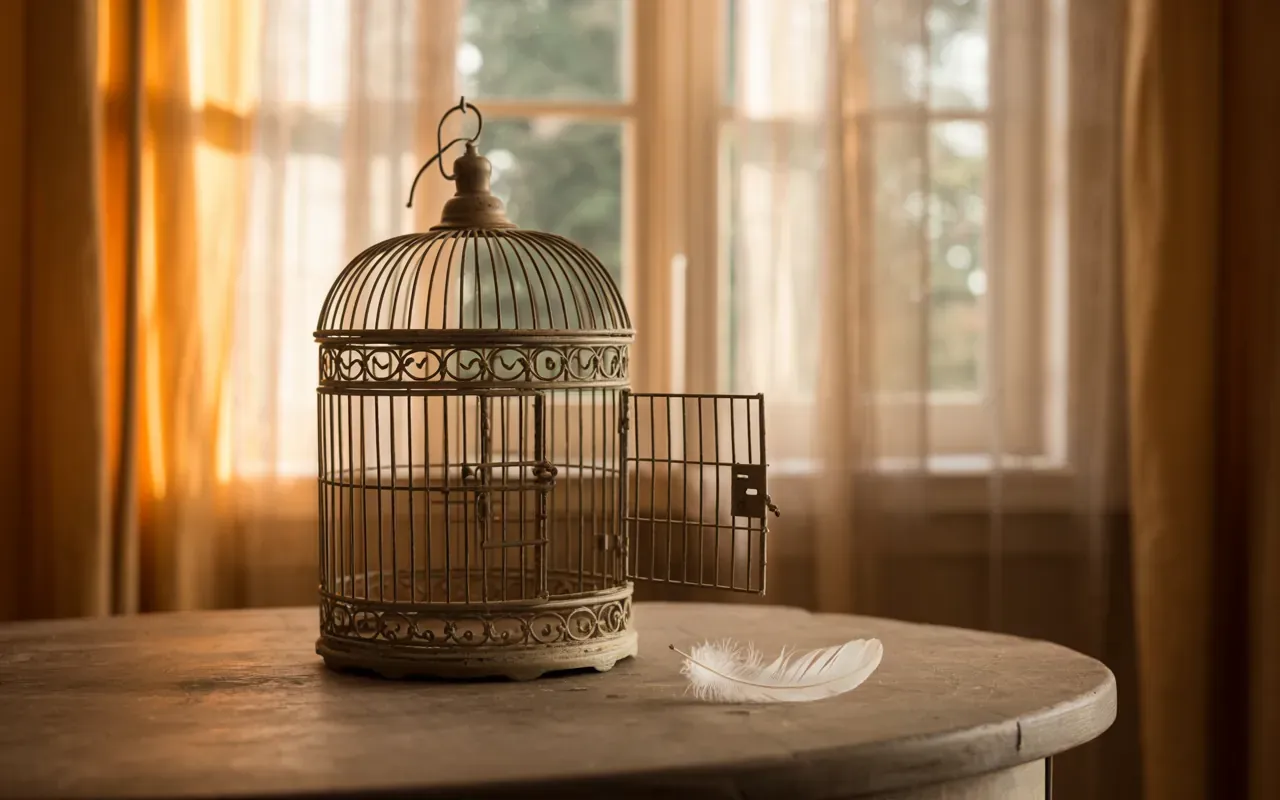
In my experience, this dream tends to appear at specific life moments. The most common triggers I\'ve noticed:
After a breakup or estrangement — When a significant relationship ends, the home it occupied in your life feels like a cage with the door hanging open. The empty cage can represent the other person\'s absence, or the role you played with them that no longer exists.
When creative work has stalled — Writers, musicians, and artists frequently report this dream when they feel disconnected from their own creative voice. The bird is the muse; the cage is the practice or routine they used to inhabit.
After losing a pet or loved one — Literally or metaphorically, when something you cared for is gone, the space they occupied becomes a kind of cage — present, but empty.
At transition points — Children leaving home, retirement, ending a long career, even finishing a major project. Whenever a structure you maintained for years is no longer needed, the psyche can manifest that shift as an empty container.
When you\'ve outgrown something — Sometimes the dreamer is the bird, not the keeper. The empty cage is a sign of growth: you\'ve escaped a limiting belief, a toxic relationship, or a self-image that no longer fits.
Is There a Scientific Explanation for This Dream?
Sleep researchers at institutions like the Sleep and Cognition Lab have found that emotionally significant object dreams most often occur during REM sleep, particularly during periods of emotional processing or unresolved grief. The brain, in sleep, continues working through experiences that feel incomplete — and empty spaces are a natural way the subconscious signals "something is missing here."
Threat simulation theory, developed by Finnish neuroscientist Antti Revonsuo, suggests that dreams help us rehearse responses to emotional challenges. An empty birdcage dream may be the brain\'s way of processing a loss or preparing for one — simulating the feeling of absence so the waking mind is less blindsided when it comes.
There\'s also evidence from memory consolidation research that objects from our environment become emotionally tagged during waking life and then appear in dreams as compressed symbols. If you\'ve ever admired a birdcage, owned one, or seen one in a meaningful context, your brain may have stored it as a symbol of something — and now it\'s showing it to you empty.
For broader context on bird symbolism in dreams, see our guide on the spiritual meaning of seeing a bird in a dream.
You may also find it useful to read our posts on yellow parrot dream meaning and what it means when you\'re feeding animals in a dream — both explore the connection between care, control, and animal symbolism.
If you\'re interested in loss-related dream symbols more broadly, our exploration of the symbolism of losing vital objects in dreams covers similar emotional terrain.
What Should You Do After This Dream?
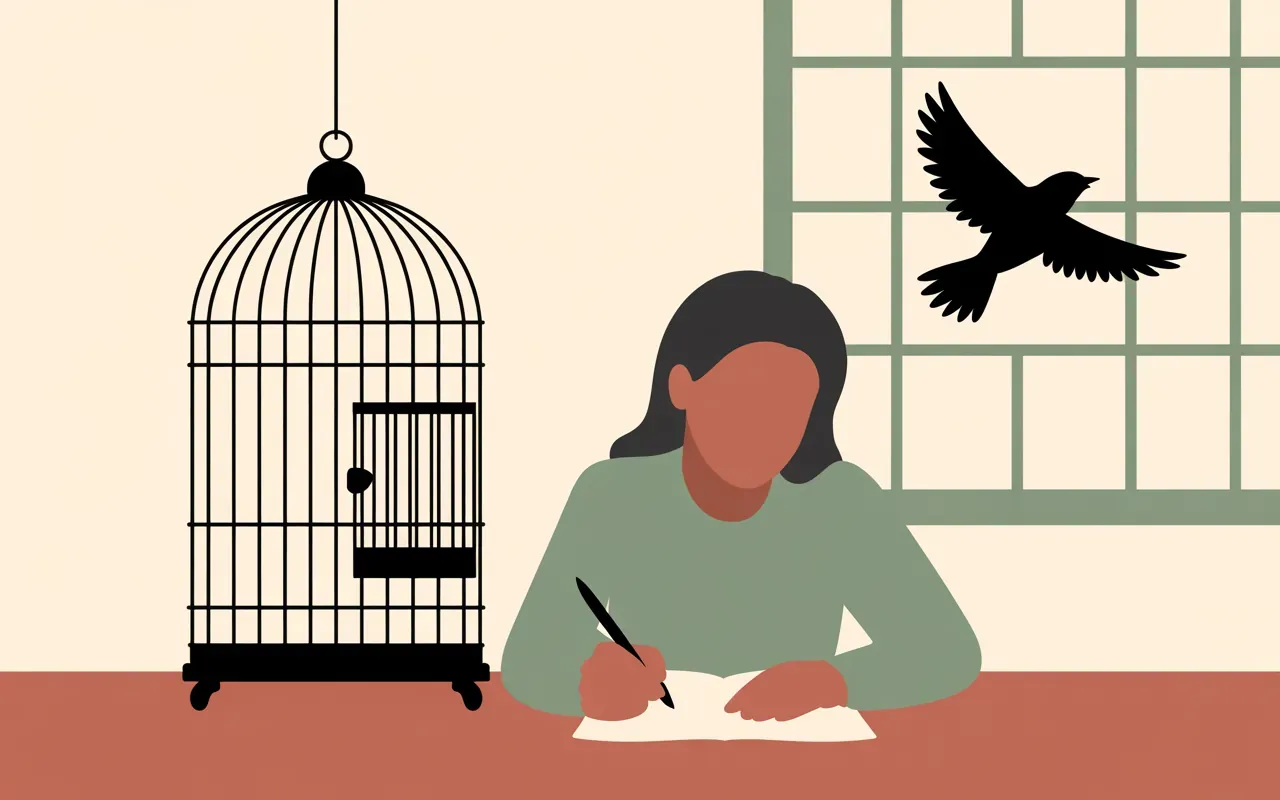
The most useful thing you can do after dreaming of an empty birdcage is sit with the feeling before analyzing it. The emotional resonance of the dream tells you more than any symbolic dictionary can. Were you sad? Relieved? Oddly detached? That\'s your starting point.
From there, some practical approaches:
Write down what the bird represented to you. Even if you didn\'t see a bird, ask yourself: if something had been in that cage, what would it have been? Your first instinct — a specific person, your singing voice, a creative project — is usually the right answer.
Notice what changed recently. Empty birdcage dreams rarely appear without cause. They tend to follow transitions, losses, or moments when you realized something was no longer there. Look at the last 2–4 weeks of your life for the source.
Consider whether you\'re the keeper or the bird. Are you grieving that something left, or are you surprised to find yourself free? Both are valid, and the distinction matters for how you move forward.
If the dream repeats, it\'s worth reflecting on whether there\'s something you\'re resisting acknowledging. Repeating emptiness dreams often signal unprocessed grief or a transition you\'ve been avoiding thinking about clearly.
Some find it helpful to journal or draw the cage — not to analyze it, but to give the feeling a form. That act of externalization can release the emotional charge the dream is carrying.
Frequently Asked Questions
What does it mean when you dream about an empty bird cage?
An empty birdcage in a dream most often represents loss, freedom, or the aftermath of change. It can point to the end of a relationship, a creative voice that has gone quiet, or a significant life transition. The emotion you feel in the dream — whether grief or relief — shapes its meaning considerably.
Does an empty birdcage dream always mean loss?
Not necessarily. If you feel relief or peace seeing the empty cage, the dream may signal liberation — something that was contained has now been set free, including possibly you. Loss and release can look identical from the outside; your inner emotional response distinguishes them.
What is the spiritual meaning of an empty birdcage?
Spiritually, an empty birdcage is often read as a sign of the soul\'s longing for freedom, or as a symbol of transition between states. Many traditions associate caged birds with the human spirit held back from its full expression. An empty cage suggests that transformation has already occurred — something has moved on.
Why do I keep dreaming about an empty cage?
Recurring empty cage dreams usually signal an unresolved emotional situation that your subconscious keeps returning to. It may be grief you haven\'t fully processed, a relationship you\'re still untangling internally, or a change you\'re resisting acknowledging. Writing about what the cage means to you specifically can help interrupt the pattern.
What does it mean if the birdcage door is open in a dream?
An open door suggests the departure was not forced — something chose to leave, or was allowed to go. It implies a threshold was crossed. This detail often appears in dreams related to conscious choices: ending relationships, leaving jobs, or choosing a new direction in life.
What does it mean if the birdcage is locked but empty?
A locked but empty cage is particularly striking — it suggests loss without understanding how the loss happened. You may feel confused or blindsided by a departure or change. It can also point to control issues: you tried to hold something, and it left anyway.
Can dreaming of an empty birdcage represent a person?
Yes, frequently. The bird in a birdcage often represents a specific person — a child who has grown up and left, a partner who is no longer present, or a friend who has drifted away. The cage in these cases represents the role that person occupied in your life, and its emptiness marks their absence.
What does it mean to clean an empty birdcage in a dream?
Cleaning or maintaining an empty cage is one of the more poignant versions of this dream. It suggests active mourning — you\'re caring for the memory of something that\'s gone. It often appears during grief periods and reflects the dreamer\'s care and sense of responsibility, even after the relationship or situation has ended.
Is dreaming of an empty birdcage a bad omen?
Not specifically. While the imagery can feel melancholy, it is not a predictive symbol — it reflects internal emotional states rather than future events. Many people report this dream during periods of healing and growth, not just loss. Context and emotional tone matter far more than the image itself.
What does the bird inside the cage usually represent in dreams?
The bird most commonly represents: creative expression, personal freedom, the soul or spirit, a relationship or loved one, or an aspiration. The specific bird (if you recall it) adds detail — a songbird suggests voice and expression; a parrot might suggest imitation or a specific person; a wild bird suggests something that was never fully domesticated.
Conclusion
The empty birdcage is one of those dream images that stays with you — not because it\'s frightening, but because it holds a truth you might not have been ready to put into words. Something was there. Now it isn\'t. And the space it left behind has a shape.
Whether you\'re grieving a loss, processing a change, or slowly realizing you\'ve been set free from something that once constrained you — the dream is offering you a chance to look at that directly. The next step is to identify, as specifically as you can, what bird lived in that cage in your waking life. That\'s where the real work — and the real relief — begins.