Finding a Secret Passage in a Familiar Place in a Dream: Unravelling Hidden Corridors of Dream Symbolism

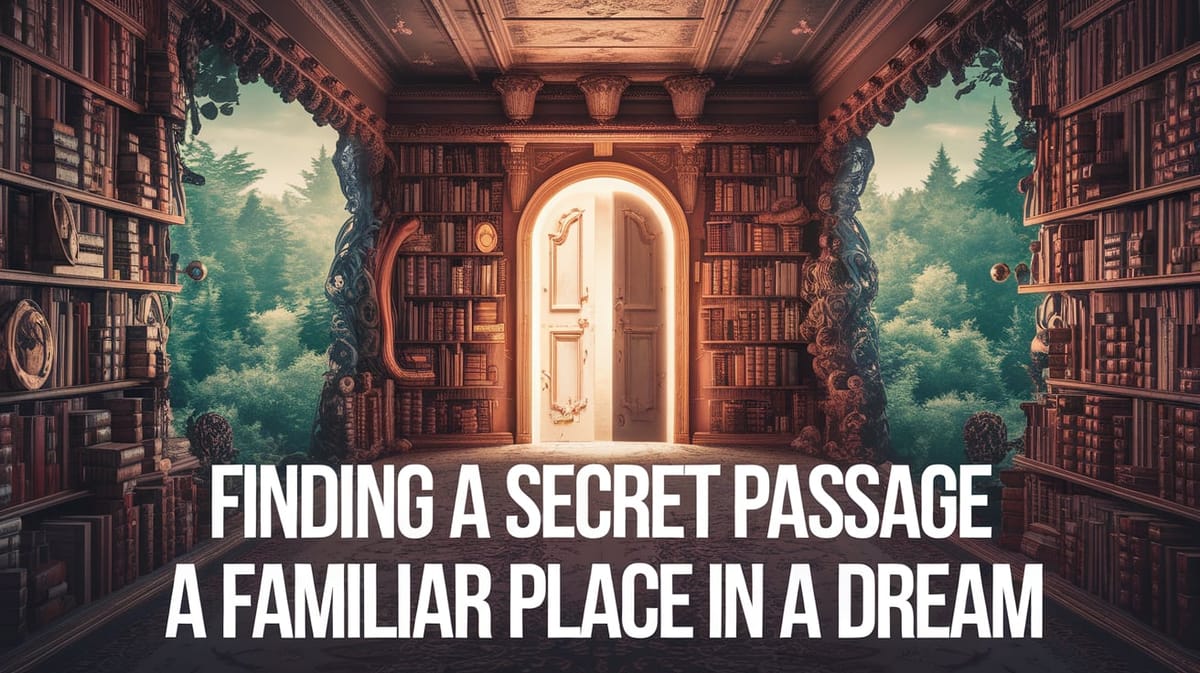
Quick answer: Dreaming of a secret passage in a familiar place signals that your subconscious is pointing to hidden potential, unexamined emotions, or new opportunities within a part of your life you thought you already knew well. The familiar setting makes the discovery feel especially significant.
Dreams about finding a secret passage in a place you know well carry a particular charge — the shock of mystery appearing where you expected certainty. In my research into recurring dream themes, this is one of the most emotionally vivid categories people report, and it almost always ties to a sense of inner expansion or unfinished self-exploration. These dreams are less about the passage itself and more about what your mind is quietly telling you is waiting on the other side.
What Does Finding a Secret Passage in a Familiar Place Actually Mean?
At its core, the secret passage in a known environment represents hidden dimensions of the self within familiar territory. The familiar place — your childhood home, a school, a workplace — symbolises an area of life you consider well-mapped. The passage shatters that assumption. Your subconscious is signalling that there is more to explore, more to understand, more potential lying just behind the walls of what you already know.
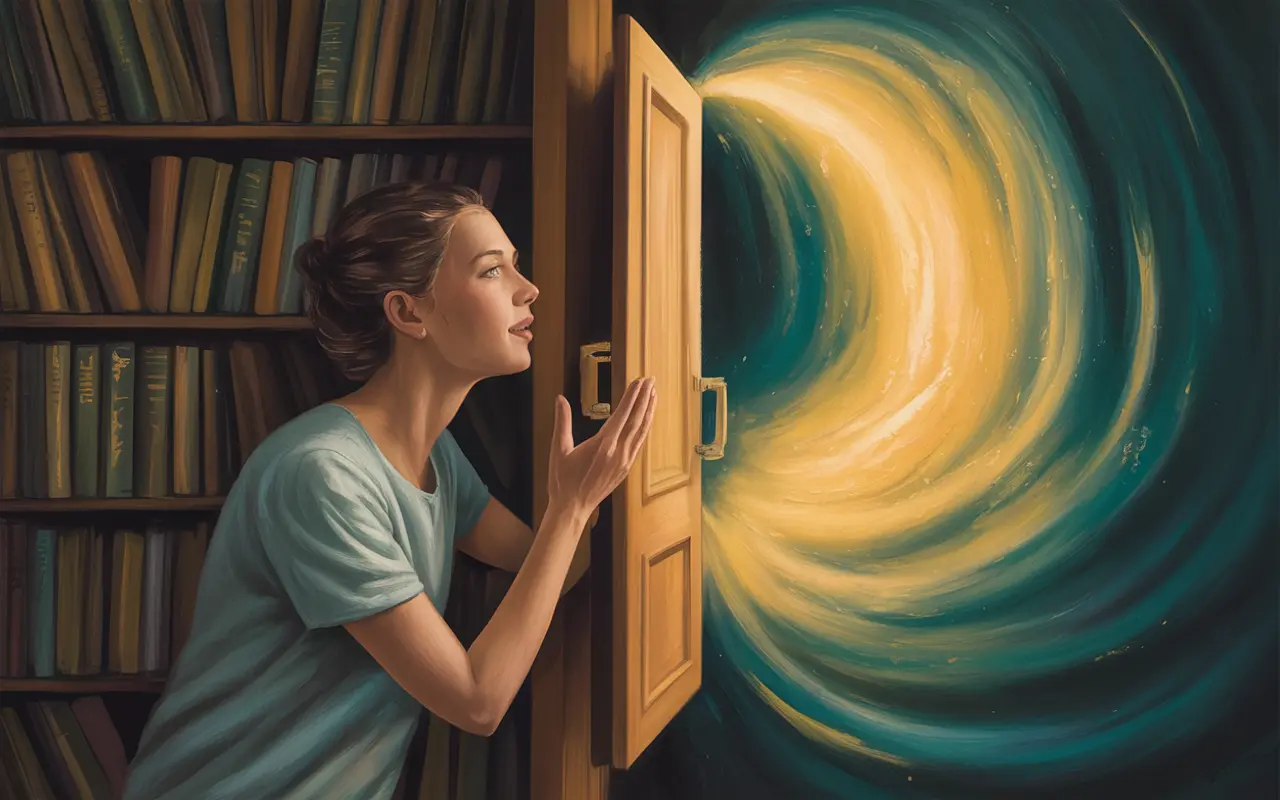
Spiritually, these dreams often mark periods of inner transition. The passage is an invitation: something in your life is asking you to look closer, step through discomfort, and engage with aspects of yourself you have kept sealed off. Unlike dreams of being lost or chased, finding a secret passage carries an active, discovery-driven energy — your dreaming mind is not warning you of danger but showing you a door.
How Does Psychology Explain Secret Passage Dreams?
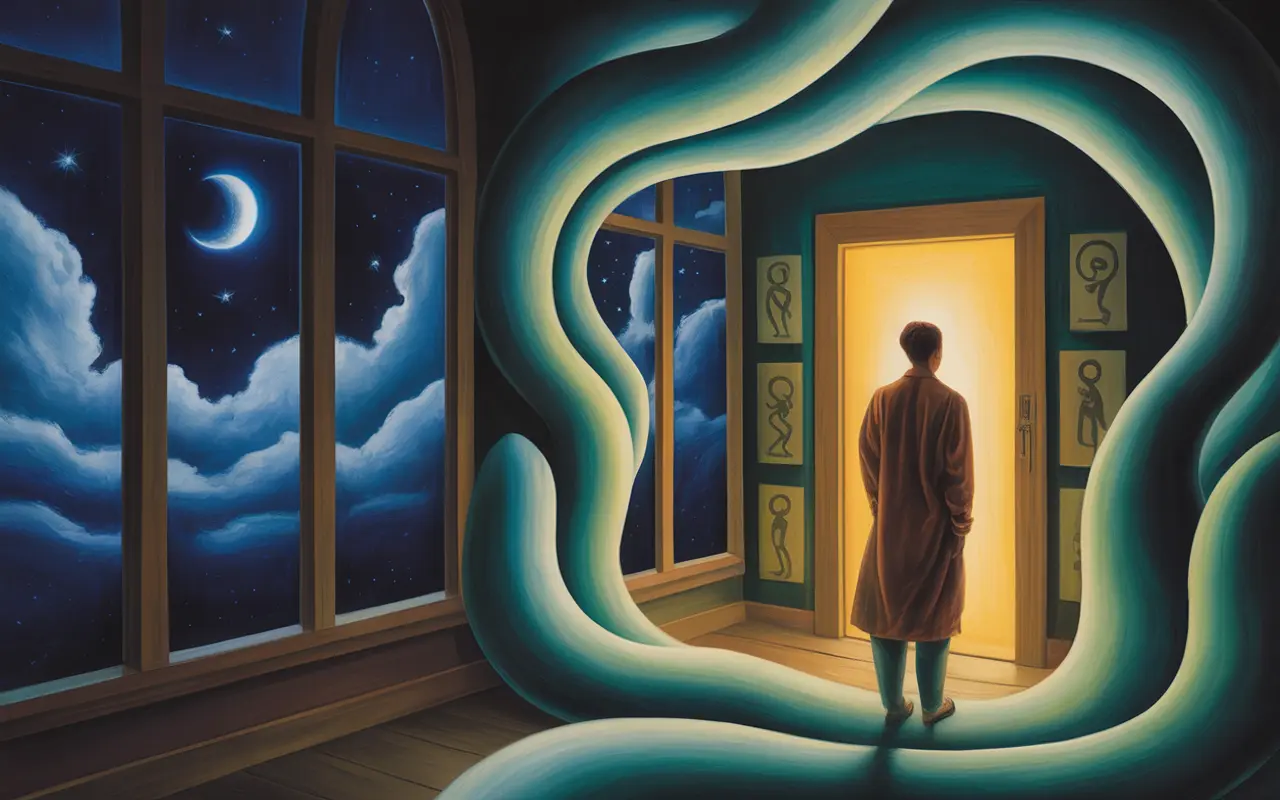
Jung described the dream itself as "the small hidden door in the innermost and most secret recesses of the soul." For him, a secret passage encountered in a dream is a near-literal representation of that concept — the dreamer crossing from the known ego-world into deeper unconscious territory. The passage may lead to the shadow self: the qualities you have not yet acknowledged or integrated.
From a Freudian perspective, the secret passage reflects suppressed curiosity or desire for transformation. The familiar place matters here: the home you grew up in may hold repressed memories; your old school might represent unresolved questions about identity or performance.
Cognitive neuroscience frames it differently. During REM sleep, the brain replays and consolidates emotional experiences. If you are processing a significant life change, a hidden opportunity, or a shift in self-perception, the brain may construct this spatial metaphor — a passage through a wall in a known space — to represent the psychological transition underway.
\n
| Perspective | What the secret passage represents |
|---|---|
| Jungian | Access to the unconscious / shadow self |
| Freudian | Suppressed desire for discovery or change |
| Cognitive | Brain processing of life transitions |
| Spiritual | Soul\'s invitation to inner exploration |
\n
What Do Different Secret Passage Dream Scenarios Mean?
The emotional tone and specific details of the passage shape the message considerably:
- Feeling excited when you find the passage: Positive anticipation toward growth. You are ready — or nearly ready — to explore a new dimension of your life or personality.
- Feeling scared or hesitant at the entrance: Apprehension about what self-examination might reveal. The shadow material behind that door feels threatening, even if it holds something valuable.
- The passage leads somewhere beautiful or bright: Your subconscious associates inner exploration with reward. Hidden talents, positive memories, or creative potential may be waiting.
- The passage is dark, damp, or scary: Points toward suppressed fears, grief, or aspects of yourself you have avoided. Not a bad omen — but an honest one.
- You find the passage in your childhood home: The unexamined material is rooted in your past. Old memories, childhood dynamics, or early-formed beliefs are ready for review.
- You discover the passage with someone else: Shared growth or a relationship that is taking you into new emotional territory together.
- You are unable to enter the passage: Resistance to change, or a sense that you are not yet ready to face what lies inside.
- The passage leads to treasure or wealth: Recognition of untapped potential — skills, strengths, or resources you have been sitting on.
I\'ve found that dreamers who have this experience during career transitions or relationship shifts are especially likely to report it as recurring until they take some concrete action in their waking life.
What Causes Secret Passage Dreams to Appear?
These dreams tend to cluster around specific life conditions:
- Personal growth phases — therapy, meditation practice, or any period of structured self-examination
- Major life transitions — changing careers, ending or beginning relationships, relocating
- Suppressed curiosity — a part of your life, creative impulse, or relationship you have not allowed yourself to pursue
- Spiritual seeking — active exploration of faith, meaning, or purpose
- Stress or anxiety about the unknown — the mind building a navigable metaphor for uncertainty
The familiar location amplifies all of these triggers. Finding something unknown in a known place is the mind\'s way of saying: you have more resources than you realise, right where you already are.
How Are Secret Passage Dreams Connected to Discovering Hidden Rooms?
The two dream types are closely related. If you have dreamed of discovering a hidden room in your house, you will recognise the same core dynamic: a familiar space contains something you did not expect. The passage extends this — it is not just a room but a threshold, a route, an active journey. Rooms represent discovered potential; passages represent the willingness to move through it.
Both dream types are also connected to dreams of a house that keeps changing, where the architecture of your inner world is in active flux. The self is not fixed — and your dreams keep showing you the renovations in progress.
Related to this theme, dreams of finding a door to another dimension take the passage concept even further — moving from the personal unconscious into archetypal or collective territory.
What Do Different Religions and Traditions Say About Secret Passage Dreams?
Across traditions, hidden passages in dreams carry initiatory significance. In Islamic dream interpretation, discovering a concealed path in a known place can suggest divinely guided revelation or an opening of barakah (blessing) that was previously unseen. In Kabbalistic tradition, hidden chambers and corridors represent the inner dimensions of the soul\'s path toward divine union. Christian mystical writers described the soul\'s interior journey in spatial terms — Teresa of Ávila\'s Interior Castle is precisely this metaphor extended into theological architecture.
In Jungian analytical psychology, which draws heavily on mythological and religious motifs, the passage is an initiation structure — the classic threshold crossing that every heroic or individuation journey requires. For a thorough grounding in how psychologists interpret recurring spatial dream symbols, Psychology Today offers a useful overview.
How Should You Respond to This Dream in Waking Life?
The most useful response is curious, not anxious. Ask yourself:
- What area of my life feels like familiar ground that might have unexplored depth?
- Is there a skill, relationship, or creative impulse I have been ignoring?
- What would it feel like to actually step through that threshold?
Keeping a dream journal and noting where the familiar place was, your emotional state at the entrance, and what (if anything) you found inside will build up a picture over time. Recurring passage dreams that provoke significant distress — especially with dark or threatening interiors — are worth exploring with a therapist, particularly if they connect to early experiences you have not fully processed.
Frequently Asked Questions
Why do I keep dreaming about a secret passage in my old house?
Recurring secret passage dreams set in childhood homes typically indicate unresolved emotional material from your past. Your subconscious keeps returning to that location because the inner work connected to those years has not been completed. Journaling, therapy, or simply allowing yourself to remember and feel those older experiences can reduce the recurrence.
What does it mean if the secret passage in my dream is dark and frightening?
A dark or threatening passage usually points toward shadow material — the parts of yourself you have suppressed, avoided, or not yet acknowledged. It is not a warning to stay away; it is an honest representation of how that inner territory currently feels. The discomfort is the signal, not the danger.
Does dreaming of a secret passage mean I have hidden talents?
It can. Many people report this dream during periods when they are sitting on creative, professional, or personal abilities they have not acted on. The passage is the mind\'s way of marking that potential and showing you it has an entrance.
What does it mean if I find treasure inside the passage?
Treasure inside a secret passage is a positive symbol — it points to undiscovered resources, positive memories, or abilities your conscious mind has not yet claimed. The dream is affirming that the exploration is worth the risk of stepping through.
Why does the secret passage always appear in a familiar place, not somewhere new?
The familiar setting is the whole point. Your mind uses known locations to represent known aspects of yourself. The hidden passage within that familiar place is telling you that there is more depth in your existing life — your relationships, your work, your sense of self — than you have accessed.
Is it common to dream about finding a secret passage?
Yes, particularly among people going through significant transitions. The theme appears across cultures and age groups. In online dream communities, hidden room and passage dreams consistently rank among the most commonly reported and emotionally memorable experiences.
What does it mean if I discover the passage with another person?
The companion in the dream matters. If it is someone you are close to, the dream may reflect a journey of shared growth or mutual discovery within that relationship. If it is a stranger, they may represent an unknown aspect of yourself — a guide figure showing you the way inward.
Should I be worried if this dream keeps recurring?
Recurring dreams are the mind\'s persistence mechanism — they repeat until the underlying situation or emotion is addressed. If the passage dream keeps returning, consider what unresolved inner exploration the dream might be pointing toward. Worry less; act more, even in small ways toward whatever the dream seems to be about.
What This Dream Is Really Telling You
The pattern I keep seeing in secret passage dreams is this: they appear at exactly the moment a person is ready to do something they have been quietly avoiding. The familiar location is the most telling detail — it says the breakthrough is not somewhere far away or in a new chapter of your life. It is inside the chapter you are already in, behind a wall you had stopped looking at.
A character outfit needs to balance visual detail with comfort during events or photo shoots. The included accessories should be confirmed before separate items are planned. For event preparation, Space Ereshkigal cosplay costume for photo shoots(スペースエレシュキガル 撮影用コスプレ衣装) provides the relevant costume reference. It can be evaluated for movement, changing and storage needs. Accurate measurements and a clear list of included pieces reduce last-minute uncertainty. Photo tests help confirm how the material behaves under direct light.
When this dream arrives, treat it as a prompt. Something in your known world has more depth than you have given it credit for. You already have the awareness to notice the door. The question the dream is actually asking is whether you will step through it.