Seeing Ghosts or Spirits of Living People in a Dream: Unraveling Phantasmal Dream Portraits

Waking up after a dream where someone you know — someone very much alive — appears as a ghost or spirit is one of the stranger experiences the sleeping mind can produce. I\'ve had readers write to me about this more times than I can count, and the confusion it leaves behind is always the same: Why would I dream of their spirit? Are they okay? What does it mean?
The short answer is that these dreams are almost never about the supernatural. They\'re about you — your relationship with that person, what they represent in your life, and the emotions your waking mind hasn\'t fully processed yet.
Quick answer: Dreaming of the ghost or spirit of a living person usually reflects unresolved emotions, shifting dynamics, or subconscious feelings about your relationship with them. It signals internal processing — not a literal message about the person\'s wellbeing or fate.
What Does It Mean to See a Ghost of a Living Person in a Dream?
When someone alive appears as a ghost in your dream, your subconscious is treating them as a symbol — and the symbol of a ghost almost always points to something unresolved, fading, or felt-but-not-spoken. In my research into dream patterns, the most consistent thread I\'ve noticed is that this type of dream clusters around relationship transitions: friendships cooling off, love turning complicated, or family dynamics shifting beneath the surface.
Symbolically, the spirit form strips a person of their physical presence and leaves only their essence as you perceive it. That\'s what your mind is actually processing — not the person, but your internal image of them. The dream is asking: what does this person\'s energy mean to you right now?
Spiritually, traditions from Jungian psychology to many indigenous belief systems hold that the dream space is where relational energy gets expressed in archetypal form. Seeing someone\'s spirit may signal an intuitive or empathic connection — a felt sense that something in the relationship has shifted, even if you can\'t articulate it in waking life.
What Does Psychology Say About Dreaming of Living People\'s Spirits?
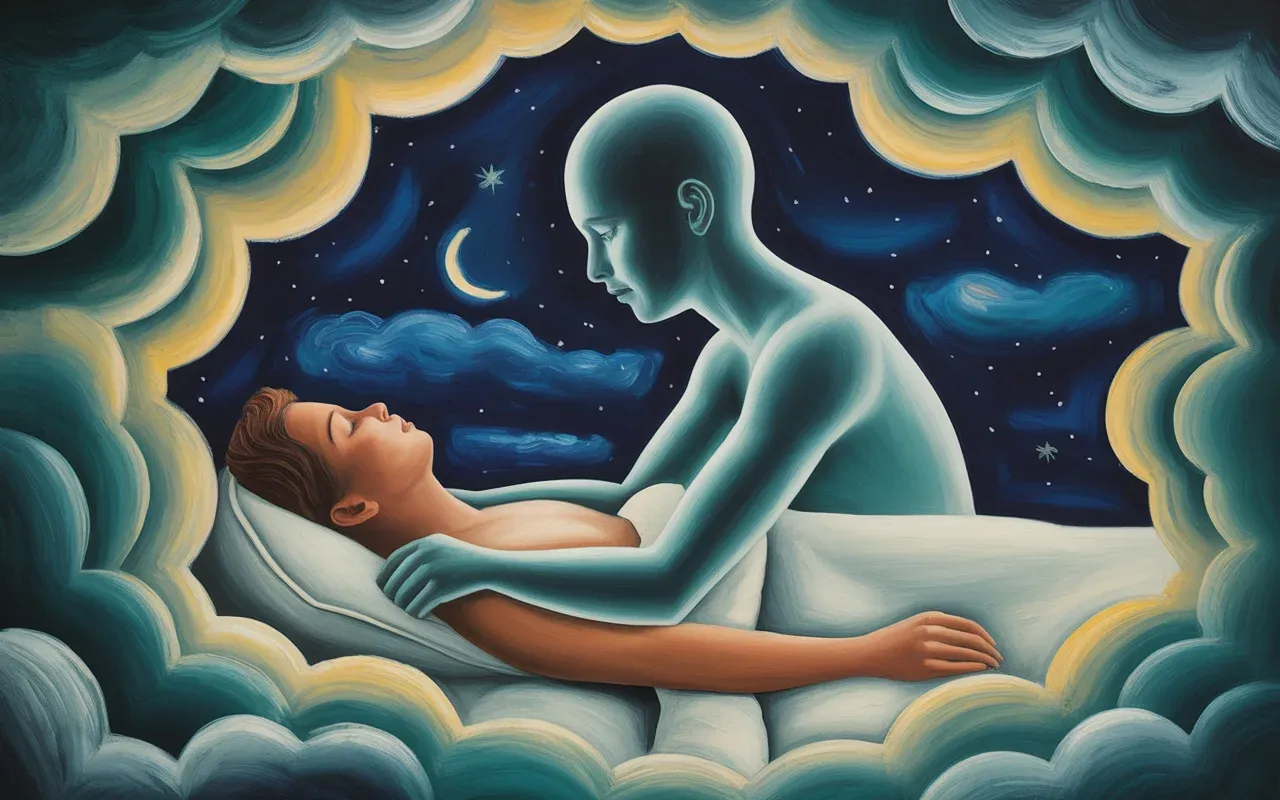
From a psychological standpoint, dreams like these are the mind\'s way of processing relational data it hasn\'t consciously sorted yet. Freud viewed such imagery as suppressed emotions or desires breaking through the surface — things you feel toward the person but haven\'t acknowledged or expressed.
Carl Jung would frame it differently. For Jung, seeing someone\'s spirit in a dream is a projection: the person is appearing as a representation of an aspect of your own psyche — your anima, your shadow, or a quality you\'re projecting onto them. The "ghost" isn\'t them; it\'s the part of yourself that interacts with, fears, admires, or needs something from them.
Modern sleep science adds a practical layer: the brain consolidates social and emotional memories during REM sleep. People who matter to you emotionally — especially those tied to unresolved situations — are likely to appear frequently. The ghostly form may simply reflect psychological distance: they feel present in your thoughts but somehow removed, unreachable, or changed.
\n\n| Lens | What the Ghost Represents |
|---|---|
| Freudian | Suppressed emotion or desire toward the person |
| Jungian | Psychological projection; shadow or anima element |
| Neuroscience | REM consolidation of emotionally unresolved relational data |
| Spiritual | Empathic or intuitive connection; soul-level awareness |
What Are the Most Common Scenarios — and What Do They Mean?
Context and emotion shape meaning. Here are the patterns that come up most often:
- You feel scared or anxious during the encounter: Fear points to unresolved tension — conflicts you\'ve been avoiding, worries about the relationship, or a subconscious sense that something between you is fragile or broken.
- You have a conversation with the ghost: This often indicates unspoken words. There\'s something you need to communicate to this person, or something you feel they\'re not saying to you. The dialogue in the dream is a rehearsal space.
- You feel calm or peaceful in their presence: Peaceful ghost encounters suggest emotional acceptance — you\'ve processed something about this relationship and arrived at a settled understanding, even if waking life still feels uncertain.
- The ghost is someone you haven\'t thought about in years: Old, dormant emotions or patterns are surfacing. Something in your current life may be triggering associations you haven\'t consciously connected yet.
- The ghost is unrecognisable or faceless: This typically points inward — projections of unknown aspects of yourself, or a feeling about "people in general" rather than one specific individual.
- Multiple ghosts of living people appear: Complex relational processing — multiple relationships or social dynamics being worked through simultaneously.
- The ghost appears threatening or hostile: A signal of perceived malice, betrayal anxiety, or fear that the person doesn\'t have your best interests at heart.
What Causes These Dreams — and Why Now?
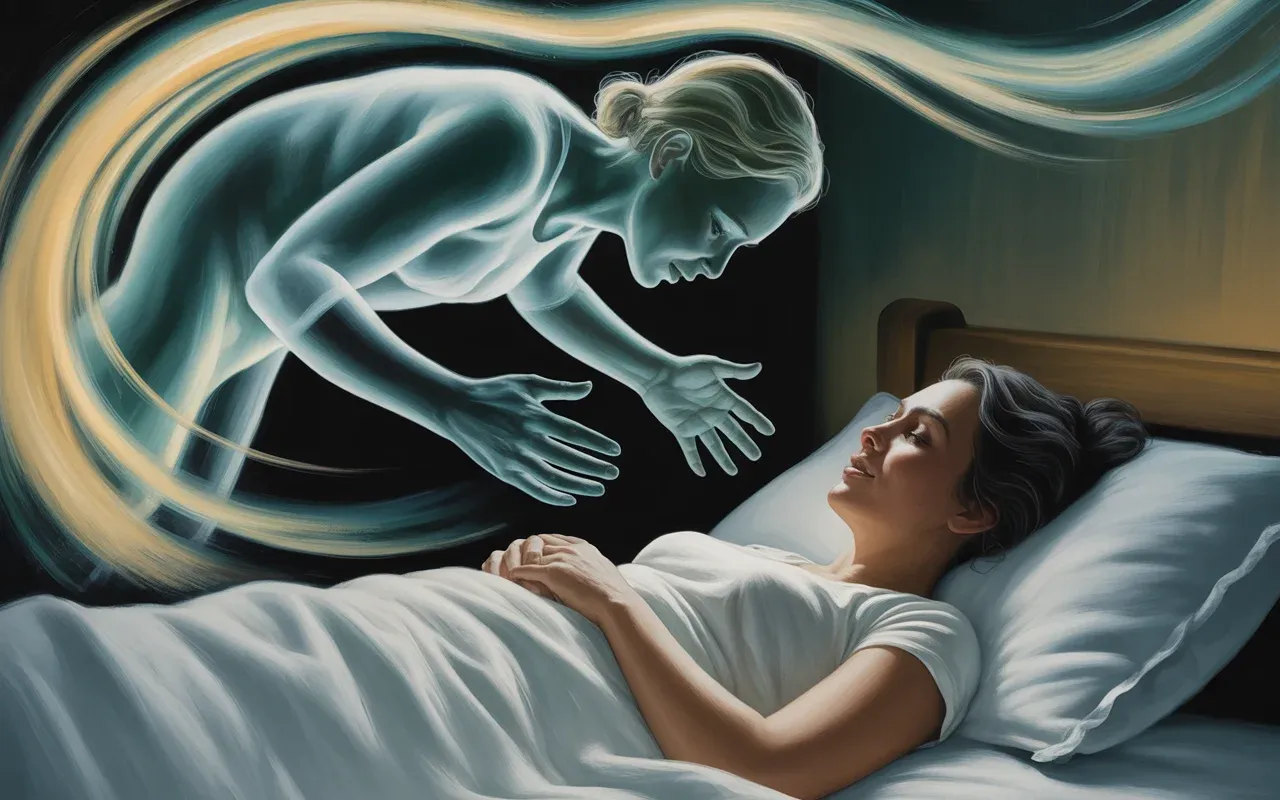
These dreams don\'t arise randomly. They cluster around specific life conditions:
- Emotional intensity: If you\'ve been thinking about this person a lot — positively or negatively — your mind is processing that intensity during sleep.
- Relationship transitions: A friendship cooling, a romance changing, a family dynamic shifting. The "ghost" form symbolises the person as they were, not as they currently are.
- Unresolved conflict: Arguments, misunderstandings, or feelings you haven\'t expressed tend to find form in dreams.
- Empathic sensitivity: Some people with high emotional intelligence or empathic tendencies process others\' energies and states through dream imagery.
- Stress and sleep disruption: High stress alters REM patterns, making emotionally charged imagery more likely and more vivid.
If you want to understand more about how relationship anxiety shows up at night, the post on the spiritual meaning of seeing familiar faces on strangers\' bodies covers the same territory from a different angle — and the insights tend to reinforce each other.
How to Make Sense of the Dream: Practical Steps
Understanding the dream is the first step; using it is the second.
- Write it down immediately. Record the emotion first, then the imagery. Emotion is almost always the primary signal.
- Ask: what does this person mean to me right now? Not historically — right now, in this chapter of your life.
- Look for the mirror: What quality of theirs might you be projecting? What aspect of yourself might they represent in this dream?
- Check for unspoken things: Is there something you need to say to this person, or something you\'re hoping they\'ll say to you?
- Notice patterns: If the same person appears repeatedly as a ghost, the dream is flagging something that needs waking-life attention — not just dream analysis.
For a broader look at how the subconscious uses identity and self-image in dreams, the post on seeing your body separate from your consciousness is a useful companion read — it maps the same territory of self-perception and projection.
You might also find it worth exploring the general meaning of seeing a ghost in a dream, which covers the broader symbolic landscape beyond the living-person-specific lens.
For further grounding in the science of REM dreaming and emotional processing, the Psychologist World\'s dream dictionary on ghosts offers a solid traditional reference point.
Coping When These Dreams Leave You Unsettled
The phantasmal imagery can feel disturbing even when the underlying message is benign. A few things help:
- Reframe the dream as information, not prophecy. It tells you something about your inner life — not about the other person\'s fate.
- Keep a dream journal over several weeks. Patterns across multiple dreams are far more meaningful than any single event.
- If the dreams are recurring and linked to significant distress, speaking with a therapist — particularly one familiar with dreamwork or relational psychology — can be genuinely useful.
- Maintain regular sleep habits. Fragmented REM sleep tends to amplify emotionally charged imagery.
Frequently Asked Questions
Does dreaming about a living person as a ghost mean they will die?
No. These dreams don\'t predict events. They reflect your internal emotional world — specifically your feelings, perceptions, and subconscious processing about that person and your relationship with them.
What does it mean if I feel scared when I see the ghost of a living person?
Fear in the dream usually points to unresolved tension: conflict you\'ve been avoiding, worry about the relationship, or a felt sense that something between you is fragile. The fear is rarely about the person themselves — it\'s about a feeling attached to them.
What if the ghost tries to communicate with me?
Communication in the dream often signals that something in the relationship is going unsaid. There may be feelings, needs, or conversations waiting in waking life. Pay attention to what the ghost says — even if it seems strange, it may reflect something you\'re telling yourself.
Does dreaming of a living person\'s spirit mean I have psychic abilities?
Not necessarily. While some spiritual traditions do interpret this as an empathic or intuitive connection, the primary explanation is psychological: your mind is processing the emotional significance of that relationship through the symbolic language of dreams.
Why did someone I haven\'t thought about in years appear as a ghost?
Old emotional patterns can resurface when triggered by current experiences — even indirectly. Something happening in your life now may be activating a dormant association with that person. The dream is surfacing it so it can be processed.
What does it mean if the ghost is someone I\'m in conflict with?
Almost certainly, the dream is processing that unresolved conflict. The ghostly form can symbolise estrangement, distance, or the felt absence of connection — even if the person is physically present in your life.
Is it common to dream about seeing ghosts of living people?
Yes — far more common than most people realise. Any relationship marked by strong emotion, change, or unresolved tension can generate this type of dream. It\'s particularly frequent during periods of relationship transition or personal stress.
What does it mean if the ghost feels peaceful and comforting?
Peaceful encounters suggest emotional resolution or acceptance — a sense that something about the relationship has settled internally, even if external circumstances remain uncertain. These are often positive signals from the subconscious.
Summary: What Your Subconscious Is Really Saying
Dreams of the ghost or spirit of a living person are your mind\'s way of putting a face — and a spectral form — on something emotional that hasn\'t been fully articulated. The person appearing as a ghost isn\'t sending you a message from the beyond; your own psyche is using their image to communicate something it hasn\'t found another way to say.
What I always tell people who write to me about these dreams: treat the ghost as a question mark, not a warning sign. What unfinished business does this person represent? What feeling are you carrying about them that you haven\'t fully faced? Answer those questions, and the dream loses its power to unsettle — and gains the power to genuinely inform.