Spiritual Meaning of Screaming in a Dream - Discover Insights


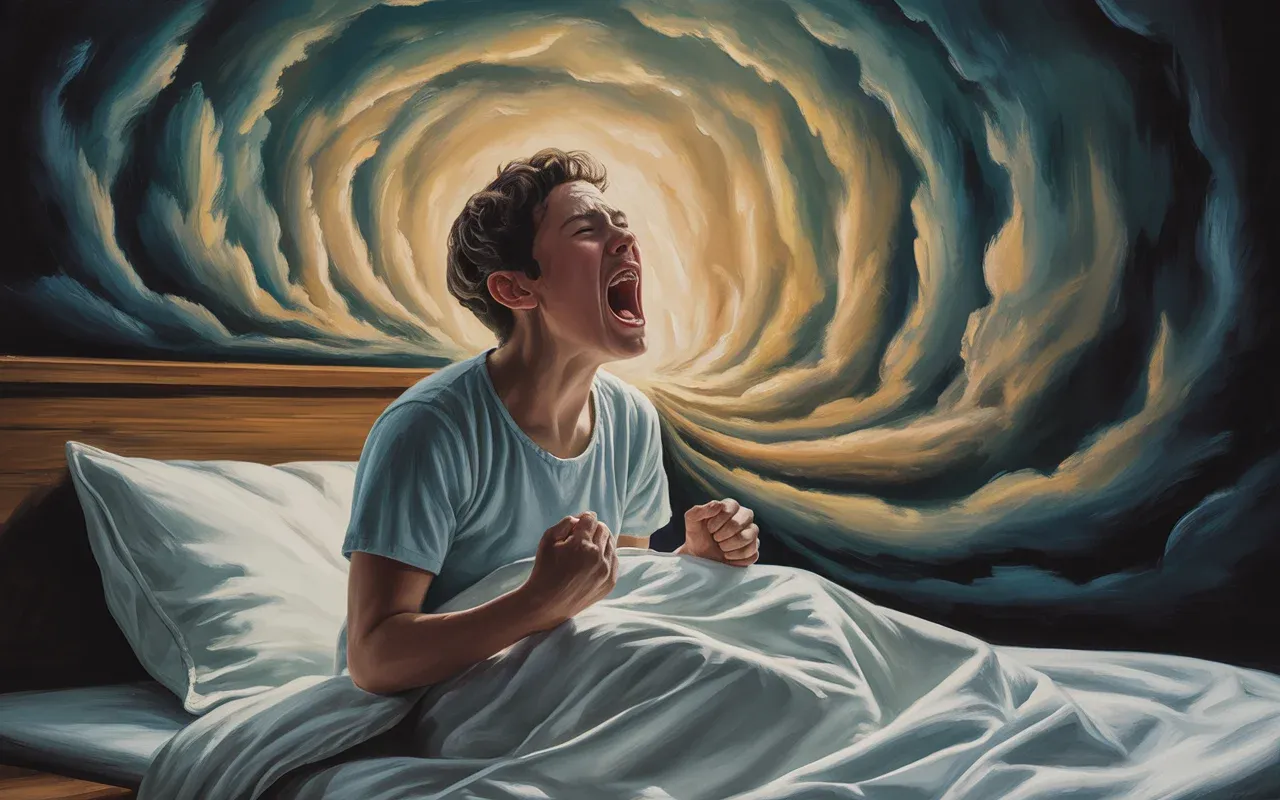
Few dream experiences hit harder than screaming — whether the sound tears out of you freely, dies silently in your throat, or belongs to someone else entirely. I\'ve analyzed hundreds of these dreams over the years, and what stands out is how consistently they point to one thing: something inside you is demanding to be heard.
Quick answer: Screaming in a dream typically signals unvoiced emotions, repressed stress, or an urgent inner need for acknowledgment. The specific meaning depends on context — screaming without sound points to powerlessness, screaming in fear reflects waking anxiety, while screaming in anger suggests buried frustration seeking release.
What Does Screaming in a Dream Spiritually Mean?
Across spiritual traditions, the voice carries enormous power. To lose it, strain it, or unleash it in a dream is rarely random. Screaming in a dream is a powerful symbol of unresolved emotions, unvoiced fears, and urgent calls for attention — it represents the need to express repressed feelings or communicate something that\'s going unheard in waking life.
From a spiritual perspective, screaming can signal a break from negative energies or an awakening to personal truth. It often reflects themes of independence, a longing for liberation from constraints, and a plea for acknowledgment of one\'s deeper inner state.
In various cultural and spiritual narratives, screaming is akin to releasing pent-up energy — an essential catharsis. Dreams of screaming might indicate the emergence of intuition, an inner voice urgently asking you to pay closer attention. Spiritually, it can mark a moment that demands genuine soul-searching, even as it highlights the mysterious territory the subconscious navigates each night.
What Do Different Screaming Dream Scenarios Mean?
The context in which screaming occurs shapes its meaning significantly. Here\'s how I break down the most common scenarios:
\n\n| Scenario | Core Meaning | Waking Life Signal |
|---|---|---|
| Screaming without sound | Powerlessness, suppressed expression | Feeling unheard or dismissed |
| Screaming in fear | Unprocessed anxiety, threat perception | High stress or an unsafe relationship |
| Screaming in anger | Repressed hostility, frustration | Unexpressed conflict needing resolution |
| Hearing someone else scream | Empathy, concern for others | Sensitivity to a loved one\'s distress |
| Screaming for joy | Breakthrough energy, liberation | Anticipating release from a long-held constraint |
| Screaming for help | Vulnerability, need for support | Difficulty asking for help in real life |
If you often dream of losing your voice entirely, the post on losing your voice or inability to speak in a dream explores that shadow side in depth.
What Does Psychology Say About Screaming in Dreams?
In my research, the psychological literature on screaming dreams converges on a few core themes — and the differences between Freudian and Jungian readings are worth understanding.
Freudian perspective: Freud would interpret screaming as a manifestation of repressed desires and unresolved conflicts rising from the subconscious. The scream is the censor failing — raw emotion breaking through in a form the waking mind would normally suppress.
Jungian perspective: Carl Jung would view screaming as an archetypal signal from the Self, alerting the dreamer to integrate a suppressed aspect of their psyche — what he called the Shadow. The scream isn\'t a failure; it\'s the psyche demanding wholeness.
Cognitive-behavioral view: Modern CBT-oriented sleep researchers frame screaming dreams as emotional processing gone into overdrive. Unresolved daytime conflict gets amplified during REM sleep, when the brain\'s emotional centers are highly active.
From an energy healing standpoint, screaming in a dream might also reflect an imbalance in one\'s energetic flow — an indicator of unsettled emotion that needs release or realignment for well-being.
Screaming dreams often occur alongside other distress-signal dreams. If you\'re also experiencing chase sequences, the article on the spiritual meaning of being chased in a dream maps the same cluster of themes from a different angle.

What Causes Screaming Dreams?
Several factors can trigger dreams involving screaming:
- Chronic stress and anxiety: High stress often translates into symbolic dreams, where screaming becomes a release valve for pent-up emotions. This is the most common trigger I see.
- Life transitions: Significant changes — a new job, relationship shifts, personal crises — can manifest as screams in dreams, reflecting inner turmoil during times of uncertainty.
- Unresolved conflicts: Interpersonal friction or moral dilemmas that remain unaddressed frequently surface in dreams as screaming, particularly when you feel unable to speak up in waking life.
- Trauma history: Screaming dreams are common in people processing past trauma. Research from the American Psychological Association connects emotional dysregulation during REM sleep to trauma-related nightmares.
- Sleep disorders: Conditions like REM sleep behavior disorder or sleep apnea can cause the body to physically act out dream content, including screaming.
- Physical discomfort: A sleeper\'s posture or environmental discomfort — heat, noise, restricted breathing — can enter the dream and get dramatized as screaming.
Violence-adjacent dreams like screaming often co-occur with attack imagery. The piece on the spiritual meaning of being attacked in a dream is worth reading alongside this one.
How to Stop or Reduce Screaming Dreams
- Dream journaling: Write down the dream immediately upon waking — context, emotion, who was present. Patterns emerge within two to three weeks that reveal the root cause.
- Therapy and counseling: For persistent or distressing screaming dreams, a therapist can help uncover the underlying anxieties driving them. Trauma-focused CBT has strong evidence here.
- Sleep hygiene: A consistent sleep schedule, a cool dark room, and no screens 30 minutes before bed directly reduce the frequency of high-arousal dreams.
- Stress reduction: Mindfulness, physical exercise, and creative expression all reduce the emotional pressure that screaming dreams tend to vent.
- Image rehearsal therapy (IRT): A clinically tested technique where you consciously rewrite a nightmare\'s ending while awake, then rehearse the new version — shown to reduce nightmare frequency significantly.
Related: What Does Running in a Dream Mean?
Screaming and running dreams frequently appear together — both are fight-or-flight responses playing out in the subconscious. Watch this breakdown of running dream symbolism for more context:
What Your Screaming Dream Is Really Telling You
The pattern I keep seeing is this: screaming dreams don\'t just signal that something is wrong — they signal that something is being ignored. Whether the scream is silent and powerless or full-throated and furious, it\'s the subconscious refusing to be dismissed any further. The specific scenario tells you what kind of ignored emotion you\'re dealing with. The frequency tells you how urgent it is. Pay attention — your inner world is making noise for a reason.
FAQ: Screaming in a Dream
What does screaming in a dream mean spiritually?
Spiritually, screaming in a dream signals a need for liberation from suppressed emotions or negative energy. Many traditions interpret it as a cathartic release — the soul breaking free from constraints and demanding authentic self-expression. It can also mark a moment of awakening, where the dreamer\'s inner voice refuses to be silenced any longer.
What does it mean when you scream in a dream but no sound comes out?
This is one of the most common and distressing dream experiences. Screaming without sound symbolizes a deep feeling of powerlessness or being unheard in waking life. It often reflects situations where you feel unable to speak up, have your voice dismissed, or lack the authority to change something that\'s troubling you.
Why do some people wake up screaming from a dream?
Waking up screaming typically indicates a night terror or a high-arousal nightmare during REM sleep. Night terrors often occur in the first third of the night during deep non-REM sleep and are more common in children, but adults under severe stress or with sleep disorders can experience them too. REM sleep behavior disorder can also cause physical acting-out of dreams, including shouting.
What does hearing someone else scream in a dream mean?
Hearing another person scream usually reflects your emotional attunement to their distress. It may indicate that someone close to you is struggling and you\'re picking up on signals you haven\'t consciously registered. It can also represent a disowned part of yourself — a voice inside you that feels unheard — projected onto another figure in the dream.
What does screaming in anger in a dream mean?
Anger screams in dreams almost always point to repressed hostility or chronic frustration. If you\'re consistently polite and non-confrontational in waking life, your dreams become the only place this emotion gets expressed. The dream is signaling that the underlying conflict needs acknowledgment and, ideally, direct action in your waking relationships.
Can screaming dreams be connected to trauma?
Yes, directly. Trauma-related nightmares — including those featuring screaming — are a core symptom of PTSD and complex trauma. The brain attempts to process overwhelming past experiences during REM sleep, and screaming can represent the emotional intensity of those memories being re-activated. If screaming dreams are recurring and distressing, trauma-focused therapy is worth exploring.
Are screaming dreams a sign of anxiety?
They\'re one of the clearest signs. Anxiety elevates baseline emotional arousal, which intensifies dream content. Screaming dreams are especially common during periods of sustained high stress — major deadlines, relationship instability, financial pressure. Reducing daytime anxiety through consistent stress management practices typically reduces the frequency of these dreams within a few weeks.
What does screaming for help in a dream mean?
Screaming for help in a dream reflects vulnerability and an unmet need for support. In waking life, you may be struggling to ask for help — whether due to pride, fear of burden, or uncertainty about who to turn to. The dream externalizes that need, essentially forcing you to acknowledge it. It\'s worth asking yourself: where do I need help right now that I haven\'t asked for?
Can screaming in a dream ever be a positive sign?
Occasionally, yes. Screaming for joy or excitement in a dream — like screaming at a concert or a breakthrough moment — reflects pent-up enthusiasm or relief finally finding expression. It can signal that a long-anticipated change is close, or that you\'re ready to release a constraint you\'ve been holding onto. The emotional quality of the scream matters enormously in interpretation.