What Does It Mean When You\'re Gambling in a Dream?

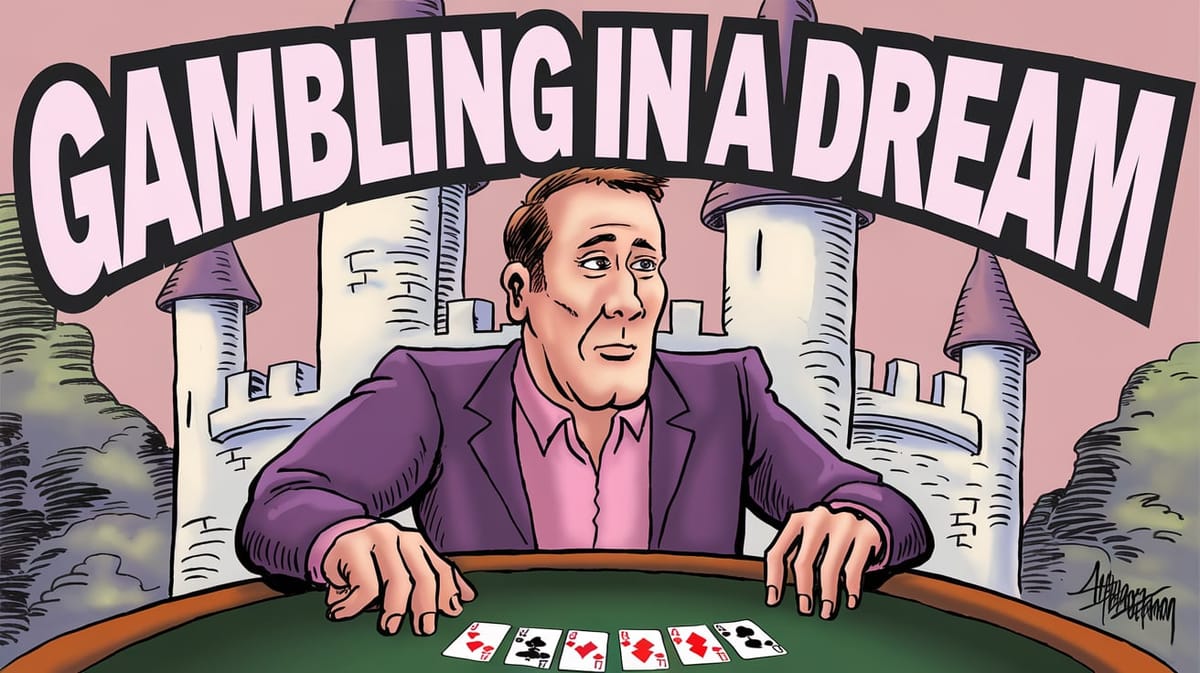
Quick answer: Gambling dreams reflect your relationship with risk, uncertainty, and decision-making in waking life. They rarely predict actual gambling outcomes — instead, they mirror how you handle situations where the result feels out of your control.
Why Do Gambling Dreams Happen?
Gambling dreams show up when your mind is processing uncertainty. I\'ve found that they tend to appear during life transitions — job changes, relationship crossroads, or financial pressure — when outcomes feel genuinely unpredictable. Your sleeping brain reaches for the most obvious metaphor it has for risk: a bet.
The specific game matters less than the feeling. Whether you\'re at a roulette wheel, a poker table, or a slot machine, the core question your subconscious is asking is the same: can I trust myself to make the right call when I don\'t know what\'s coming?
What Does Gambling Symbolize in Dreams?
At its root, gambling in a dream is about your comfort level with the unknown. The chips, cards, and dice are stand-ins for the stakes in your actual life — money, love, status, security.
In my research, I keep seeing the same pattern: people who dream about gambling are usually facing a real decision where they feel torn between playing it safe and going all in. The dream isn\'t telling you what to do. It\'s showing you how you feel about the choice.
\n\n| Symbol | What It Represents |
|---|---|
| Casino or betting hall | Life situations where outcomes feel uncertain |
| Winning big | Optimism, desire for validation or financial relief |
| Losing everything | Fear of failure, feeling out of control |
| Playing cards or poker | Strategy, hidden information, social competition |
| Dice or roulette | Feeling at the mercy of chance |
| Slot machines | Repetitive effort with uncertain payoff |
| Betting on someone else | Trust issues or dependency on others\' choices |
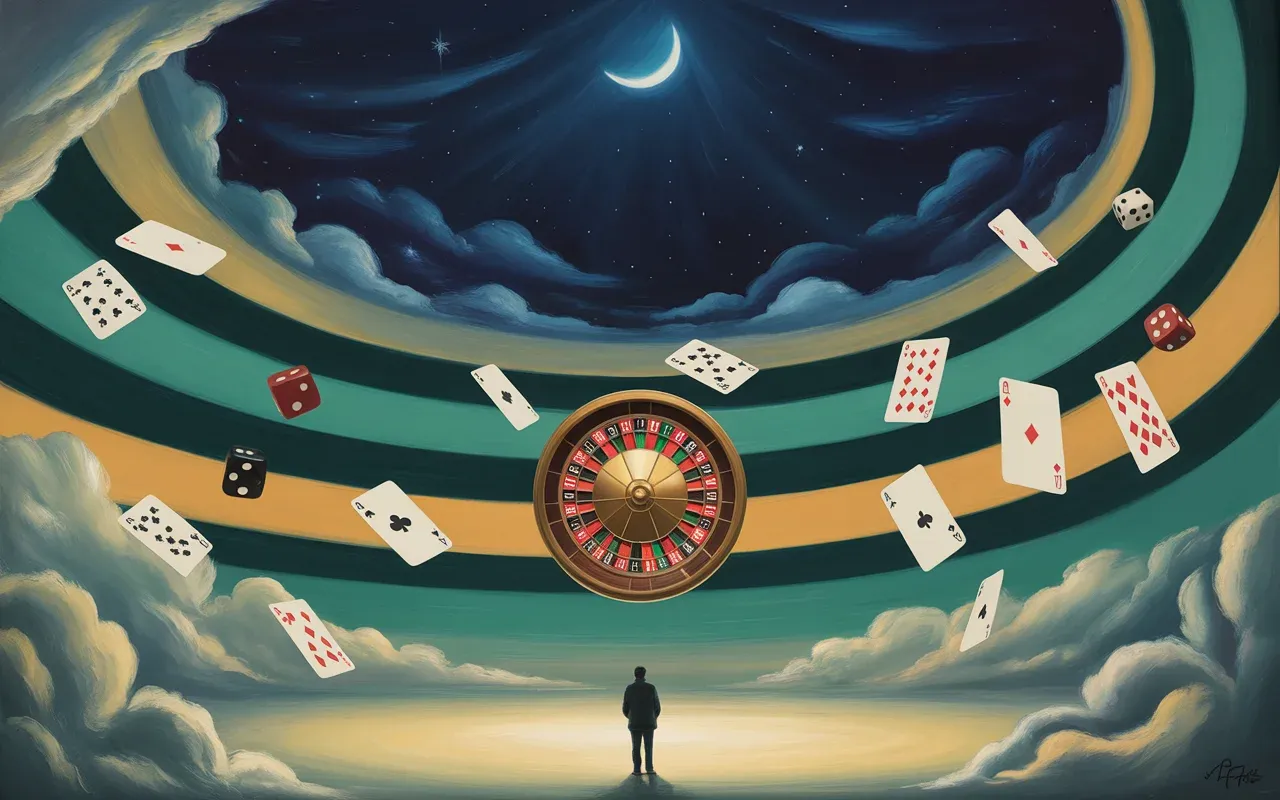
What Does It Mean to Dream About Winning at Gambling?
Winning in a gambling dream usually reflects hope rather than prophecy. Your brain is rehearsing a positive outcome for something you\'re worried about. It can also signal that you feel confident about a recent decision — your subconscious is giving you a thumbs-up.
But there\'s a catch. If the win feels hollow or anxious in the dream, it may point to imposter syndrome — a worry that your success isn\'t earned or won\'t last. Pay attention to the emotion, not just the result.
What Does It Mean to Dream About Losing at Gambling?
Losing dreams are more straightforward. They typically surface when you feel powerless or regretful about a choice you\'ve already made. The empty pockets and shrinking chip stack mirror a sense of emotional or material depletion in your waking life.
I\'ve noticed that people who dream about losing something important in a dream often share this same underlying anxiety — the fear that something valuable is slipping away.
What Do Different Gambling Scenarios Mean in Dreams?
- Poker with people you know: Hidden power dynamics or unspoken competition in your relationships. The bluffing element suggests someone — maybe you — is hiding their true hand.
- Slot machines on repeat: A cycle you can\'t break. This often connects to jobs, habits, or relationships where you keep investing effort without clear returns.
- Betting on a horse race or sports: You\'re relying on someone else\'s performance for your own success. Think about where you\'ve outsourced control in your life.
- Being unable to stop gambling: Loss of control. This is your mind flagging compulsive behavior — not necessarily gambling, but any pattern where you can\'t walk away.
- Watching others gamble: You feel like a bystander in a situation where others are taking the risks and reaping the rewards.

What Does Psychology Say About Gambling Dreams?
Freud saw gambling dreams as expressions of unconscious desire — the thrill of the bet mirrors our pleasure-seeking impulses, and the fear of losing reflects the ego struggling with consequences. In his framework, the gambler\'s rush is a sublimated form of deeper urges.
Jung took a different angle. He\'d read the casino as a meeting place between your conscious self and your shadow — the part of you that craves excitement and danger even when your rational mind says no. The gambling table is where these two sides negotiate.
Modern sleep research adds another layer: during REM sleep, your brain\'s risk-assessment centers stay active while your prefrontal cortex (the part that says "bad idea") is dialed down. This explains why gambling dreams can feel so intense and emotionally charged — your brain is processing risk with the brakes off.
What Is the Spiritual Meaning of Gambling in a Dream?
Across spiritual traditions, gambling dreams carry warnings about misplaced trust. In Christianity, gambling in a dream may signal reliance on luck rather than faith — a reminder to ground your decisions in something more stable than chance. Biblical interpretation often frames it as a test of where you place your security.
In Islam, dreaming of gambling (maysir) is generally seen as a warning against haram activities and a call to examine whether you\'re chasing worldly gains at the expense of spiritual well-being.
From a broader spiritual perspective, the pattern I keep seeing is this: gambling dreams ask you to examine what you\'re willing to risk and whether the potential reward justifies the cost. They push you toward intentional choice over passive hope.
What Triggers Gambling Dreams?
These dreams tend to cluster around specific life situations:
- Career uncertainty — considering a job change, starting a business, or waiting on a promotion
- Financial stress — debt, major purchases, or investment decisions
- Relationship crossroads — committing, separating, or rebuilding trust
- Health decisions — choosing between treatment options or lifestyle changes
- Media exposure — watching gambling content can prime your brain to use casino imagery
The link to losing control of a vehicle in a dream is worth noting — both dream types spike during periods when you feel your life\'s direction is out of your hands.
How Should You Respond to Gambling Dreams?
- Name the real bet. What waking-life decision is your dream actually about? Write it down.
- Check the emotional tone. Were you excited, terrified, numb? That feeling is the real message.
- Audit your risk exposure. Are you taking on too much uncertainty at once, or avoiding necessary risks?
- Look for patterns. If gambling dreams recur, track them in a journal. Notice what triggers them.
- Separate chance from choice. Many things that feel like gambles actually have knowable odds. Do your homework before deciding.
If your dreams involve fighting and winning, you may be processing a different aspect of the same conflict — the part where you\'re ready to stop leaving things to chance and take direct action.
Gambling Dreams Are About the Bets You\'re Already Making
Every gambling dream points back to a real choice. Your subconscious picked casino imagery because something in your life feels uncertain and high-stakes. The dream isn\'t predicting whether you\'ll win or lose — it\'s asking you to look at the bet you\'re already making and decide whether you\'re playing with intention or just hoping for the best.
Identify the decision. Weigh what you know. Then make your move — not because the odds guarantee a win, but because you\'ve thought it through. That\'s the difference between gambling and choosing, and your dream is asking which one you\'re doing.
Frequently Asked Questions
Does dreaming about gambling mean I should actually gamble?
No. Gambling dreams are metaphorical, not instructional. They reflect how you process risk and uncertainty in everyday life — career moves, relationship decisions, financial choices — not a signal to visit a casino.
What does it mean when you dream about winning money gambling?
Winning money in a gambling dream usually mirrors optimism or a desire for financial security. It can mean you feel good about a recent risk you took, or it may reveal a wish that a current uncertain situation will turn out in your favor.
What is the spiritual meaning of winning money gambling in a dream?
Spiritually, winning at gambling in a dream can represent divine favor or a sign that your path is aligned. However, many traditions also caution that it could reflect overconfidence or attachment to material outcomes rather than spiritual growth.
What does it mean to dream about gambling and losing?
Losing in a gambling dream typically reflects fear of failure, regret over past decisions, or a sense that something in your life is costing more than it\'s worth. It\'s your subconscious flagging an imbalance between risk and reward.
What does gambling in a dream mean in Christianity?
In Christian dream interpretation, gambling often symbolizes trusting in luck over faith. It may be a call to examine whether you\'re relying on God\'s guidance or chasing uncertain worldly outcomes. Some interpreters connect it to stewardship — how wisely you\'re managing what you\'ve been given.
What does gambling in a dream mean in Islam?
In Islamic dream interpretation, gambling (maysir) is generally a warning sign. It may indicate involvement in or temptation toward haram activities, or it could reflect anxiety about financial decisions. It\'s often read as a call to seek halal means and trust in Allah\'s provision.
Why do I keep having recurring gambling dreams?
Recurring gambling dreams point to an unresolved decision or ongoing source of uncertainty. Your mind keeps returning to the gambling metaphor because the underlying issue hasn\'t been settled. Identifying and addressing the real-life "bet" usually reduces these dreams.
Can gambling dreams indicate a gambling addiction?
They can, but not always. If you gamble regularly and dream about it, the dreams may reflect preoccupation or compulsive behavioral patterns studied in clinical research. For non-gamblers, these dreams are almost always metaphorical — about life risks, not actual betting.
What does it mean to dream about gambling with friends or family?
Gambling with familiar people in a dream highlights hidden competition, trust dynamics, or shared risk in those relationships. Pay attention to who wins and who loses — it often mirrors real power dynamics or concerns about loyalty.