What Does It Mean When You're Reading Quran in a Dream?

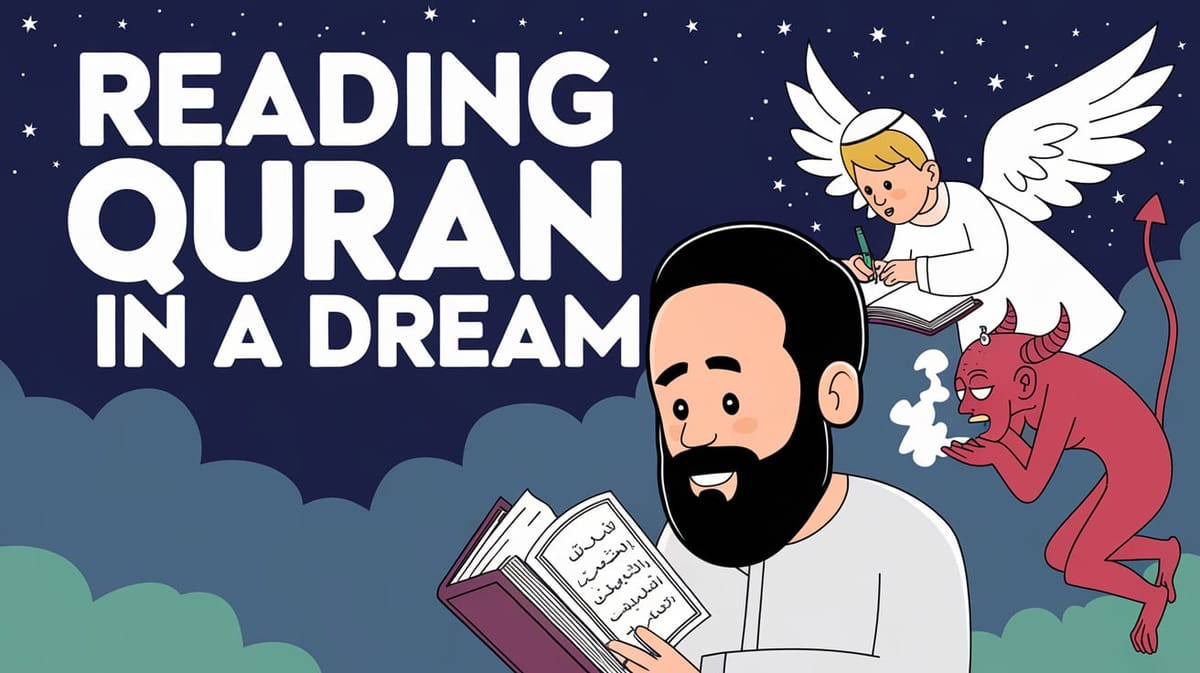
Quick answer: Reading the Quran in a dream typically signals divine guidance, spiritual growth, and moral clarity. In Islamic tradition, it's one of the most blessed dream signs — pointing to protection, wisdom, and a strong connection with your faith. The specific details of the dream shape its deeper meaning.
What Does Reading the Quran in a Dream Mean Spiritually?
It means you're receiving a sign of divine favor and spiritual alignment. In Islamic dream interpretation (ta'bir al-ru'ya), seeing yourself read the Quran is one of the most positive signs a dreamer can receive.
I've found that these dreams tend to appear during turning points — when someone is seeking answers, wrestling with a decision, or deepening their relationship with faith. The Quran in a dream often acts as a mirror for your inner state. If you're reading with ease and understanding, your spiritual path is clear. If you're struggling to read, there may be something in your waking life pulling you away from what matters most.
Islamic scholars like Ibn Sirin considered Quran dreams to be among the truest forms of spiritual communication. The dreamer isn't just seeing a symbol — they're participating in a sacred act, even within the dream world. That matters.
Does Allah Send Messages Through Quran Dreams?
Many Islamic scholars say yes. In the hadith tradition, Prophet Muhammad (PBUH) taught that true dreams (ru'ya sadiqah) are one-forty-sixth of prophethood. A dream of reading the Quran fits squarely into this category — it's not random neural activity but potentially a form of divine communication.
That said, context matters. In my research, I keep seeing a pattern: the emotional tone of the dream shapes its message more than the visual details alone. Feeling peace while reading suggests reassurance and blessing. Feeling confusion or distress may point to spiritual questions that need attention.
The key distinction Islamic scholars make: dreams from Allah bring clarity and peace, while confused or disturbing dreams come from other sources. If your Quran dream left you feeling calm and guided, that's a strong positive sign.
What Do Different Quran Reading Scenarios Mean?
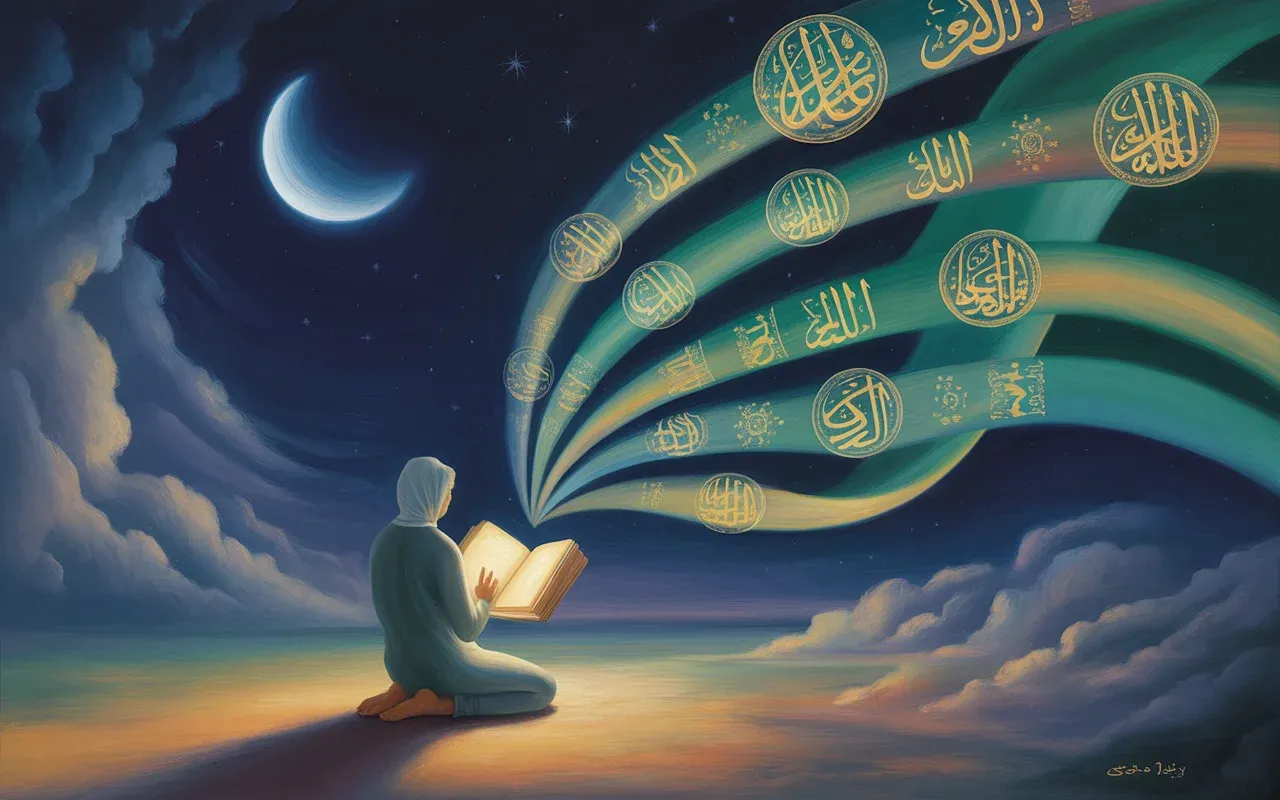
The specific situation in your dream changes the interpretation significantly. Here's what each common scenario points to:
| Dream Scenario | Interpretation | Emotional Sign |
|---|---|---|
| Reading clearly with understanding | Spiritual clarity and growth in faith | Peace, confidence |
| Unable to read or understand verses | Spiritual obstacles or disconnection | Frustration, longing |
| Teaching others to read | You're called to guide and mentor | Purpose, responsibility |
| Difficulty holding the Quran | Inner struggles with faith or obligations | Anxiety, uncertainty |
| Hearing someone else recite | Guidance coming through others in your life | Receptivity, humility |
| Reading a specific surah | That surah's theme applies to your current situation | Focus, recognition |
| Seeing torn or damaged pages | Need for spiritual renewal or repair | Concern, urgency |
| Reading in a language you don't know | Hidden knowledge waiting to surface | Wonder, curiosity |
The pattern I keep seeing is that the dreamer's emotional state during the dream is just as telling as the visual content. A person reading with tears of joy has a very different message than someone reading in fear.
Why Do People Dream About Reading the Quran?
These dreams don't come from nowhere. Several real-world triggers make them more likely:
- Active spiritual practice — regular prayer, Quran study, or dhikr carries into sleep
- Ramadan and sacred periods — heightened spiritual awareness during holy months
- Major life decisions — your mind seeks moral guidance through familiar sacred frameworks
- Guilt or moral uncertainty — unresolved ethical questions often surface as religious imagery
- Grief or loss — seeking comfort through spiritual connection
- Recent religious discussions — conversations about faith can trigger processing during sleep

What Does Psychology Say About Religious Text Dreams?
From a psychological standpoint, dreams about reading sacred texts activate something specific. Neuroscience research on REM sleep shows the prefrontal cortex — the brain region tied to moral reasoning and decision-making — processes spiritual and ethical information encountered during waking hours.
Carl Jung would frame a Quran dream as contact with the collective unconscious — the shared symbolic language of humanity that includes sacred texts, archetypes, and moral frameworks. The Quran in this view represents the Self archetype: the integrated, wise core of your psyche reaching out to your conscious mind.
Freud took a different angle: religious text dreams often reflect the superego — your internalized moral conscience and inherited spiritual values. The act of reading in the dream represents your attempt to align your behavior with your deepest beliefs.
Both perspectives agree on one thing: these dreams aren't random. They reflect genuine psychological processing of moral and spiritual material.
Can Non-Muslims Dream About Reading the Quran?
Yes, and it's more common than most people think. Dreams pull from every experience and exposure point in your life. If you've encountered Islamic culture, heard Quran recitation, or simply explored questions about faith and meaning, your subconscious has material to work with.
For non-Muslims, a Quran dream usually represents a broader search for spiritual meaning, moral guidance, or connection with something sacred. It doesn't necessarily signal a call to Islam — though some people have interpreted it that way. More often, it reflects the universal human need for wisdom and moral direction, expressed through a symbol your mind has encountered.
This connects to similar dreams people have with other sacred texts. If you're curious, you can explore what it means to read the Bible in a dream or the meaning of reading Torah in a dream for comparison.
What Should You Do After Having a Quran Dream?
These dreams deserve attention, not anxiety. Here's a practical approach:
- Write it down immediately — details fade fast. Record emotions, specific surahs if remembered, setting, and who else appeared
- Note the emotional tone — peaceful, anxious, awed, confused? This shapes the interpretation more than anything
- Reflect on your current life situation — what decisions, relationships, or spiritual questions are active right now?
- Consider consulting a knowledgeable scholar — Islamic dream interpretation has a rich tradition. A qualified interpreter can offer insights you'd miss alone
- Don't over-interpret — one dream is a data point, not a verdict. Watch for patterns across multiple dreams
If the dream brought peace, receive it as the blessing it is. If it brought unease, treat it as an invitation to examine something in your spiritual life that needs attention.
Are Quran Dreams at Dawn More Significant?
In Islamic tradition, yes. Dreams near fajr (pre-dawn prayer time) carry special weight. The Prophet Muhammad (PBUH) indicated that the most truthful dreams occur toward the end of the night, when sleep is deepest and the soul is closest to the divine realm.
From a neuroscience perspective, this tracks. REM sleep cycles grow longer toward morning, and the final REM period produces the most vivid, emotionally rich, and memorable dreams. So whether you approach this spiritually or scientifically, dawn dreams do carry more weight.
How Do Quran Dreams Compare to Other Sacred Text Dreams?
People across all faiths report dreams of reading their sacred texts, and the emotional patterns are surprisingly similar. The sense of awe, the feeling of receiving guidance, the impression that the text is "speaking directly to you" — these show up whether the dreamer is Muslim, Christian, Jewish, or from another tradition entirely.
What makes Quran dreams distinct is the Islamic tradition of systematic dream interpretation. Scholars like Ibn Sirin, Al-Nabulsi, and Ibn Shaheen developed classification systems for dream symbols that have been refined over centuries. This gives Quran dream interpretation a depth and specificity that few other traditions match.
For those interested in how other traditions interpret similar dreams, see our guide on finding yourself in a library with infinite books in a dream.
Frequently Asked Questions
Is reading the Quran in a dream always a good sign?
Usually, yes — but context shapes the full meaning. Reading with peace and clarity is strongly positive in Islamic tradition. Reading with confusion, fear, or inability to understand may signal spiritual struggles needing attention. The dream itself isn't bad, but it might be pointing to something that requires work.
What if I can't remember which surah I was reading?
That's completely normal and doesn't reduce the dream's significance. Most dreamers can't recall specific verses. The act of reading matters more than the specific text. Focus on how you felt during the dream — that carries the real interpretive weight.
Does seeing a torn or damaged Quran in a dream mean something bad?
Not necessarily "bad," but it's a call to attention. Damaged sacred texts in dreams often point to neglected spiritual practices, internal conflicts about faith, or a relationship with religion that needs repair. Think of it as a signal to reconnect, not a punishment.
Why did I dream of reading Quran in a language I don't understand?
This often represents knowledge or wisdom that's available to you but hasn't fully surfaced yet. It can also indicate that divine communication goes beyond human language — the message reaches you at a soul level even when the conscious mind can't decode it.
Can Quran dreams predict the future?
Some Islamic scholars acknowledge prophetic dreams (ru'ya), but most interpretation focuses on present spiritual state rather than future events. These dreams typically reflect where you are now — your spiritual health, your relationship with faith, your current moral questions — rather than forecasting specific events.
What does it mean if someone else is reading Quran to me in my dream?
This usually signals that guidance is coming to you through another person in your waking life. Pay attention to teachers, mentors, family members, or friends who might be offering wisdom you haven't fully received yet. It can also represent the tradition of oral transmission that's central to Islamic culture.
How often can these dreams occur, and should I be concerned if they repeat?
Recurring Quran dreams aren't cause for concern — they typically mean the message hasn't been fully received or acted upon. Some people experience them during Ramadan or other spiritually active periods. If they cause anxiety rather than peace, speaking with a knowledgeable scholar can help you process their meaning.
I'm not religious but dreamed of reading the Quran. What does it mean?
For non-religious dreamers, sacred text dreams usually reflect a search for meaning, structure, or moral guidance — not a specific religious calling. Your mind selected the Quran as a symbol because you've encountered it culturally. The deeper message is about your need for wisdom and direction in some area of your life.
Final Thoughts on Quran Dreams
Dreams of reading the Quran sit at the intersection of faith, psychology, and personal meaning. In Islamic tradition, they're among the most honored dream types — signs of divine attention and spiritual blessing. From a psychological view, they reflect your deepest moral processing and your mind's search for guidance through familiar sacred symbols.
What matters most isn't finding the "correct" interpretation — it's paying attention to what the dream stirs in you. If it draws you closer to spiritual practice, reflection, or moral clarity, then the dream has already done its work. Record it, sit with it, and let its meaning unfold naturally over the days that follow.