Scientific Studies on Dreams: Latest Research and Insights

Quick answer: Scientific dream research shows that dreams occur mainly during REM sleep and serve functions including memory consolidation, emotional regulation, and threat simulation. Modern neuroscience, building on Freud and Jung, now maps dream activity directly to brain regions — and the findings keep surprising researchers.
What Does Science Actually Say About Why We Dream?
For most of recorded history, dreams were the territory of priests and prophets. Today, sleep laboratories and fMRI scanners have taken over — yet the honest answer is that scientists still debate the core "why." Several competing theories each hold real evidence:
- Threat Simulation Theory (Antti Revonsuo, 2000) — Dreams exist to rehearse dangerous scenarios in a safe environment, sharpening our survival responses.
- Memory Consolidation — Research by Harvard\'s Robert Stickgold and colleagues shows that sleep — especially REM sleep — strengthens new memories and connects them to older ones.
- Activation-Synthesis Hypothesis (Hobson & McCarley, 1977) — The brain generates random electrical signals during REM; the cortex weaves a narrative around them. On this view, meaning is imposed after the fact.
- Emotional Regulation — A 2009 paper by Walker and van der Helm proposed that REM sleep "strips the emotional charge" from difficult memories, which is why we can recall trauma without re-experiencing its full intensity.
In my research, I keep returning to the fact that no single theory wins outright — which itself tells us something about how rich and varied dreaming really is.
What Happens in the Brain During a Dream?
Modern neuroimaging has mapped dreaming with striking precision. During REM sleep:
\n
| Brain Region | Activity Level | What It Produces |
|---|---|---|
| Visual cortex | High | Vivid imagery without external input |
| Amygdala | High | Intense emotional tone — fear, joy, awe |
| Prefrontal cortex | Low | Reduced logic & self-monitoring |
| Hippocampus | Active | Memory fragments woven into scenes |
| Motor cortex | Active (suppressed output) | Dreamed movement without physical action |
\n
The suppressed prefrontal cortex explains why dream logic feels perfectly reasonable while you\'re in it — you\'re literally running with reduced critical oversight.
How Do Researchers Actually Study Dreams?
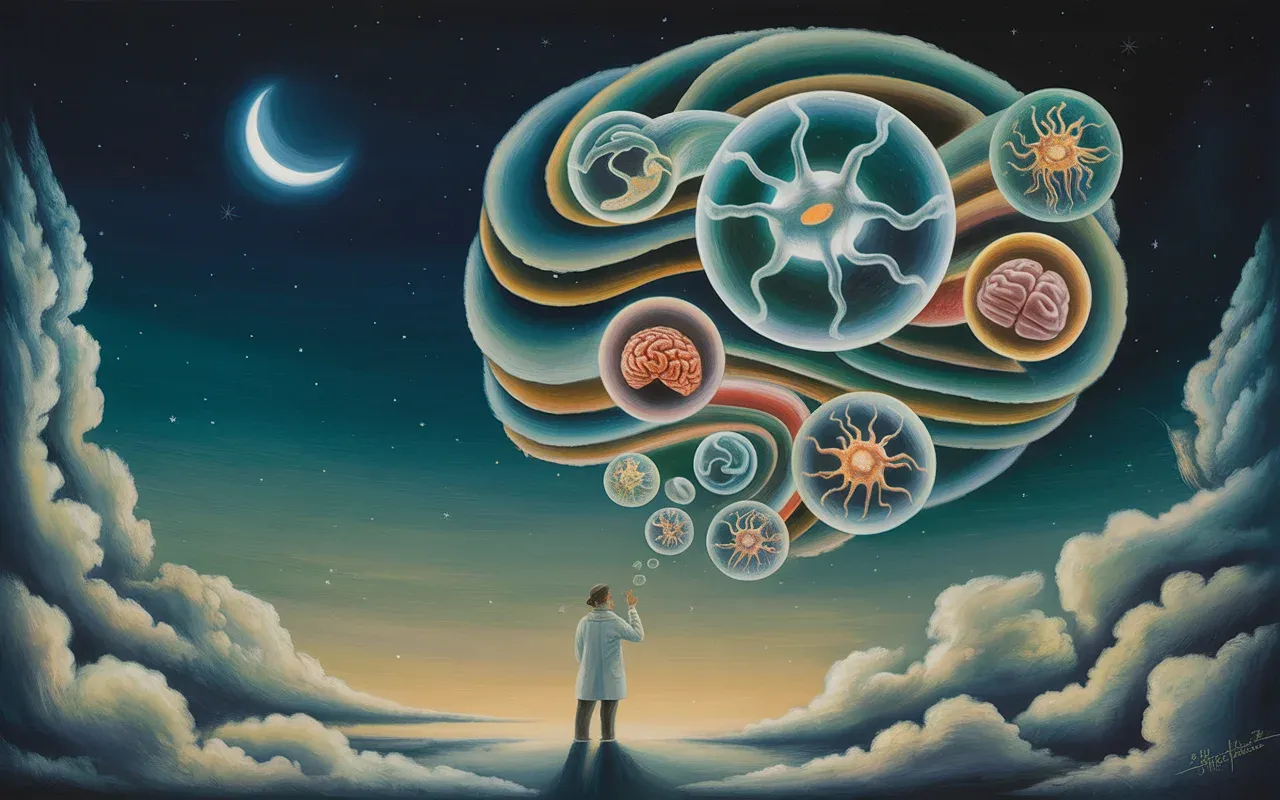
Dream science has a methodological problem: the primary data disappears when you wake up. Researchers work around this in several ways:
- Sleep lab wake-ups — Participants are woken during identified REM periods and asked to report immediately. This catches dreams before they fade.
- Dream journals — Large-scale diary studies (like the Hall/Van de Castle coding system) allow statistical analysis of thousands of dream reports across demographics.
- Real-time communication — A landmark 2021 study published in Current Biology (supported by the NSF) achieved two-way communication with lucid dreamers during REM sleep, asking yes/no questions via eye movements. The dreamers answered correctly.
- Neuroimaging — Researchers at UC Berkeley have partially reconstructed dream imagery from fMRI data using machine learning, showing that the visual cortex\'s activity patterns during dreaming mirror those during waking perception.
What Did Freud and Jung Get Right — and Wrong?
Freud argued that dreams are disguised wish-fulfillments, particularly of repressed sexual or aggressive drives. Modern research has largely dismantled his specific claims about symbolism — the evidence for universal symbol substitution is thin at best. However, his core intuition that dreams connect to waking emotional life holds up: studies consistently show that people dream about their current concerns, relationships, and anxieties.
Jung\'s framework fares somewhat better empirically. His concept of the "continuity hypothesis" — that dream content reflects waking preoccupations — is now well-supported. Cross-cultural dream studies show consistent archetypal themes (being chased, falling, flying) across populations, which aligns with Jungian ideas about shared symbolic inheritance, though the mechanism remains debated.
I find Jung\'s emphasis on the compensatory function of dreams particularly useful: the idea that dreams often surface what waking life suppresses. I\'ve seen this pattern repeatedly in the dreams people share with me.
For a deeper look at how different traditions interpret dream symbols, see our guide to dream symbolism in different religions.
What Are the Latest Research Findings on Dreams?
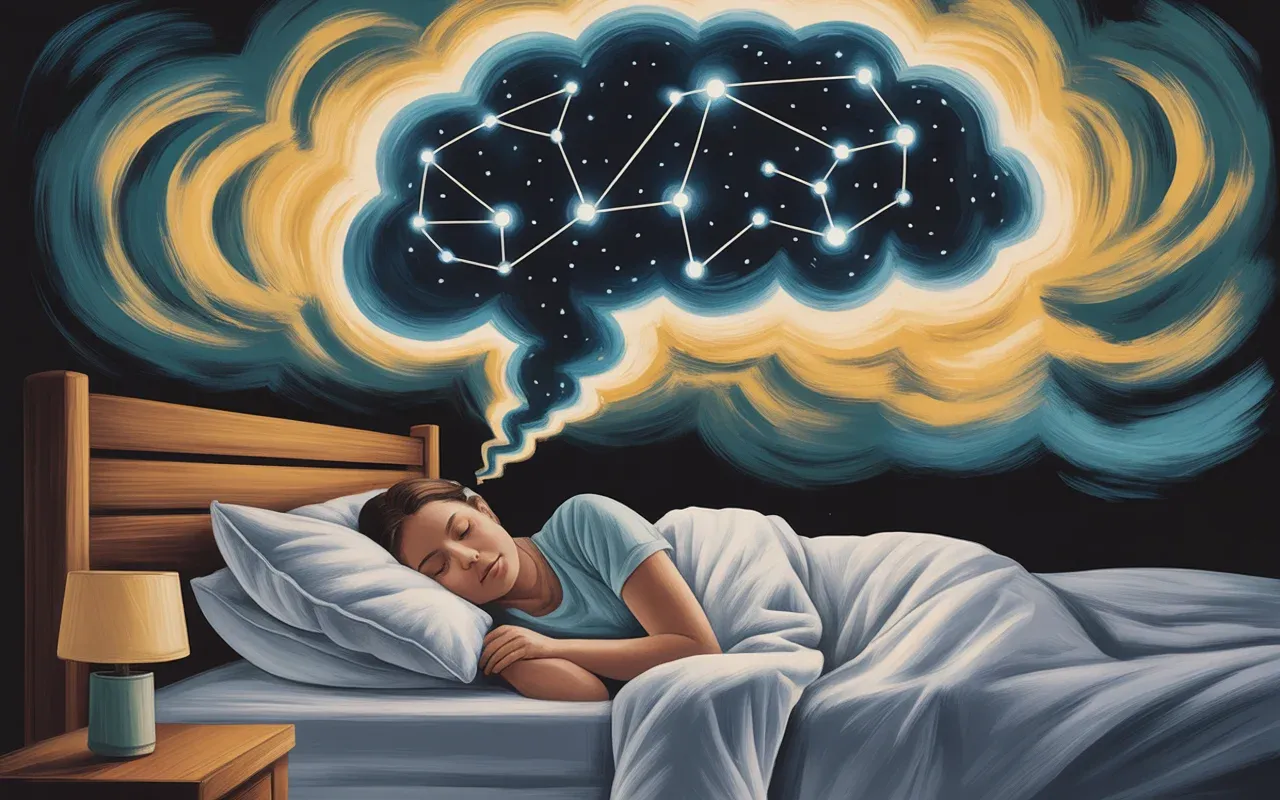
The field has accelerated significantly in the past decade:
- 2024 neuroscience review (PubMed, Nov 2024) — Updated the neural mechanisms of dreaming, confirming that dreaming is not limited to REM sleep; non-REM dreams are shorter but common, especially in N2 sleep.
- Lucid dreaming and mental health — A 2025 ScienceDirect review found promising links between trained lucid dreaming and reduced nightmare disorder, though clinical protocols are still being standardized.
- Predictive coding models — Emerging frameworks propose that the sleeping brain runs "offline simulations," testing predictive models of reality to improve waking performance.
- Two-way dreamer communication — The NSF-backed 2021 study has been replicated in multiple labs, suggesting that real-time dream research is now genuinely possible.
For more on the science of controlling your dreams, see our in-depth article on lucid dreaming.
Why Do Some People Remember Dreams and Others Don\'t?
Dream recall varies enormously between individuals. Key factors include:
- Wake timing — People who wake during or just after REM sleep remember 60–90% of dreams. Waking during non-REM sleep drops recall to 20–50%.
- Personality traits — Higher trait openness and creativity correlate with better dream recall.
- Sleep quality — Fragmented sleep ironically improves recall because it creates more REM interruptions.
- Alcohol and medication — Both suppress REM sleep, drastically reducing dreaming and recall.
Keeping a dream journal — writing down anything you remember the moment you wake — reliably improves recall within two to three weeks. For detailed guidance on dream recall and mechanisms, see the Sleep Foundation\'s guide to dreams.
Do Recurring Dreams Have Scientific Meaning?
Recurring dreams are well-documented in the literature. They tend to share a common structure: unresolved emotional themes, often tied to stress, trauma, or major life transitions. The continuity hypothesis predicts exactly this — if a waking concern remains unresolved, the brain keeps processing it during sleep.
Common recurring themes identified in large-sample studies include: being chased, being unprepared for an exam, teeth falling out, and falling. These appear across cultures and ages, suggesting they tap into universal stress responses rather than purely personal histories. For more on this, see our piece on falling in a dream and hitting the ground.
FAQ: Scientific Studies on Dreams
What is scientifically proven about dreams?
Dreams occur primarily during REM sleep. They involve high activity in the visual cortex and amygdala with reduced prefrontal oversight. Research confirms that dreaming aids memory consolidation, emotional regulation, and possibly threat rehearsal. The activation-synthesis hypothesis shows dreams can arise from random neural firing, though their emotional content clearly connects to waking concerns.
Do we really forget 90% of our dreams?
Not exactly. People who wake during REM sleep remember dreams 60–90% of the time. Waking during non-REM sleep drops that to 20–50%. Most people experience 4–6 dream episodes per night; most are forgotten before full waking consciousness is reached. Consistent journaling significantly improves recall rates.
Why do we dream about the same things?
The continuity hypothesis — well-supported in the literature — shows that dream content mirrors waking concerns, relationships, and unresolved stress. Recurring dreams typically indicate an ongoing emotional issue the brain is still processing. Resolution of the underlying concern often ends the recurrence.
Can scientists read dreams?
Partially. UC Berkeley researchers reconstructed rough dream imagery from fMRI data using machine learning. The 2021 NSF-backed study demonstrated two-way communication with lucid dreamers during REM, with dreamers answering questions via eye movements. Full dream-reading remains out of reach, but real-time dream research is now possible.
What is oneirology?
Oneirology is the scientific study of dreams. It draws on neuroscience, psychology, and cognitive science to understand the mechanisms, content, and functions of dreaming. It is distinct from dream interpretation, which focuses on personal or symbolic meaning.
Are nightmares the same as regular dreams scientifically?
Nightmares occur in REM sleep like most dreams, but they activate the amygdala more intensely, producing fear responses strong enough to wake the sleeper. Nightmare disorder is now recognized clinically; emerging research into lucid dreaming training and image rehearsal therapy shows real treatment potential.
Does what you eat affect your dreams?
Some evidence supports this. Spicy foods and heavy meals close to bedtime can raise body temperature and disrupt sleep stages, producing more vivid or bizarre dreams. Alcohol suppresses REM sleep initially, then causes REM rebound — intense dreaming — in the second half of the night.
What is the activation-synthesis hypothesis?
Proposed by Hobson and McCarley in 1977, this theory holds that dreams result from the cortex\'s attempt to make narrative sense of random electrical signals generated in the brainstem during REM sleep. It doesn\'t mean dreams are meaningless — only that their origin may be neurological noise rather than deliberate subconscious messaging.
What the Science of Dreams Points To
After reviewing decades of research, the picture that emerges is both humbling and fascinating: dreams are not random static, but they\'re also not coded prophecy. They\'re your brain doing maintenance work — processing emotions, consolidating memories, running simulations — while you\'re offline. The fact that this work produces vivid, often deeply personal narratives is itself a remarkable window into how the mind organizes experience. The smartest approach is to take both dimensions seriously: what neuroscience tells us about mechanism, and what your own dream content tells you about what\'s unresolved in your waking life.
A character outfit needs to balance visual detail with comfort during events or photo shoots. The range of movement matters when the costume will be worn for several hours. When comparing size and included pieces, Rem cosplay costume for photo shoots(レム 撮影用コスプレ衣装) keeps the choice tied to the intended costume. The fabric and construction can then be considered for the planned setting. Comfort, movement and fabric care are as important as the visual design. The costume can be prepared in the order it will be put on.