Seeing a Tiger in a Dream: What It Means & Symbolizes

You wake from sleep with your heart still racing — a tiger locked eyes with you in the dark, and the intensity hasn't faded with the alarm. In my research into animal dream symbols, tiger dreams are among the most charged: they carry layers of meaning that span psychology, spirituality, and raw personal emotion. Seeing a tiger in a dream almost always signals something significant stirring beneath your conscious awareness.
Quick answer: Dreaming of a tiger typically signals personal power, suppressed instincts, or a confrontation with fear. The tiger represents the untamed parts of your psyche — strength you haven't fully claimed or a threat you've been avoiding in waking life.
What Does a Tiger Symbolize in Dreams?
Tigers carry a cross-cultural weight in dream symbolism. In Eastern traditions, the tiger is a guardian and a divine protector — strength that watches over rather than destroys. In Western psychology, it more often represents the shadow: that raw, instinctual power we keep caged behind social expectations. At their core, tiger symbols in dreams point to independence, willpower, primal instinct, and courage.
I've found that dreamers who report tiger encounters are often in periods of personal transition — standing at a threshold where they must choose between playing small and stepping into something demanding. The tiger shows up to ask: which are you going to do?
| Tiger Symbol | Common Meaning | Emotional Tone |
|---|---|---|
| Tiger watching you | Hidden power observing your choices | Alertness, respect |
| Tiger chasing you | Fleeing from confrontation or instinct | Anxiety, urgency |
| Tiger in a cage | Suppressed emotion or locked potential | Frustration, control |
| Friendly/tame tiger | Mastery of personal power | Confidence, calm |
| Tiger attacking | External threat or self-sabotage | Fear, aggression |
| Dead tiger | Loss of drive or overcoming a fear | Relief, grief |
What Is the Spiritual Meaning of Seeing a Tiger in a Dream?
Spiritually, seeing a tiger in a dream can be a representation of deep intuition and hidden aspects of the psyche demanding recognition. In Hindu tradition, the goddess Durga rides a tiger — symbolizing divine feminine power over chaos. In Chinese culture, the white tiger governs the west and rules over metal energy: precision, grief, and righteous strength.
A tiger appearing in your dream may be urging you to trust your instincts more fully. It could signify an awakening of primal awareness, a powerful protector arriving in your life, or a nudge to confront latent fears before they become obstacles you can't step around.
From a biblical lens, though tigers aren't named in scripture, the symbolism maps onto lions and beasts that represent both majesty and danger — forces that test and refine the dreamer's character.
How Do Freud and Jung Interpret Tiger Dreams?
The Freudian View: Repression and Raw Drive
From a Freudian standpoint, a tiger in a dream often mirrors repressed urges or primitive desires. The tiger's power is precisely what you can't let yourself express in waking life — anger kept polite, desire kept quiet, ambition kept modest. Your unconscious stages the tiger to show you what's being contained.
The Jungian View: Engaging the Shadow
Jung would identify the tiger as an archetypal Shadow figure — those disowned parts of the self that carry real energy. The pattern I keep seeing in dream journals is that people who fear their tiger often fear their own capacity for power or aggression. Engaging with the tiger in the dream (rather than running) is a Jungian invitation toward integration: claiming that energy rather than being ruled by it.
Energy Work and Intuition
In Reiki and energy healing frameworks, a tiger in a dream sometimes flags imbalances in the solar plexus chakra — the seat of personal power, confidence, and will. The dream is a diagnostic: your energy body pointing toward where attention is needed.
What Do Different Tiger Dream Scenarios Mean?
Standing Face-to-Face with a Tiger
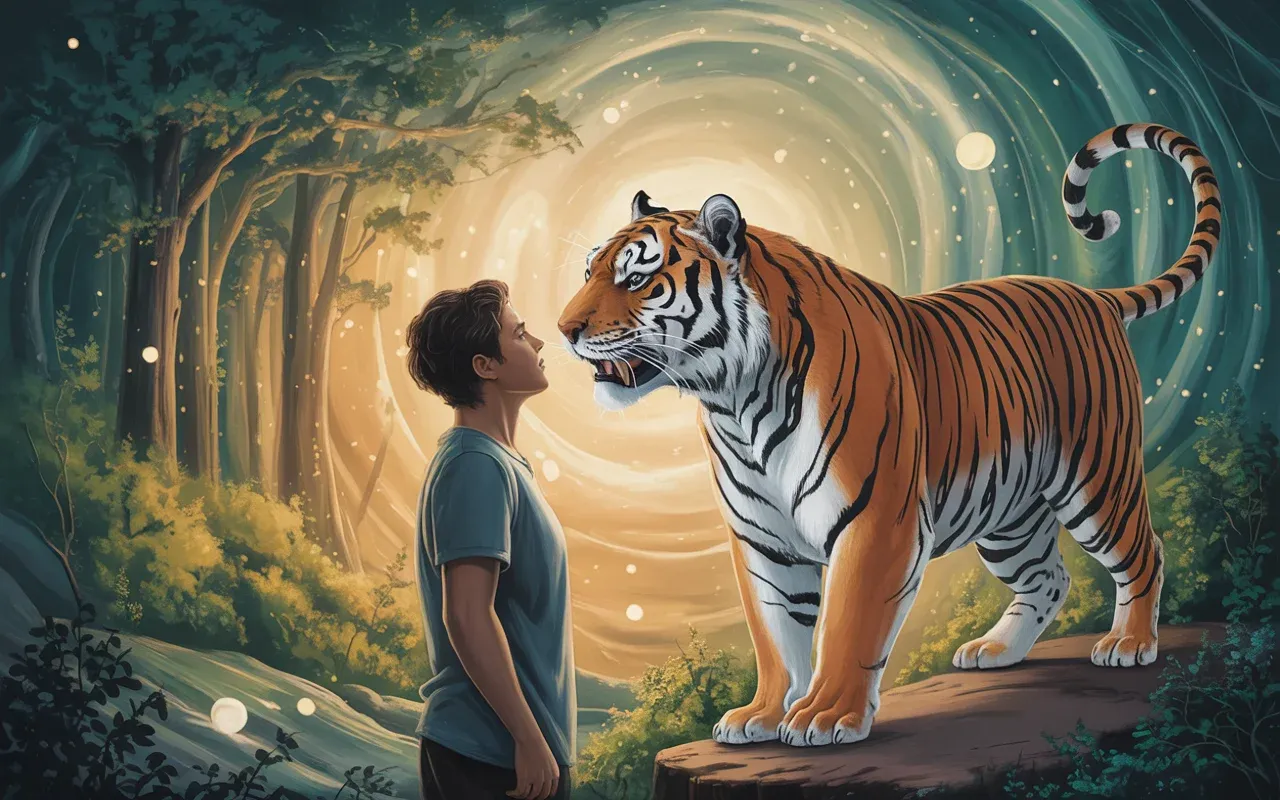
This is one of the most direct tiger scenarios. Standing face-to-face signals a confrontation with the primal or raw parts of yourself. In waking life, this often mirrors a moment where you're being called to own your power — whether in a relationship, a professional situation, or a long-avoided internal conflict. The tiger isn't attacking; it's waiting to see if you'll hold your ground.
Being Chased by a Tiger
Being pursued by a tiger points to internal fears or pressures that feel overwhelming. The chase is a clue that you've been avoiding something — a conversation, a decision, an emotion — and it's catching up. The strategy you've been using to outrun it isn't working.
Tiger in a Cage
A caged tiger suggests something powerful is being suppressed. This could be anger, ambition, desire, or creative energy that you've locked up for the sake of social acceptance. The cage feels safer, but the dream is asking whether the cost of that containment is worth it.
Watching a Tiger from a Distance
Seeing a tiger from afar indicates respectful awareness — you acknowledge this force without being overwhelmed by it. It suggests preparedness and a measured approach to challenges ahead. You know something powerful is at play; you're watching it carefully before acting.
A Friendly or Tame Tiger
A tame tiger that comes to you peacefully is a strong positive sign — you've made peace with your own strength. It can also represent a powerful ally arriving in your life or a period of confidence where your instincts and reason are working in harmony.
What Triggers Tiger Dreams?
Tiger dreams tend to cluster around specific life conditions. Stress and feeling overwhelmed are the most common triggers — the mind externalizes internal pressure as something with claws and teeth. Significant life transitions (career changes, relationship shifts, major decisions) often coincide with animal dreams of this intensity. Unresolved conflict, jealousy, or feelings of being threatened in waking relationships can also animate the tiger in your sleep.
Physiologically, disrupted sleep or vivid REM activity increases the likelihood of striking animal imagery. During deep REM sleep, the brain's fear-response pathways fire in ways that access primal survival imagery — and tigers sit high on the list of apex symbols.
If you're also dreaming of other animals, it may be worth reading about feeding animals in a dream, which often signals a nurturing relationship with your own instincts.
How to Work with Tiger Dreams
Rather than trying to stop tiger dreams, I'd encourage working with them. Keep a dream journal and note the tiger's behavior, your emotional state, and the setting — patterns over time reveal what your unconscious is processing. If the tiger is aggressive and recurring, that's a signal worth exploring with a therapist who works with somatic or depth approaches.
Mindfulness practices before sleep reduce stress reactivity, which can ease the intensity of threatening animal dreams. But don't be too eager to make them stop: the tiger often brings useful information.
For context on how animal symbolism works across broader spiritual frameworks, see our guide on spiritual meaning of a fox in a dream and the scorpion dream meaning — both explore how predator symbols function in the unconscious.
Tiger Dream Meaning Across Cultures
The meaning shifts noticeably depending on cultural lens:
- Chinese tradition: The tiger (especially white tiger) is a protective force and guardian of the west. A tiger dream can mean divine protection or a call to develop righteous strength.
- Hindu tradition: Associated with goddess Durga, the tiger symbolizes power over chaos and spiritual protection.
- Islamic dream interpretation: A tiger can represent a powerful enemy; riding a tame tiger suggests overcoming opposition.
- Indigenous traditions: Tigers as power animals signal a need to reclaim authority over one's own territory — physical or energetic.
- Western psychology: Focuses on the tiger as shadow archetype, representing what has been suppressed and needs integration.
For broader cultural context on how spiritual traditions approach dream symbols, our piece on dream symbolism in different religions covers the major frameworks in depth.
External research from the Centre of Excellence on tiger spiritual symbolism confirms the cross-cultural pattern: tigers consistently signal raw power, independence, and primal instinct across traditions.
FAQ: Tiger Dream Meaning
What does it mean to see a tiger in your dream?
Seeing a tiger in a dream typically signals personal power, suppressed instincts, or a need to confront fear. The tiger represents untamed energy — strength you haven't fully owned, or a situation requiring more courage than you've been showing.
What does it mean when a tiger chases you in a dream?
Being chased by a tiger points to avoidance — stress, fear, or a confrontation you've been putting off that is now pressing harder. The chase suggests it's time to stop running and face what's driving the anxiety.
What does a tiger attacking you in a dream mean?
A tiger attack can reflect feeling threatened by an external force, or a situation where your own suppressed power is turning destructive. It can also mirror real-life aggression from someone around you that your unconscious is processing at night.
What does a white tiger mean in a dream?
A white tiger is rare and carries amplified symbolism. In Chinese tradition it represents divine protection and purity. In psychological terms, a white tiger can signal a highly elevated form of personal power — refined and spiritually aligned rather than raw and uncontrolled.
What does a friendly tiger in a dream mean?
A calm or friendly tiger suggests you've developed a healthy relationship with your own power and instincts. It can also represent a powerful, protective presence entering your life, or a period of self-confidence where you feel capable of handling challenges without aggression.
What does a tiger in a cage represent in a dream?
A caged tiger points to something powerful being held back — often suppressed anger, ambition, or desire. The cage may feel safe, but the dream is questioning whether what you're containing deserves more freedom.
What does a dead tiger symbolize in a dream?
A dead tiger can signal overcoming a major fear or challenge — the threat has passed. It can also represent the loss of vital energy, drive, or personal power, suggesting a need to reconnect with your own strength and motivation.
What does it mean to ride a tiger in a dream?
Riding a tiger indicates mastery over powerful forces — you're not being overwhelmed by intensity, you're directing it. In Islamic dream tradition, riding a tame tiger means you'll overcome opposition or bring a powerful adversary under control.
Is there a biblical meaning to dreaming of a tiger?
Tigers aren't mentioned in the Bible directly, but the symbolism maps to lions and great beasts — divine tests of character and faith. Dreaming of a tiger through a biblical lens often suggests a trial requiring courage, or the presence of a spiritually powerful force testing your resolve.
Why do I keep dreaming about tigers?
Recurring tiger dreams indicate unresolved material — your unconscious keeps returning to the symbol because the underlying issue hasn't been addressed. Common causes include ongoing stress, suppressed emotions, or a major life situation you're avoiding. Journaling and, if needed, professional support can help move the pattern.
Final Thoughts
Tiger dreams are among the most potent in the animal dream lexicon. They don't appear randomly — they surface when something significant is stirring. Whether the tiger represents your own unacknowledged power, a confrontation you've been avoiding, or a protective force taking shape in your life, the most useful response is attention rather than alarm. Write it down. Sit with the feeling. The tiger is trying to tell you something worth hearing.