Seeing the World from an Animal\'s Perspective in a Dream: Through the Wild Lens of Dream Symbolism

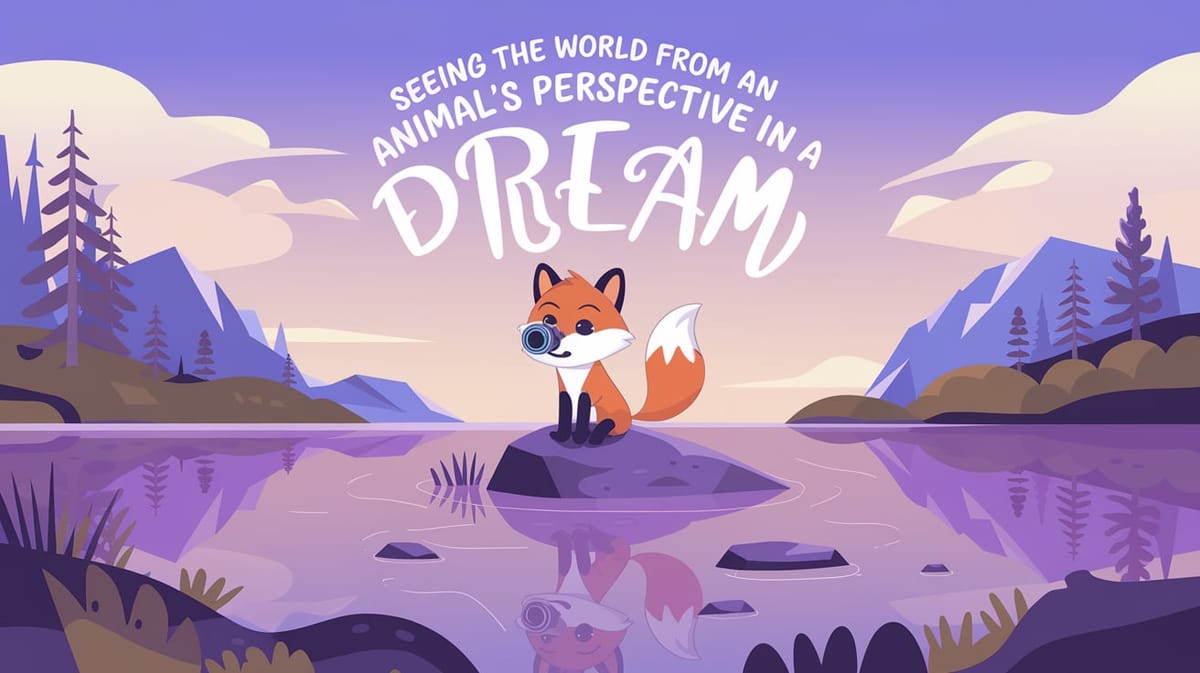
What happens when your sleeping mind slips into the body of a wolf, an eagle, or a deer — and you start perceiving the world through senses you\'ve never consciously used? I\'ve been tracking this dream type for years, and I find it one of the richest experiences the subconscious offers. These dreams aren\'t just strange — they\'re packed with symbolic intelligence about your instincts, your hidden traits, and the parts of yourself you rarely let run free.
Quick answer: Dreaming through an animal\'s eyes reflects your subconscious connecting with instinctual wisdom, primal qualities, or unexplored viewpoints. The specific animal shapes the meaning: an eagle signals perspective-seeking, a wolf suggests intuition, a rabbit points to vulnerability or quick thinking.
What Does It Spiritually Mean to See Through an Animal\'s Eyes?
Symbolically, this dream type points to the untamed, pre-rational parts of yourself — the instincts and natural attributes that civilization trains you to suppress. In my research, the animal\'s identity always matters. A lion perspective carries themes of power and leadership. A deer brings awareness, sensitivity, and the capacity to sense danger. An eagle gifts you breadth of vision — literally and figuratively.
Spiritually, many indigenous traditions identify with this experience directly. Shamanic practices deliberately sought animal consciousness as a path to natural wisdom and totem guidance. If you experience this dream, your subconscious may be asking you to reconnect with an animal\'s elemental quality you need right now.
According to Psychology Today\'s analysis of animal dreams, Jungian analyst Barbara Hannah noted that "animals almost invariably represent instincts when we meet them in dreams." That instinctual energy, bottled up by waking-life self-control, surfaces here as perspective — you don\'t just see an animal; you are one.
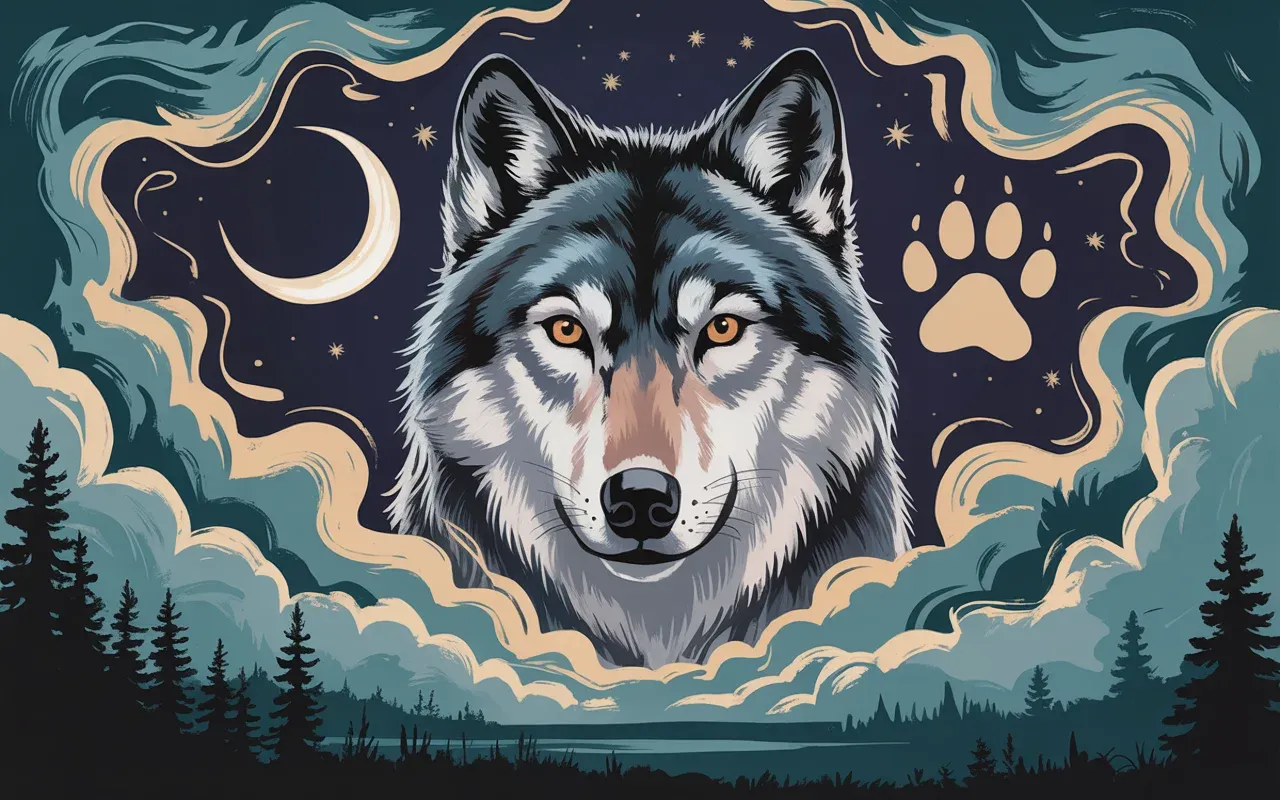
What Do Different Animal-Perspective Dream Scenarios Actually Mean?
The emotional tone and the specific animal together form the true message. Here\'s what the pattern I keep seeing in these dreams suggests:
\n
| Animal | Key Qualities Suggested | Emotional Tone |
|---|---|---|
| Wolf | Intuition, pack loyalty, territorial instinct | Often powerful or protective |
| Eagle / Hawk | Broad perspective, clarity, freedom | Expansive, liberated |
| Deer | Vulnerability, gentle awareness, quick reflexes | Calm, sometimes anxious |
| Lion | Leadership, authority, raw strength | Confident, dominant |
| Rabbit | Fear-response speed, fertility, shyness | Nervous or playfully alert |
| Raven / Crow | Intelligence, cunning, threshold-crossing | Mysterious, unsettling |
\n
Feeling scared while inhabiting an animal: This often signals anxiety about your own instincts — a fear of what happens if you let your primal side take the wheel. In waking life, this tends to appear when you\'ve been suppressing anger, desire, or self-protectiveness for too long.
Feeling joy and freedom: Contentment in this dream type suggests you\'re in natural alignment with some core trait. You may be accepting something about yourself you\'ve previously judged as "too much" or "too raw."
Being attacked while inside the animal\'s body: This can symbolize external threats to your instinctual self — social pressure, relationship dynamics, or situations that are forcing you to override your gut feelings.
Controlling the animal\'s actions deliberately: A strong signal of growing self-mastery — your conscious mind and instinctual nature are learning to cooperate rather than fight.
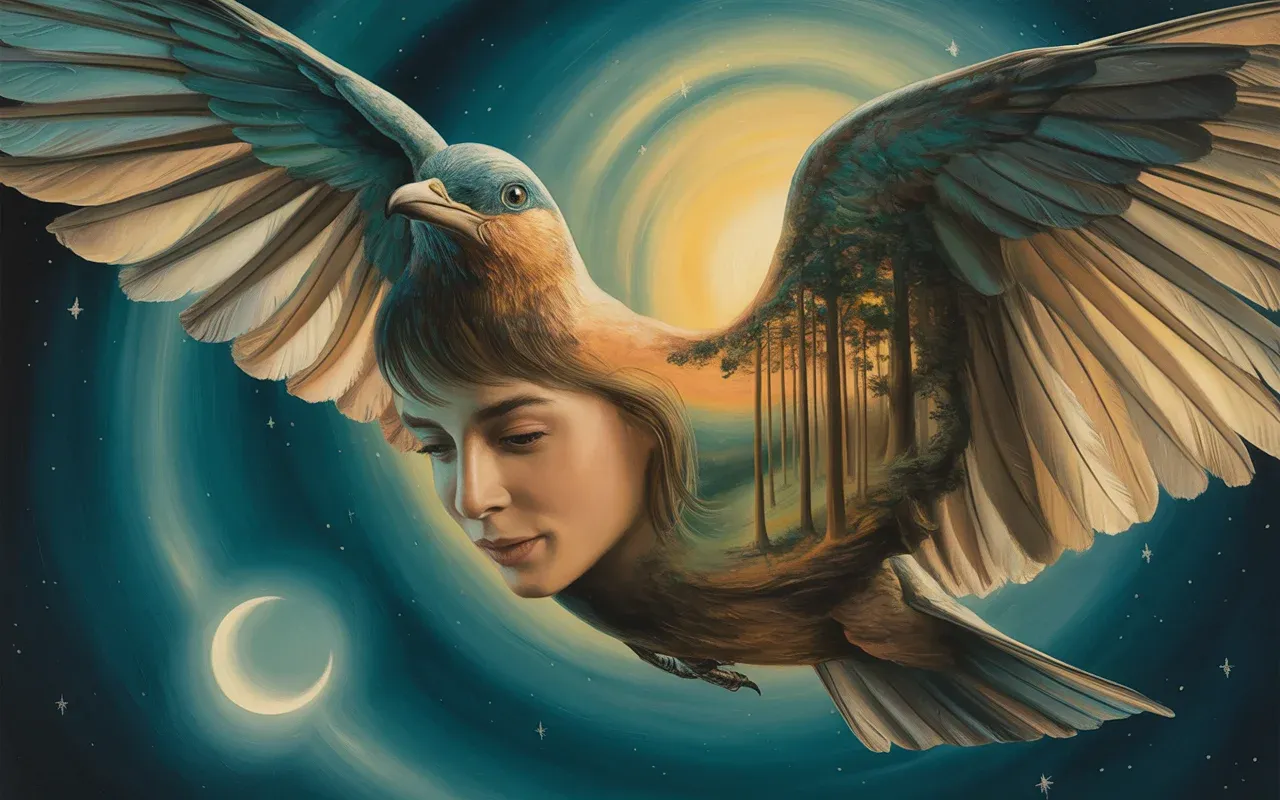
What Does Psychology Say About Dreaming Through an Animal\'s Perspective?
Freud read these dreams as expressions of the id — the primal, pleasure-seeking part of the psyche that exists before social conditioning. Seeing through an animal\'s eyes meant your raw drives were surfacing without the usual filters of ego or superego.
For Jung, this was richer territory. He saw animals in dreams as archetypal figures from the collective unconscious — representations of qualities that transcend individual biography. The animal isn\'t "you" in a literal sense; it\'s a symbol of a psychic energy that seeks integration. In my reading of his work, the animal-perspective dream is specifically about embodying that energy rather than just encountering it from outside — a deeper stage of integration.
Modern neuroscience adds another layer: the brain\'s limbic system — the emotional, instinctual core — is highly active during REM sleep. Animal-perspective dreams may be the brain rehearsing limbic responses in contexts where the prefrontal cortex (rational control) is offline. This isn\'t pathological — it\'s the brain doing emotional maintenance.
If you\'re curious about how animals appear more broadly in your dreams, explore our guide to the spiritual meaning of seeing an animal in a dream for foundational symbolism across species.
Why Do You Have This Dream? Common Causes and Triggers
These dreams don\'t appear randomly. The triggers I\'ve identified most often include:
- Suppressed instincts: When you\'ve been overriding gut feelings in a relationship or at work, your dreaming mind may construct an entire animal-perspective experience to remind you what instinct actually feels like.
- Totem or spirit animal work: Those actively engaged in shamanic or indigenous spiritual practices often report sharper and more frequent animal-perspective dreams.
- Life transitions: Moving cities, changing careers, ending relationships — moments where your "old self" feels shed like a skin often trigger dreams of inhabiting a new body.
- Nature exposure: Interestingly, hiking, wildlife encounters, or even documentaries watched before sleep can prime the visual cortex to generate animal-POV imagery.
- Empathy processing: People with high empathy sometimes dream this way as a way of simulating another creature\'s inner experience.
The wolf is one of the most potent animals to embody in a dream. If you dreamed specifically through wolf eyes, our post on what a wolf means in a dream goes deep on the symbolism of pack instinct and lunar intuition.
What Science Reveals About Animal-Perspective Dreams
Dream research at MIT\'s Picower Institute has demonstrated that animals themselves experience complex dream states — rats re-run maze memories during REM sleep with remarkable accuracy. This suggests that the neurological architecture of dreaming is ancient and cross-species. When humans dream through animal perspectives, they may be accessing that older, pre-linguistic layer of the brain.
Activation-Synthesis theory (Hobson & McCarley) proposes that the brain assembles narratives from random neural firings during sleep. But recurring animal-perspective dreams — especially consistent ones featuring the same animal — suggest something more selective than noise. The content isn\'t random; it\'s emotionally organised.
Watch: Animal Symbolism in Dreams
This short video from our channel explores bird dream symbolism — closely related to the freedom, perspective, and instinctual themes that dominate animal-perspective experiences:
How to Work With This Dream Instead of Just Waking From It
These dreams are data, not decoration. Here\'s how to actually use them:
- Write the animal down immediately. Before interpreting, just record which animal, what you sensed (smells, sounds, motion), and the emotional register. Detail fades within minutes of waking.
- Research the animal\'s actual behaviors. What does a wolf hunt? How does an eagle scan territory? The literal behavioral traits often map precisely onto what your psyche is processing.
- Ask what instinct you\'ve been suppressing. If the dream felt liberating, you\'re probably restricting something healthy. If it felt threatening, you may be in conflict with your own nature.
- Consider body-based practices. Yoga, dance, martial arts, or time outdoors can help integrate the instinctual energy these dreams are pointing at — without requiring further sleep analysis.
Animal communication dreams — where you actually exchange information with creatures — carry their own distinct symbolism. Our post on the spiritual meaning of communicating with animals in a dream explores that specific dimension.
What This Dream Is Telling You
Dreaming through an animal\'s eyes is your subconscious running an instinct audit. The animal chosen isn\'t arbitrary — your sleeping mind reached into the symbolic vocabulary of the collective unconscious and handed you exactly the creature whose qualities you need to examine, integrate, or express. Whether you woke feeling free, frightened, or fascinated, the dream is asking the same question: which parts of your natural self are you still keeping caged?
The answer is worth sitting with. These aren\'t throwaway images — they\'re among the most symbolically concentrated dreams the human psyche produces.
Frequently Asked Questions
What does it mean to dream of seeing through an animal\'s eyes?
It means your subconscious is connecting you with the instinctual qualities associated with that specific animal — whether power, intuition, sensitivity, or freedom. The experience often surfaces when those qualities are needed or suppressed in waking life.
Does the specific animal in the dream change the meaning?
Yes, significantly. An eagle perspective signals broad vision and freedom-seeking. A wolf suggests intuition and loyalty. A rabbit points to fear-response speed or vulnerability. A lion brings themes of leadership and raw authority. Always start interpretation with the animal\'s defining behavioral traits.
Why did I feel scared while inhabiting the animal?
Fear during an animal-perspective dream often reflects anxiety about your own instincts — worry about what happens when your rational self isn\'t in control. It can also signal that the animal\'s core qualities feel threatening or unfamiliar to your waking-life identity.
What does it mean if I could control the animal\'s actions in the dream?
Control within the dream suggests growing integration — your conscious self and your instinctual nature are aligning rather than conflicting. It\'s generally a positive sign of internal harmony and self-awareness.
Can this dream mean I want to escape human responsibilities?
Sometimes, yes. Inhabiting an animal\'s body in a dream can reflect a desire to return to simpler, pre-social instincts — to shed the weight of obligations, expectations, or self-imposed rules. This is worth examining honestly in your waking life.
What does it mean if the animal can\'t see or interact with me?
If you\'re in the animal\'s perspective but feel invisible or disconnected from other animals around you, this often reflects feelings of being overlooked or misunderstood — a sense that your instinctual or authentic self isn\'t being perceived by others.
Is it common to have this type of dream?
Less common than standard animal encounter dreams, but documented across cultures. Frequency rises during periods of significant personal transition, when instinctual self-expression is suppressed, or during active spiritual practice involving animal symbolism.
A cosplay costume should be assessed through sizing, construction and the pieces included in the set. Fastenings and detachable pieces can affect changing time and storage. For a closer costume review, Space Ereshkigal cosplay costume(スペースエレシュキガル コスプレ衣装) identifies the matching character outfit. Its measurements can be checked before accessories are added. Comfort, movement and fabric care are as important as the visual design. A simple checklist keeps the outfit complete and easier to manage.
What if I was hurt or attacked while inside the animal\'s body?
Being hurt in this context points to threats or conflicts around your instinctual nature — situations in waking life that are forcing you to act against your gut, suppress natural responses, or compromise fundamental aspects of who you are.
What does a recurring animal-perspective dream mean?
Recurring versions of this dream signal an unresolved tension between your instinctual self and your conscious choices. The same animal appearing repeatedly is your psyche prioritising a particular quality or energy that hasn\'t yet been acknowledged or integrated.