
The Spiritual Meaning of Mutual Spiritual Guidance and Interdependent Awakening in Dreams

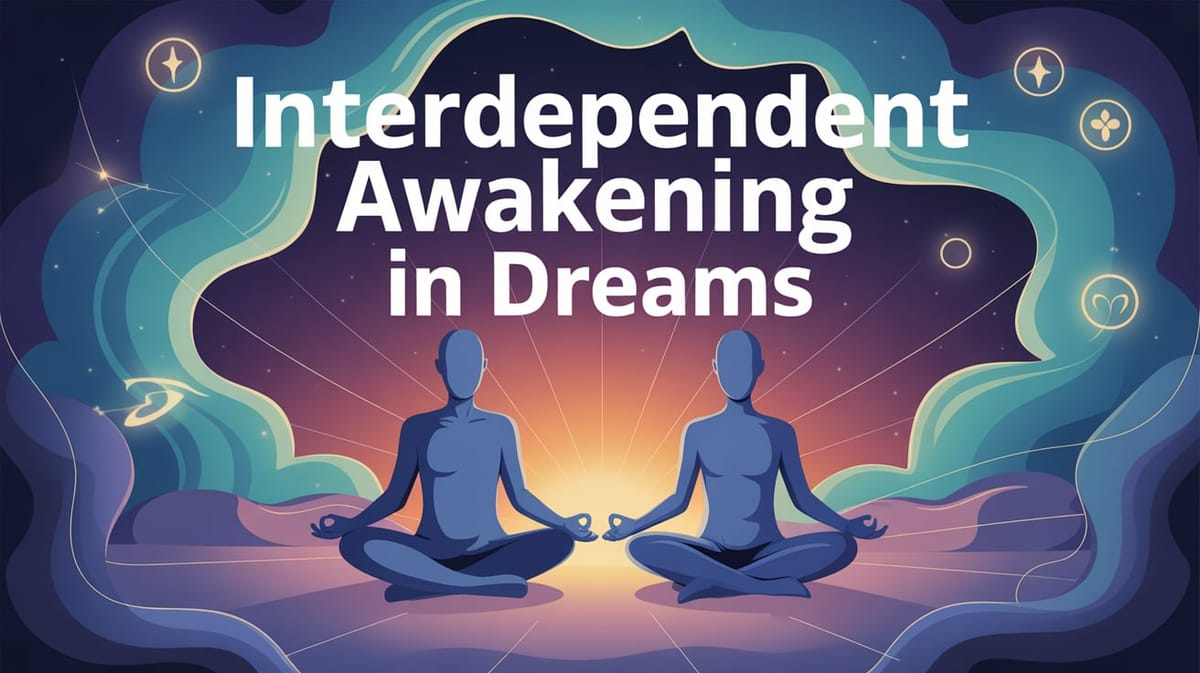
Quick answer: Dreams of mutual spiritual guidance — where you're both teacher and student at once — signal that your inner growth is tied to your connections with others. These dreams point to a phase where giving wisdom and receiving it happen simultaneously, reflecting the truth that awakening is a shared process.
Have you ever woken from a dream where you were guiding someone through a dark forest while they held a lantern lighting your path? I've spent years studying these particular dreams, and they remain some of the most striking experiences people report. In my research, they show up most often during turning points — career shifts, new relationships, grief, or spiritual practice deepening.
These aren't random brain noise. Dreams of mutual spiritual guidance tap into something cultures worldwide have named: the Buddhist Bodhisattva who learns through teaching, the African Ubuntu philosophy ("I am because we are"), and the Sufi idea that the student calls the teacher into being just as much as the reverse.
What Does It Mean to Be Both Teacher and Student in a Dream?
When you play both roles at once, your subconscious is processing a shift in how you relate to wisdom itself. You're moving past the idea that knowledge flows one way — from expert to novice — and into the reality that genuine understanding is a loop. The pattern I keep seeing in these dream reports is that the dreamer wakes up feeling humble and empowered at the same time, which is rare for any dream type.
From a Jungian standpoint, this dual role is an encounter with the Self archetype — the unified wholeness beyond individual ego. Carl Jung wrote that individuation (becoming fully yourself) always involves recognizing yourself in others. These dreams dramatize that recognition.

Why Do These Dreams Happen During Life Transitions?
Several triggers consistently show up in people who report mutual guidance dreams:
| Trigger | What It Signals | Dream Pattern |
|---|---|---|
| Spiritual awakening | Expanding consciousness, dissolving old boundaries | Exchanging light or energy with a figure |
| New mentoring role | Processing the responsibility of guiding others | Teaching while discovering new knowledge |
| Grief or loss | Seeking meaning and connection after separation | Receiving comfort while comforting a stranger |
| Relationship shifts | Renegotiating dynamics of support and growth | Walking side by side with a figure, alternating who leads |
| Creative breakthroughs | Understanding that success is interconnected | Building something together with a dream companion |
I've found that these dreams spike during the first year of any helping profession — therapy students, new teachers, hospice volunteers. The psyche is rehearsing a role where the line between helper and helped is thinner than expected.
What Are the Different Types of Mutual Guidance Dream Scenarios?
Each variation carries its own meaning:
Teaching through shared experience: You guide someone through a challenge you've already faced. This signals you're integrating past lessons and moving from personal healing into service. The dream confirms you've earned that knowledge — now pass it forward.
Learning while leading: You're the guide, yet you keep uncovering new insights mid-lesson. This reflects the alchemical nature of real teaching. Your brain is processing the fact that authority and curiosity aren't opposites — they feed each other.
Silent communication: Guidance happens without words, through touch, eye contact, or energy transfer. This suggests your capacity for intuitive connection is expanding. People who meditate regularly report this version more often.
Circular role-switching: You and another person trade the teacher/student role back and forth in a loop. This is the dream equivalent of an infinity symbol — endless reciprocity, endless growth.

What Does Psychology Say About These Dreams?
Freud would frame the dual role as ego and superego integration — your conscious desires learning to coexist with your moral compass. The mutual aspect represents resolving the tension between self-interest and altruism.
Jung offers the richer reading. The Self archetype, synchronicity, and the collective unconscious all converge here. When you guide and are guided simultaneously, you're experiencing individuation — the process where personal growth and collective healing overlap.
Transpersonal psychology treats these dreams as evidence of expanded consciousness, where individual boundaries soften and a wider awareness surfaces. Researchers call these "non-ordinary states" — the same territory accessed through deep meditation, breathwork, or psychedelic experience.
From an energy healing perspective, mutual guidance dreams often signal heart chakra opening. The balance of giving and receiving energy in the dream mirrors what sustainable healing work looks like in waking life.
What Does Neuroscience Tell Us About Mutual Guidance Dreams?
The brain doesn't produce these dreams randomly. The default mode network — active during rest and self-reflection — shows heightened activity during REM sleep, exactly when these dreams occur. This network handles both self-referential thinking and theory of mind (understanding what others feel), which explains why you can inhabit two perspectives at once.
Mirror neurons play a role too. These cells fire both when you perform an action and when you watch someone else do it. During mutual guidance dreams, mirror neuron pathways appear especially active, creating that vivid sensation of shared experience.
Theta brain waves — the same waves present in deep meditation — dominate REM sleep. This overlap may be why these dreams feel spiritually significant rather than just "weird." Your brain is in a state that blurs the line between inner wisdom and outer connection.
How Should You Respond to These Dreams?
These dreams aren't problems to solve — they're invitations. Here's how to work with them:
Journal the details immediately. Write down who appeared, what was exchanged, and how it felt. Pay attention to the quality of connection — was it warm? Electric? Calm? That emotional texture carries meaning.
Sit with it before analyzing. Spend five minutes in silence after waking. Let the dream settle before you start picking it apart. The insight often arrives after the analysis stops.
Look for real-world mirrors. Within a week of these dreams, many people encounter a teaching or mentoring opportunity in waking life. Stay open to it — your subconscious may have been preparing you.
Practice loving-kindness meditation. This specific meditation style — sending goodwill to yourself and others in turn — directly reinforces the reciprocal energy these dreams carry.
Find community. Join a study group, spiritual circle, or peer mentoring arrangement. These dreams often signal readiness for spaces where wisdom flows in multiple directions.
Get professional support if needed. If the dreams trigger intense emotion or spiritual upheaval, a therapist specializing in transpersonal psychology can help you integrate the experience safely.
Conclusion
Dreams of mutual spiritual guidance are your psyche telling you something specific: you've reached a stage where growth and service are the same act. The teacher in you needs the student; the student in you is the teacher. These aren't feel-good metaphors — they reflect what neuroscience, depth psychology, and contemplative traditions all confirm about how human consciousness actually works. If you're having these dreams, pay attention. They're marking a threshold. What you do with that knowledge — whether you journal it, share it, or simply let it change how you show up for people — is the real awakening these dreams are pointing toward.
Frequently Asked Questions
Do spirit guides come to you in dreams?
Many spiritual traditions say yes — that dreams are a primary channel for spirit guides, ancestors, or higher aspects of yourself to communicate. From a psychological perspective, these "guide" figures represent your own inner wisdom taking a form your conscious mind can interact with. Whether the source is external or internal, the guidance itself tends to be meaningful and worth examining.
Can soulmates communicate through dreams?
Reports of shared dreams between close partners are common across cultures. While science hasn't confirmed literal dream telepathy, research on emotional attunement between bonded individuals suggests that deep relational connection can produce strikingly similar dream content on the same night.
What are the signs of a spiritual awakening in dreams?
Key markers include: recurring dreams of flying or ascending, meeting wise figures, experiencing vivid light or colors, feeling simultaneously peaceful and alert, and — particularly relevant here — finding yourself in a teacher-student dynamic where roles keep shifting. Increased dream recall itself is often an early awakening sign.
Can two people dream about each other on the same night?
This happens more often than people expect. Studies on couples and close friends show correlated dream themes, especially during emotionally charged periods. The mechanism isn't clear — it may involve shared daily experience priming similar neural patterns during sleep, or something less easily explained.
What does it mean to dream about being led by someone?
Being led in a dream typically reflects trust, surrender, or a need for direction in waking life. If the guide feels benevolent, you may be ready to accept help or mentorship you've been resisting. If the guide feels threatening, the dream may be processing a fear of losing autonomy or following the wrong path.
Why do mutual guidance dreams feel more real than regular dreams?
The theta brain wave state during REM sleep mimics deep meditation, producing heightened emotional vividness and a sense of significance. Mutual guidance dreams also activate both self-referential and empathy networks simultaneously, creating a richer, more "layered" experience than standard dream content.
Should I change my spiritual practice after having these dreams?
These dreams often signal readiness for practices that emphasize connection — group meditation, spiritual direction, peer mentoring, or service-oriented traditions. You don't need to overhaul anything, but consider adding a relational element to what you already do. The dreams are pointing toward growth-through-others, not growth-in-isolation.
Are mutual guidance dreams a sign I should become a healer or therapist?
Not necessarily a career directive, but they do indicate a growing capacity for holding space for others while remaining open to your own learning. Many people who have these dreams are already in helping roles — parent, friend, colleague — without a formal title. The dream validates what you're already doing.
How can I have more of these dreams?
Set an intention before sleep: "I'm open to mutual learning tonight." Practice loving-kindness meditation during the day. Keep a dream journal to strengthen recall. And spend waking time in genuine exchanges where you both teach and learn — the dreaming mind follows what the waking mind values.