Spiritual Meaning of Being Chased in a Dream: Unveil Hidden Messages

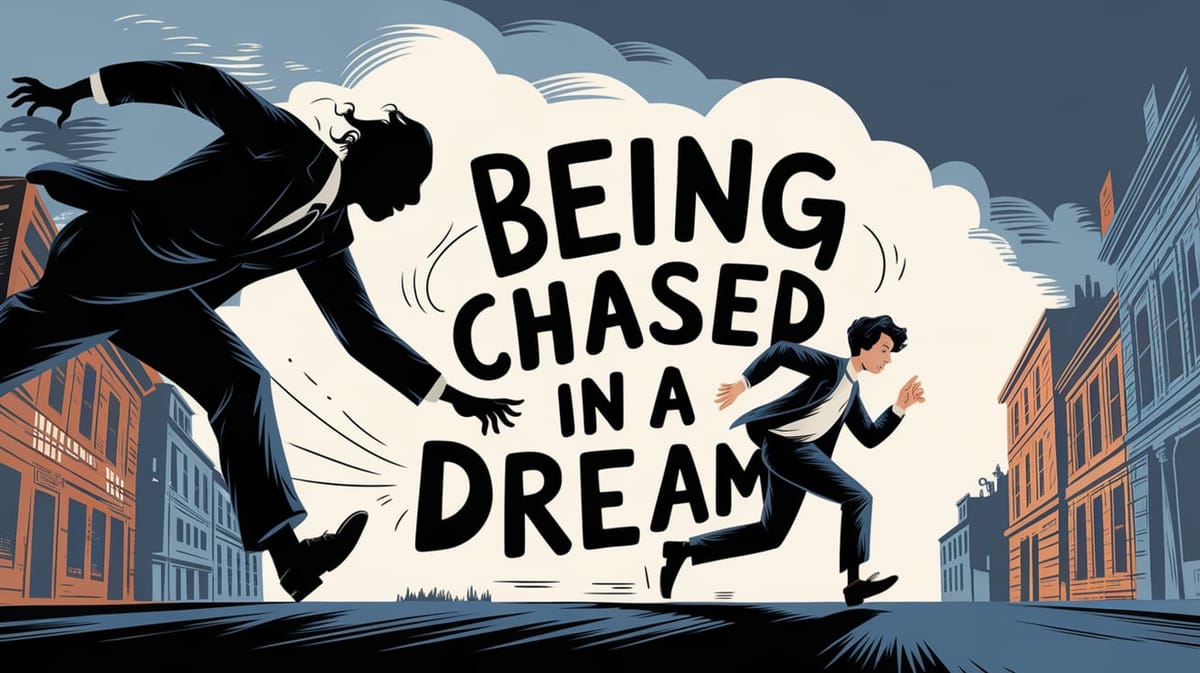
Quick answer: Being chased in a dream typically signals unresolved anxiety, avoidance, or a confrontation your waking self keeps postponing. Spiritually, the pursuer often represents your shadow self — the suppressed fears or emotions calling for acknowledgment and integration.
You bolt down an endless corridor, legs heavy, breath ragged — and you wake up with your heart hammering. Dreams of being chased rank among the most commonly reported dreams worldwide, and they carry a weight that lingers long after the alarm goes off. In my research across thousands of dream reports, the pattern I keep seeing is this: the pursuer is almost never a true external threat. It is the dreamer, chasing themselves.
These dreams stir fear precisely because they mirror something real. They tap into deep-seated tensions, unaddressed conflicts, and spiritual urgings that our waking minds would rather sidestep. Understanding what they mean — psychologically, spiritually, and scientifically — can transform a terrifying nightly experience into a genuine tool for self-awareness.
What Does Being Chased in a Dream Mean Spiritually?
Spiritually, being chased in a dream signals a confrontation with something unresolved in your inner life. The pursuer is not a villain — it is a messenger. Across many spiritual traditions, this archetype surfaces when the soul is urging growth that the conscious mind keeps resisting.
The pursuit symbolism runs deep:
- Shadow integration: In Jungian terms, the pursuer embodies your shadow — the qualities you deny, suppress, or find shameful. The chase is your psyche demanding you turn and acknowledge them.
- Karmic urgency: Some spiritual frameworks interpret the chase as a reminder of unfinished karmic business or a life lesson you have been avoiding.
- Awakening call: Spiritual teachers in traditions from Sufism to Eckhart Tolle\'s frameworks describe chase dreams as a push toward presence — the pursuer catches you only when you stop running and face the moment.
- Suppressed intuition: Repeated chase dreams often appear when your intuition has been ignored for too long. The dream amplifies the signal until you listen.

What Are the Different Being-Chased Dream Scenarios and What Do They Mean?
The identity of your pursuer and the circumstances of the chase reshape the meaning entirely. Here is a breakdown of the most common variations:
\n\n| Scenario | \nLikely Meaning | \n
|---|---|
| Chased by a known person | \nUnresolved conflict or tension with that individual; unexpressed feelings in the relationship | \n
| Chased by an unknown entity | \nGeneral anxiety or a fear you have not yet identified or named | \n
| Chased but unable to move | \nFeelings of powerlessness, being trapped, or paralysis in a waking-life situation | \n
| You turn and face the pursuer | \nGrowing courage; readiness to confront what has been avoided | \n
| Chased and you escape | \nA problem you feel capable of outrunning — though it likely needs addressing, not evading | \n
| Chased by an animal | \nPrimal fears or instincts that feel out of control; untamed emotional energy | \n
| Chased in a familiar place | \nThe source of anxiety is close to home — family, work, or a known relationship | \n
For a focused look at a specific variation, our guide on being chased by an unknown entity in a dream unpacks the symbolism of faceless or formless pursuers in depth.
What Do Psychologists Say About Dreams of Being Chased?
The psychological lens on chase dreams is remarkably consistent across frameworks. I\'ve found that even researchers who disagree on most aspects of dream theory converge here: chase dreams are avoidance dreams.
- Freudian view: Freud connected chase dreams to repressed desires or guilt — the unconscious dramatizes what the ego refuses to examine. The pursuer is the id, demanding expression.
- Jungian view: Jung framed the chase as an invitation to integrate the shadow self. The terrifying pursuer shrinks when you face it — and can even become an ally.
- Cognitive model: Modern cognitive researchers like Antti Revonsuo argue that dreams simulate threats so the waking mind can rehearse responses. Chase dreams are practice runs for confrontation.
- Energy healing (Reiki): Practitioners view the chase as a signal of blocked or stagnant energy — particularly in the root chakra, which governs safety and belonging.
What Causes Dreams About Being Chased?
Several real-world triggers reliably produce chase dreams:
- Chronic stress or anxiety: The most common trigger. When waking vigilance stays elevated, the sleeping brain keeps running threat simulations.
- Avoidance patterns: If you are consistently sidestepping a difficult conversation, decision, or situation, your subconscious will stage it as a chase.
- Significant life transitions: Job changes, relationship shifts, relocations — periods of uncertainty map naturally onto the pursued-but-unable-to-find-safety motif.
- Unresolved conflict: Lingering interpersonal friction tends to cast the other person as a pursuer in dreams.
- Trauma: Hyperarousal from unprocessed trauma keeps the nervous system primed for flight — and that state bleeds into REM sleep.
- Health anxiety: Fear about physical well-being frequently appears as threat-pursuit in dreams.

What Does Science Say About Why We Dream of Being Chased?
The neuroscience of chase dreams points to the brain\'s threat-processing systems:
- REM sleep and the amygdala: During REM — the stage where most vivid dreams occur — the amygdala (the brain\'s fear center) is highly active. It generates emotional scenarios that feel physically real.
- Fight-or-flight rehearsal: Evolutionary psychologists propose that chase dreams evolved as survival rehearsal. The brain runs worst-case scenarios so the body stays ready.
- Cortisol and stress hormones: High daytime cortisol disrupts REM architecture, producing more intense, emotionally charged dreams — including pursuit dreams.
- Sleep disturbances: Fragmented or shallow sleep pushes the brain into hyperactive REM states where threat simulations intensify.
Research published by sleep scientists at the Sleep Foundation confirms that anxiety disorders significantly increase the frequency and intensity of chase-type nightmares.
How to Stop Recurring Dreams About Being Chased
The most effective approach is not to suppress the dream — it is to address what the dream is pointing at:
- Dream journaling: Write down the dream immediately on waking. Note who or what was chasing you, the setting, and how you felt. Patterns emerge over time and point to specific waking triggers.
- Lucid dreaming practice: Training yourself to become aware within the dream lets you choose to stop running and face the pursuer. Many practitioners report the pursuer transforms into something harmless — or even helpful — once confronted.
- Stress reduction: Mindfulness meditation, breathwork, and progressive muscle relaxation lower nighttime cortisol and reduce the frequency of anxiety-driven dreams.
- Image rehearsal therapy (IRT): A clinically validated technique where you rewrite the dream script while awake, giving it a different, resolved ending. This has strong evidence for reducing nightmare frequency.
- Therapy: If dreams are affecting daily function, working with a therapist to identify and process the underlying avoidance or anxiety is the most direct route.
- Sleep hygiene: Consistent sleep and wake times, a cool dark room, and no screens in the hour before bed all support calmer REM cycles.
Interestingly, the sensation of running in chase dreams overlaps significantly with standalone running dreams — our guide on the spiritual meaning of running in a dream explores those additional layers.
The Biblical and Cultural Meaning of Being Chased in a Dream
Chase imagery appears across cultures and sacred texts in strikingly similar ways:
- Biblical tradition: Pursuit in scripture often represents divine accountability — Jonah fleeing God, or the psalmist writing "surely goodness and mercy shall follow me." Being chased can carry both a warning and a promise.
- Indigenous traditions: Many Native American dream traditions interpret the pursuer as an ancestor or spirit seeking communication, not harm.
- Hindu/Buddhist frameworks: The chase may symbolize karmic debt — something from a past cycle that requires resolution before forward movement is possible.
- Sufi mysticism: Rumi\'s poetry directly uses the metaphor of being chased by love itself — the pursuer as the divine, not the threatening.
If the shadow element resonates, you may also find meaning in dreams of being followed by a shadow figure, which shares the pursuit theme through a more archetypal lens.
What Does Turning and Facing the Pursuer Mean?
This is one of the most significant moments possible in a chase dream. When the dreamer stops running and turns to face whatever is pursuing them, the dream almost always shifts — the pursuer slows, changes form, or dissolves entirely.
Psychologically, this represents the moment avoidance ends. The threat, stripped of the power that running gave it, reveals itself as manageable — often as something the dreamer already knew they needed to face. Spiritually, it is the pivotal act of self-integration: accepting rather than fleeing the parts of yourself that feel frightening.
The related YouTube video below explores the running motif in depth:
Summary: What Your Chase Dream Is Really Telling You
Dreams of being chased are not random noise from a resting brain. They are the psyche\'s most insistent form of communication — a flare sent up by the parts of you that are tired of being ignored. The pursuer is almost always an aspect of yourself: a fear that needs naming, a conflict that needs resolving, or a truth that needs accepting.
The dreams do not stop when you run faster. They stop when you turn around. Whether that means journaling, therapy, meditation, or simply having the conversation you have been avoiding, the path forward runs through the thing you have been fleeing — not away from it.
FAQ: Dreams About Being Chased
What is the spiritual meaning of being chased in a dream?
Spiritually, being chased signals an unresolved inner conflict, suppressed emotion, or avoided truth that your psyche is urgently drawing attention to. The pursuer most often represents your shadow self — the parts you deny — calling for integration rather than flight.
Why do I keep having recurring dreams about being chased?
Recurring chase dreams indicate a persistent, unresolved issue in waking life. The dream repeats because the underlying trigger — chronic anxiety, an avoided conflict, or unprocessed fear — has not been addressed. Identifying and acting on the source is what ends the cycle.
What does it mean when I am being chased but cannot move?
Paralysis during a chase dream reflects feelings of powerlessness or being trapped in a waking-life situation. The body\'s natural REM atonia (muscle paralysis during sleep) sometimes bleeds into dream awareness, amplifying the sensation of being unable to escape.
Is being chased in a dream a bad omen?
Not in itself. Chase dreams are uncomfortable, but they function as internal warnings rather than external omens. They point to something in your own psychology that needs attention — treating them as information rather than prophecy is the more useful approach.
What does being chased by an unknown figure mean?
An unidentified pursuer typically represents a fear or anxiety that has not yet been named or consciously recognized. The vagueness of the threat mirrors the vagueness of the underlying worry — journaling can help identify what unnamed concern your mind is processing.
What does it mean if I escape my pursuer in the dream?
Escaping suggests you feel capable — on some level — of managing the threat. However, escape without resolution rarely ends the dream series. The issue tends to resurface until addressed rather than outrun.
What does turning to face the pursuer mean?
Facing your pursuer is a sign of psychological readiness to confront what you have been avoiding. In lucid dreaming practice, this moment often transforms the dream entirely — the pursuer changes form or the threat dissolves. Waking-life equivalent: having the difficult conversation or making the decision you have postponed.
Can chase dreams be caused by physical health issues?
Yes. Sleep apnea, restless leg syndrome, and high cortisol from illness can all increase nightmare frequency, including chase dreams. If the dreams are new and accompanied by other sleep disturbances, a medical evaluation is worth pursuing.
How do I use a chase dream for personal growth?
Write down every detail immediately on waking: who or what was chasing you, the setting, how you felt, whether you escaped. Then ask: what in my waking life does this map to? What have I been avoiding? The dream is already doing the work of identifying the issue — your job is to follow the thread it hands you.