Spiritual Meaning of Being Unable to Run or Move Quickly When in Danger in a Dream

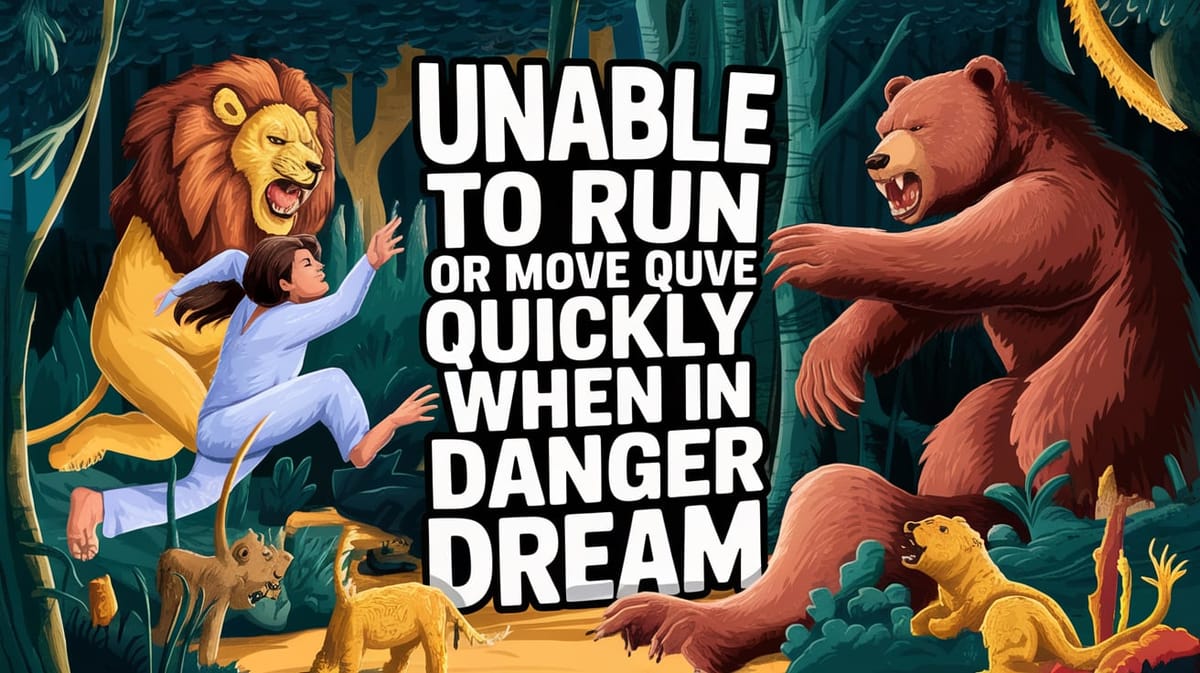
Quick answer: Dreaming you cannot run from danger reflects feelings of helplessness, anxiety, or being stuck in waking life. It is also explained by REM sleep atonia — your brain paralyzes your muscles during dreaming, creating that frustrating slow-motion sensation. It rarely signals a physical problem.
You are sprinting hard, lungs burning, legs pumping — but you are going nowhere. The threat is closing in and your body simply refuses to cooperate. I have spoken with hundreds of dreamers who describe this moment as the most terrifying thing their sleeping mind produces. In my research on recurring dream patterns, this scenario appears more consistently than almost any other. Let me walk you through exactly what it means.
What Does It Mean When You Cannot Run in a Dream?
This dream points directly to a place in your waking life where you feel powerless or stuck. The inability to move quickly when danger is near reflects an emotional reality — a situation where you want to act decisively but feel blocked, overwhelmed, or simply incapable of moving forward at the speed you need.
Spiritually, the dream is less a warning and more a prompt. Your subconscious is showing you where resistance lives in your life. The danger chasing you is not the enemy — the paralysis is. It represents the inner obstacles slowing your spiritual growth: unprocessed fear, self-doubt, unresolved conflict.
What Is the Spiritual Significance of Being Unable to Run from Danger?
Across spiritual traditions, movement represents agency and will. When you cannot run, the dream is asking a pointed question: where are you surrendering your power?
The scenario often coincides with periods of stagnation — a career plateau, a relationship reaching a breaking point, or a long-avoided decision that keeps resurfacing. Your higher self is using the most primal physical metaphor available: you cannot escape because you are not yet ready to face what is chasing you.
From an energy healing perspective, chronic dreams of this type are sometimes linked to blockages in the root chakra (survival, security, grounding) or the solar plexus (personal will and confidence).
What Do Psychologists Say About Not Being Able to Run in Dreams?
Psychology offers some of the clearest explanations for this dream experience:
\n\n| Framework | Interpretation |
|---|---|
| Freudian | Suppressed trauma or unprocessed emotional conflict the dreamer is avoiding |
| Jungian | The Shadow archetype surfacing — a denied aspect of personality causing inner "stuck" feeling |
| Cognitive | Stress-induced anxiety rehearsal; the brain processing unresolved threat scenarios |
| Somatic | REM atonia bleeding into dream narrative as physical frustration |
Jung would likely identify the pursuer as the Shadow — the part of you that contains everything you have rejected or denied about yourself. The inability to run is not weakness; it is your psyche insisting that you stop fleeing and turn to face it.
In my experience working through dream journals, people who have this dream repeatedly are often in a transition phase — something in their life needs a confrontation they keep postponing.
Why Do Your Legs Feel Heavy and Slow in Dreams?
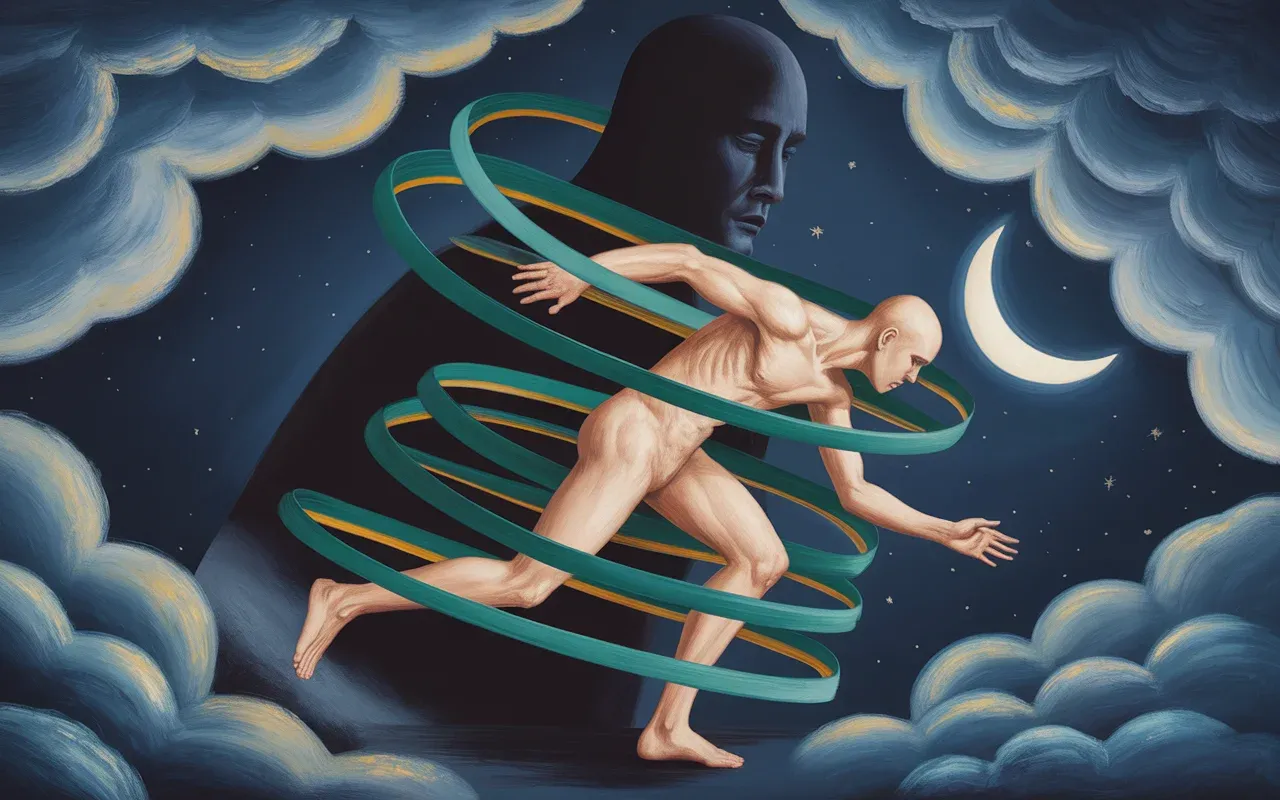
The most grounded scientific explanation is REM sleep atonia. During Rapid Eye Movement (REM) sleep, your brainstem sends signals that temporarily paralyze voluntary muscles. This is a protective mechanism that stops you from physically acting out your dreams.
When your dream scenario involves vigorous physical action — running, fighting, climbing — your motor cortex fires signals but your muscles receive a counter-signal blocking them. The result is the maddening sensation of legs that will not respond, punches that land with no force, and running that gets you nowhere.
This is normal physiology, not a disorder. It becomes clinically relevant only if you regularly wake up and find yourself physically acting out dreams (REM Sleep Behavior Disorder), which warrants medical evaluation. For most dreamers, the leaden legs are simply the brain processing emotion through the body\'s language.

What Do Different Scenarios of This Dream Mean?
The details of your dream shift its meaning considerably:
\n\n| Scenario | Likely Meaning |
|---|---|
| Chased by a human pursuer | Interpersonal conflict; someone or something in your life that you feel pressured or threatened by |
| Natural disaster chasing you | Feelings of insignificance against forces beyond your control |
| Monster or shadow figure | Jungian Shadow — an unacknowledged aspect of yourself demanding attention |
| Legs feel like concrete | Deep-rooted anxiety; root chakra imbalance, feeling ungrounded |
| Running through water or mud | Emotional overwhelm; being bogged down by feeling or circumstance |
| You eventually escape | Resilience signal; your subconscious trusts your ability to overcome |
What Real-Life Situations Trigger This Dream?
Certain waking-life conditions make this dream significantly more likely:
- Chronic stress or anxiety — the nervous system runs hot and finds release in dream scenarios
- Feeling trapped in a job or relationship — the dream mirrors the emotional paralysis
- Avoiding an important decision — procrastination has a way of becoming nightmares
- Recent trauma or unprocessed grief — the mind rehearses threat responses
- Perfectionism and fear of failure — the pressure to perform, even in sleep
If the dream appears during a specific period of your life, pay close attention to what feels unresolvable or avoided right now. The dream is a signal, not a sentence.
How Can You Stop Having This Dream?
Since the dream usually reflects a real situation, the most effective approach works on both levels — the psychological and the practical:
- Keep a dream journal — write the dream down immediately on waking, then look for emotional parallels in your daily life
- Identify the pursuer — ask yourself honestly: what am I avoiding right now?
- Practice lucid dreaming techniques — learning to become lucid in your dreams allows you to turn and face the threat, which often dissolves it
- Grounding practices — physical exercise, breathwork, and time in nature help regulate the nervous system that feeds anxious dreams
- Therapy — if the dream is recurring and linked to trauma, working with a therapist can help process the underlying cause
For those who experience sleep paralysis alongside this dream type, it is worth understanding the neurological overlap — both involve the body\'s movement-blocking system creating experiential distress. The two conditions are related but distinct.
Related Dream Experiences Worth Exploring
If this dream resonates with you, you may also find meaning in exploring what it means to be chased in a dream more broadly — the pursuer\'s identity often carries its own symbolic weight. Dreamers who experience movement restriction frequently also report recurring themes of entrapment, including maze dreams and locked-room scenarios.
For a broader framework on what running symbolizes in dreams, see the Sleep Foundation\'s overview of common dream themes, which situates chase dreams within the wider landscape of stress-processing during sleep.
Frequently Asked Questions
What is it called when you can\'t run in your dreams?
The phenomenon is most often called "dream paralysis" or "REM atonia." Scientifically, it results from the muscle inhibition signal sent by the brainstem during REM sleep, which prevents your body from acting out dream movements.
What does it mean when you dream about not being able to run away?
It typically reflects a waking-life situation where you feel stuck, threatened, or powerless. The dream is your subconscious processing anxiety about a threat — real or perceived — that you have not yet resolved.
What does a paralyzing dream mean spiritually?
Spiritually, a dream in which you are frozen or immobilized points to blocked energy, unacknowledged fear, or the need to stop fleeing and confront what is pursuing you. It is often a call to face your shadow rather than run from it.
Why are my legs so slow and heavy when I run in dreams?
Your muscles are physically inhibited during REM sleep. When the dream storyline demands vigorous movement, your motor cortex fires but the signals are blocked — creating the sensation of running through thick air or mud.
Why can\'t I run fast or punch hard in dreams?
Both experiences stem from the same mechanism: REM atonia. The brain suppresses voluntary muscle activity during dreaming. Efforts that require physical force — running, hitting, screaming — are all muted by the same neurological process.
Does dreaming I can\'t run mean I\'m a coward?
No. Dreams are symbolic, not literal character assessments. This dream reflects your emotional landscape — specifically, an area where you feel overwhelmed or uncertain — not your courage in waking life.
Can past trauma cause this dream?
Yes. Unprocessed trauma often manifests as recurring threat-response dreams. The nervous system rehearses survival scenarios as part of its attempt to process and integrate difficult experiences. If this is the case, trauma-informed therapy can be transformative.
Is it normal to feel panicked after waking from this dream?
Completely normal. The emotional content of the dream — danger, helplessness, urgency — carries over into waking consciousness for a few minutes. Deep breathing and grounding exercises help regulate the stress response quickly.
Should I be worried about physical health if I can\'t run in dreams?
For most people, no. The sensation is neurological and normal. However, if you regularly wake up having physically acted out your dreams, or you experience episodes of true sleep paralysis with hallucinations, consulting a sleep specialist is worthwhile.
What This Dream Is Really Telling You
Dreams where you cannot run from danger are among the most common and most instructive dream experiences. They are not random noise — they carry a consistent message: something in your waking life needs to be faced rather than fled. The paralysis is not a punishment; it is an invitation to stop and look at what is chasing you.
In my research, the dreamers who stop trying to outrun the threat — either by turning in the dream or by confronting the real-life source — almost always report that the dream stops recurring. Your subconscious does not need you to be faster. It needs you to be honest.