Spiritual Meaning of Elephant in a Dream: Symbolism & Significance

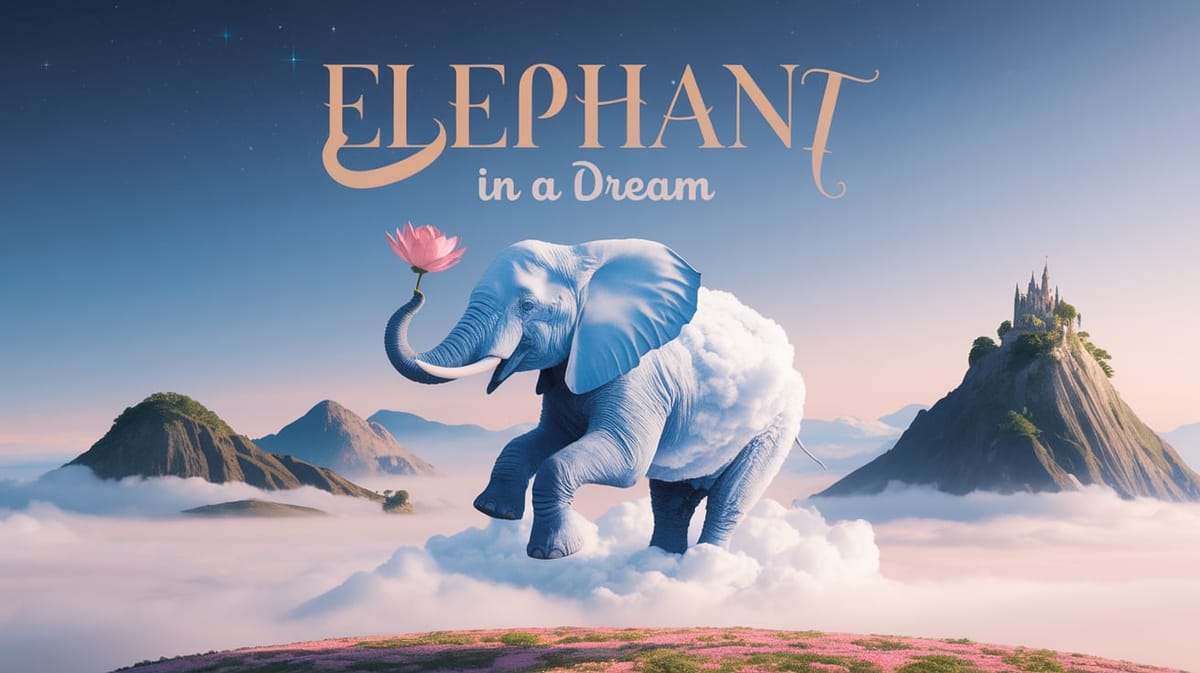
Quick answer: An elephant in a dream most often represents wisdom, strength, and long memory — your subconscious drawing on the animal\'s power to signal that you\'re facing a challenge requiring endurance, or that buried emotions and unresolved situations need your attention.
Few dream images stop us in our tracks quite like the elephant. When this enormous creature walks through our sleep, something in us pays attention. Throughout history, elephants have been revered across cultures as symbols of power, wisdom, and memory — and in dreams, their appearance rarely feels random. I\'ve tracked this symbol in hundreds of dream reports over the years, and the pattern I keep seeing is that elephants tend to arrive at turning points: when life demands more strength than we think we have, or when something long-ignored finally presses forward.
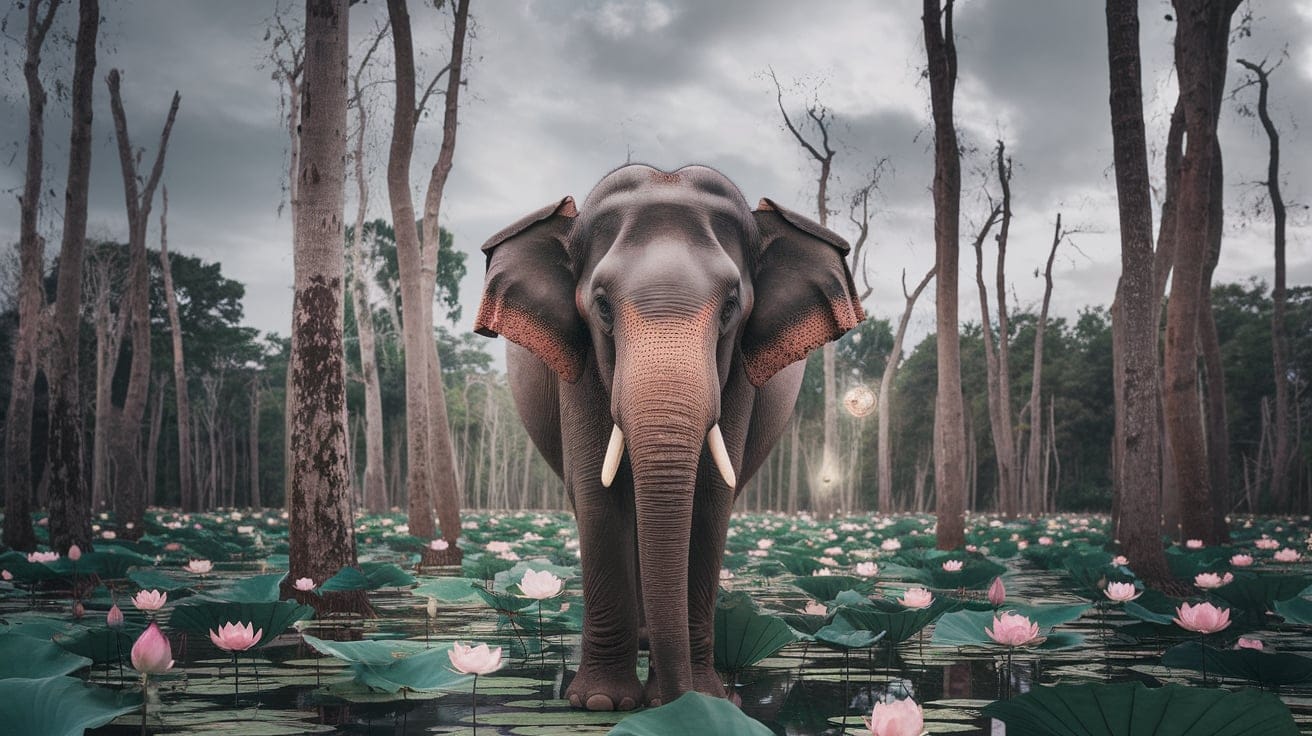
What does an elephant symbolize in a dream?
The elephant in dreams carries a dense symbolic load. Its most consistent meanings across cultures are wisdom, memory, loyalty, and immovable strength. In Hindu tradition, the elephant-headed Lord Ganesha is the remover of obstacles — so dreaming of an elephant can be a direct signal that a barrier in your waking life is ready to be cleared. In African and Asian traditions, elephants are seen as family protectors and carriers of ancestral memory.
At a core level, the elephant in your dream may mirror one of three things: a challenge that requires patient endurance, an emotional memory you\'ve been storing but not processing, or the need to apply greater wisdom to a current decision.
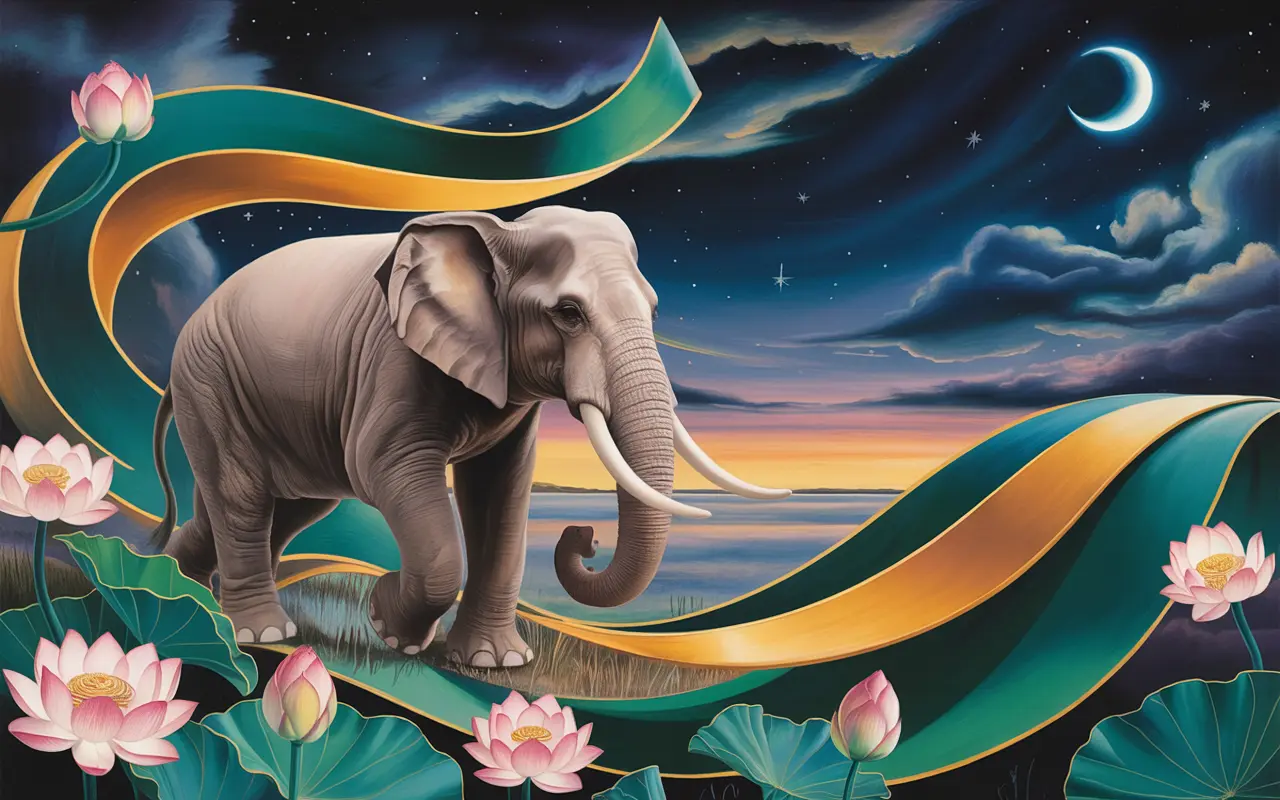
What do different elephant dream scenarios mean?
The context of the elephant matters enormously. Here is how the most common scenarios break down:
\n\n| Scenario | Core Meaning | What to Ask Yourself |
|---|---|---|
| Calm, peaceful elephant | Inner strength, stable support | Who or what is grounding you right now? |
| Charging or aggressive elephant | Unresolved conflict, suppressed anger | What challenge am I refusing to face? |
| Baby elephant | New growth, something tender needing care | What project or relationship is in its early stages? |
| Elephant in chains or captivity | Feeling trapped, constrained freedom | Where do I feel I lack autonomy? |
| Riding an elephant | Control, leadership, commanding a situation | Am I stepping into power — or forcing my way? |
| Elephant herd | Family, community, collective wisdom | Am I leaning on my support network, or isolating? |
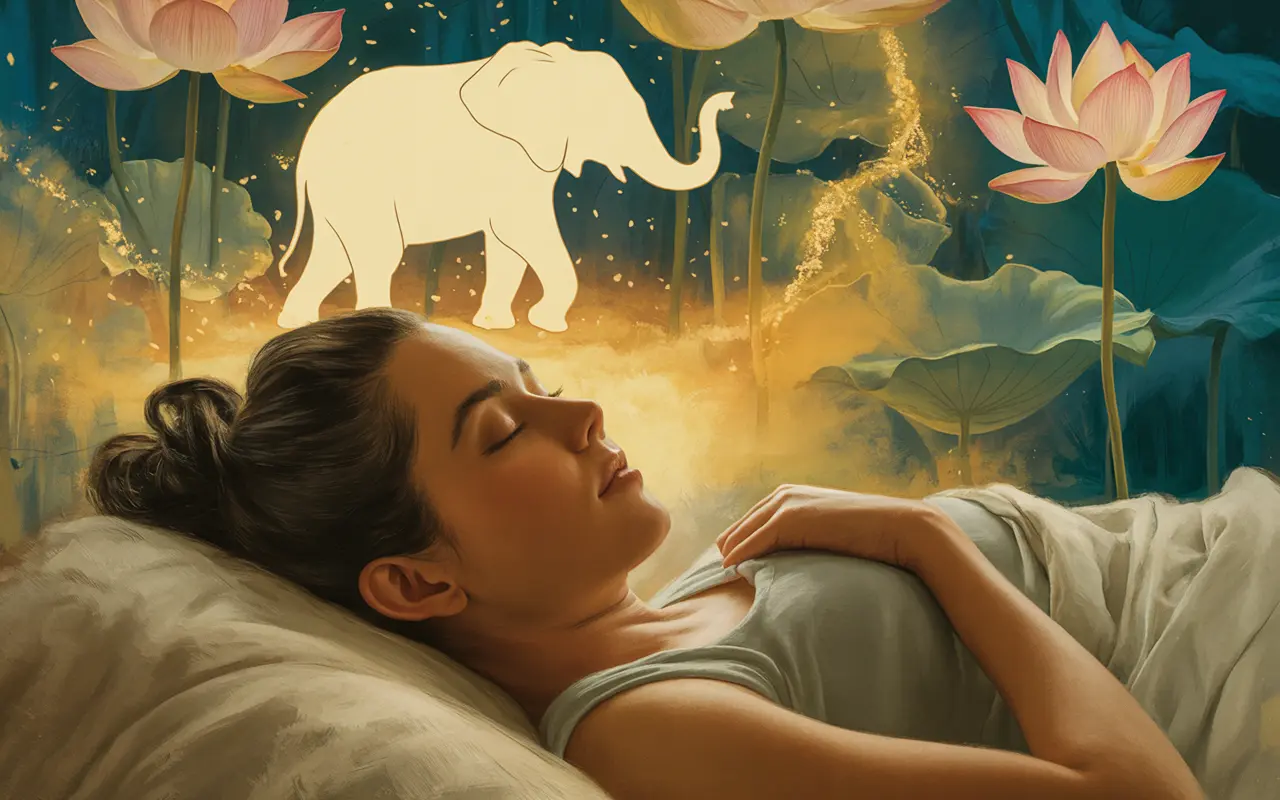
What do Freud and Jung say about elephant dreams?
Sigmund Freud would likely read the elephant\'s massive, imposing body as a symbol of something that has been repressed — a formidable unresolved issue from the past that the dreamer has been pointedly not thinking about. The phrase "the elephant in the room" isn\'t accidental: these dreams often arrive when something obvious is being avoided.
Carl Jung would take a different angle. For Jung, the elephant is an archetypal figure connected to the collective unconscious — a guide toward individuation. Its intelligence and memory make it a natural symbol of the Self pushing the ego toward wholeness. In my research into Jungian dream literature, I\'ve found that elephant dreams tend to intensify during periods when someone is close to a breakthrough but still resistant to it.
In energy-based models like Reiki, the elephant connects to the root chakra — the foundation of security and stability. A dream of a healthy elephant may indicate your energetic roots are strong; a wounded or constrained elephant could point to instability in your foundation.
What triggers elephant dreams?
- Major life transitions: Starting a new job, ending a relationship, or moving can activate the elephant symbol as the mind reaches for something solid and enduring.
- Accumulated stress: When burdens pile up, the subconscious may personify the weight as a massive animal — both the problem and its potential solution.
- Ignored intuitions: Elephants have extraordinary sensory awareness. If you\'ve been suppressing gut feelings or long-held memories, the elephant often surfaces as a prompt.
- Health concerns: Some dreamers report elephant dreams when physical wellness is declining — possibly the psyche invoking a healer archetype.
- Interpersonal avoidance: If you\'re circling an uncomfortable truth with someone close to you, the "elephant in the room" metaphor translates directly into dream imagery.
What is the biblical meaning of an elephant in a dream?
Elephants don\'t appear directly in the Bible, but biblical dream interpretation draws on their symbolic qualities through adjacent principles. In Christian dream traditions, large, powerful animals often represent forces either to be overcome or to be received as divine support. An elephant\'s renowned memory can connect to themes of covenant and faithfulness — God\'s enduring remembrance of his people. A threatening elephant might represent a formidable spiritual battle requiring divine strength rather than personal effort alone.
What is the spiritual meaning of a white elephant in a dream?
A white elephant in a dream carries heightened spiritual significance. White signals purity, rarity, and divine blessing in most spiritual traditions. In Buddhist belief, white elephants are sacred — associated with Siddhartha\'s conception and with royal spiritual power. Dreaming of a white elephant often points to an extraordinary opportunity arriving in your life, or to the emergence of rare spiritual wisdom. Take this dream seriously: something valuable but unusual is being offered.
What does it mean to dream of a dead or dying elephant?
A dead elephant in a dream is sobering but not necessarily negative. It most commonly signals the end of a long-standing power structure in your life — the conclusion of something that was once immovable. This might be the collapse of an old belief system, the end of a relationship that had defined your identity, or the release of a burden you\'ve been carrying for years. Grieve it if needed, but recognize: when something that large stops moving, it clears space for something new.
How do you work with an elephant dream after waking?
- Write it down immediately: The specific scenario — whether the elephant was calm, aggressive, captive, or free — holds the most important interpretive data. Capture every detail before it fades.
- Name the "elephant in the room": Ask yourself directly: what am I refusing to confront in my waking life right now? The answer is often immediate and uncomfortable.
- Sit with the emotion: Whether the dream left you feeling awe, fear, or calm, that emotional residue is information. Don\'t rush past it.
- Consider a grounding practice: Because elephant energy connects to the root chakra and foundational stability, grounding exercises — walking barefoot, breathwork, or spending time in nature — can help integrate the message.
- Seek support if the dream recurs: Recurring elephant dreams, especially distressing ones, may benefit from conversation with a therapist familiar with dream analysis.
Related animal dreams worth exploring
If elephants are appearing in your dreams, you may also find meaning in these related patterns: what a lion symbolizes in a dream (sovereignty and raw power), the broader spiritual meaning of seeing animals in dreams, and being chased by a giant animal in a dream — which shares the elephant\'s theme of facing something overwhelmingly large.
For a short visual overview, the channel\'s Elephant in a Dream breakdown covers the essentials in under two minutes.
FAQ: Elephant in a Dream
Is dreaming of an elephant good or bad?
Generally, elephant dreams are positive omens — they signal strength, wisdom, and endurance. The exception is a charging or wounded elephant, which points to unresolved conflict or suppressed emotion needing attention. Even then, the message is actionable rather than ominous.
What does it mean when an elephant chases you in a dream?
Being chased by an elephant typically reflects avoidance. Something large and important in your life — a difficult conversation, an unaddressed fear, an obligation — has reached a point where it can no longer be ignored. The size of the threat in the dream often corresponds to how long you\'ve been putting it off.
What does a baby elephant in a dream mean?
A baby elephant points to something new that requires careful tending. This might be a relationship in its early stages, a creative project just getting started, or a newly discovered personal quality that hasn\'t yet found its full expression. Treat it gently — it has significant potential.
What does it mean to see an elephant in a dream in Islam?
In Islamic dream interpretation, an elephant can represent a powerful authority figure, a king, or significant influence. Riding an elephant peacefully may indicate rising to a position of respect or leadership. A hostile elephant could signal confrontation with a powerful adversary.
What does riding an elephant in a dream mean?
Riding an elephant signals that you are directing great power — you\'re in a position of command over something formidable. If the ride feels smooth and confident, this reflects real-life mastery over a large challenge. If the elephant is unruly, it may suggest you\'re trying to control something that isn\'t yet fully cooperating.
What does it mean to dream of an elephant herd?
A herd of elephants emphasizes community, family bonds, and collective wisdom. These dreams often surface when someone needs to lean more heavily on their support network, or when family dynamics are shifting in significant ways.
Can elephant dreams be connected to past trauma or long-held memory?
Yes — and this connection is one of the most consistent findings in my research. Elephants are the quintessential memory animals; their appearance in dreams frequently coincides with the surfacing of long-buried emotional material. If the elephant in your dream seems ancient or weathered, the memory it represents may be particularly old.
Do elephant dreams have a scientific explanation?
From a neuroscience perspective, dreaming of elephants follows standard consolidation patterns: the sleeping brain processes unresolved emotional content and selects powerful symbols to represent it. The elephant\'s cultural weight — strength, memory, inescapability — makes it a highly available mental schema during emotionally loaded sleep. Sleep Foundation\'s overview of dream meaning research covers the current scientific consensus on why emotionally significant symbols dominate dream content.
What your elephant dream is really telling you
An elephant dream asks you to stop sidestepping something significant. Whether that\'s a long-unacknowledged emotion, a challenge that demands your full strength, or a truth you\'ve been tactfully avoiding — the elephant arrived because it\'s time. In my experience, people who sit with this dream honestly and ask "what am I not facing?" almost always know the answer within moments. The elephant didn\'t come to frighten you. It came because you\'re ready.