Spiritual Meaning of Finding Yourself in a House that Keeps Changing in a Dream

Quick answer: A house that keeps changing in a dream reflects your shifting sense of self, emotional fluctuations, or major life transitions. Each morphing room or moving wall is your subconscious mapping inner change — it rarely signals danger, but always invites self-examination.
Dreams of being inside a house that won\'t stop shifting are among the most emotionally charged experiences people report to me. The walls slide, corridors lead somewhere new, rooms multiply or vanish — and yet the dreamer rarely panics. In my research, this calm-within-chaos is itself a clue: the dream wants you to pay attention, not escape.
What Does a House Symbolize in Dreams?
In dream psychology, a house almost universally represents the self — your mind, identity, and emotional interior. Carl Jung described the house as a psychic map: the basement holds the unconscious, the upper floors hold aspirations, and the rooms in between hold the day-to-day workings of personality. When that house keeps changing, the map is being redrawn.
Spiritually, the changing house can signal a transformative phase in your inner life. Whether you\'re shedding old beliefs, growing into a new role, or integrating parts of yourself you\'d ignored, the morphing architecture externalizes that invisible process. I\'ve found that people who dream this way are usually in the middle of something significant — even if they don\'t consciously recognize it yet.
What Do Different Scenarios Mean in a Changing House Dream?
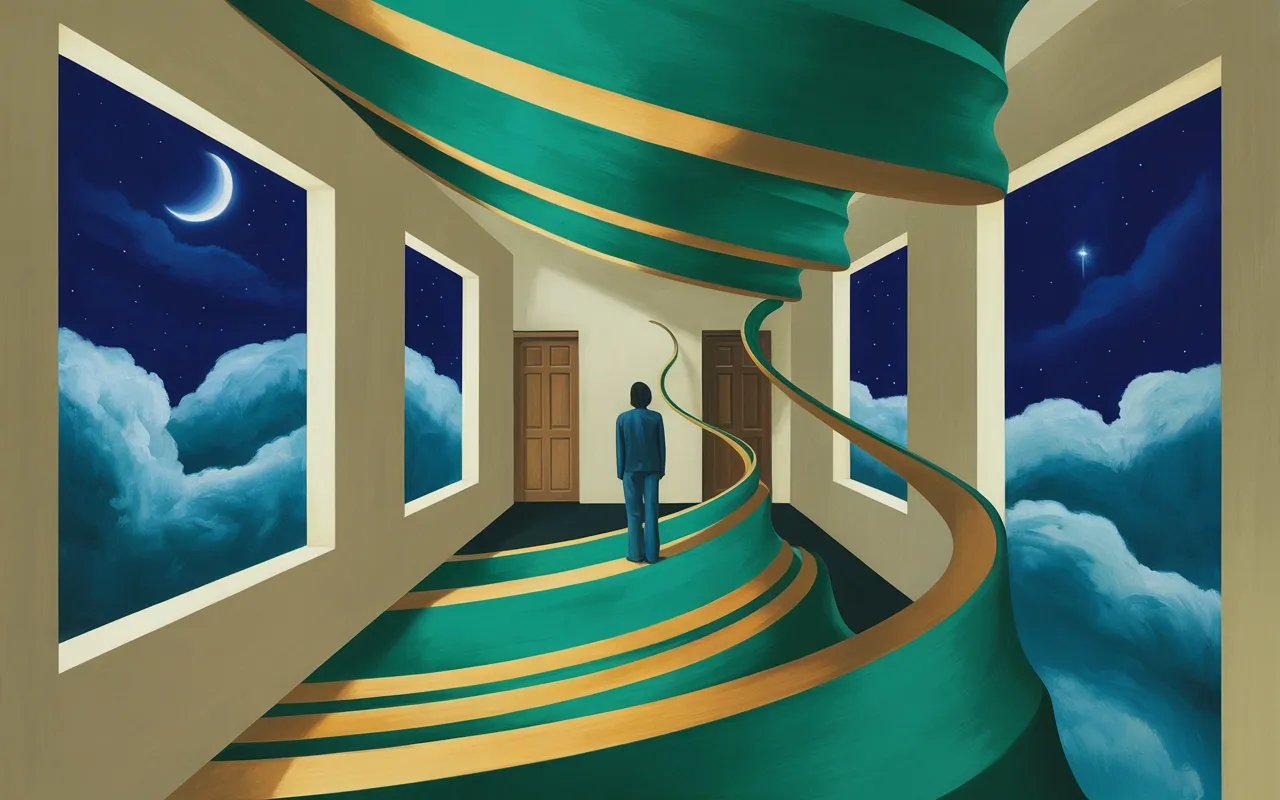
The specific way the house changes matters enormously. Here is a breakdown of common variations:
\n
| Dream Scenario | Likely Meaning |
|---|---|
| House grows larger, new rooms appear | Personal expansion, new capacities opening up |
| House shrinks or rooms close off | Feeling restricted, self-contraction, loss of access to parts of yourself |
| Labyrinthine corridors, you get lost | Confusion, too many choices, uncertainty about direction |
| Comfortable feeling throughout | Adaptability, acceptance of ongoing change |
| Anxiety or fear inside the house | Resistance to change, fear of losing familiar identity |
| Rooms rearranging while you watch | Active reorganization of priorities or perspectives |
\n
For people going through a physical move, a career change, or the end of a relationship, the scenario tends to mirror their emotional posture toward that change. The dream house is never abstract — it is personal.
What Are the Psychological Interpretations of a House That Keeps Changing?
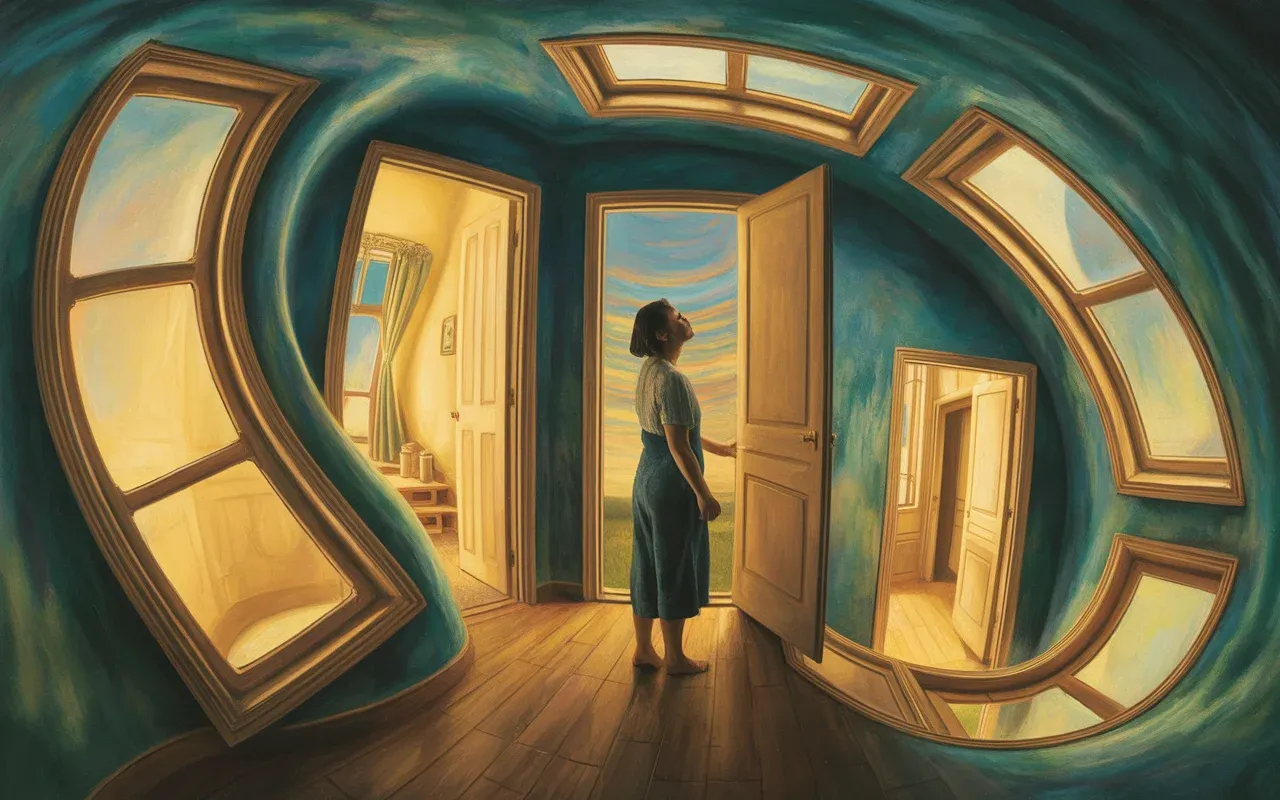
Freud read dreams of changing rooms as expressions of shifting psychosexual dynamics — the house a stand-in for the body or for family structure. Jung took a broader view: every room is a chamber of the psyche, and the dream\'s architecture is a live diagram of how the mind is currently organized. When the rooms move, the psyche is reorganizing.
Modern neuroscience adds another layer. Research published in Sleep Foundation\'s dream overview suggests dreams engage the brain\'s memory consolidation systems, particularly during REM sleep. A house that keeps changing may reflect the brain actively integrating new experiences, re-cataloguing memories, and revising its model of who you are. It is not confusion — it is construction.
Practitioners of energy healing sometimes associate this dream with shifts in the body\'s subtle energy — chakra states in flux, or a period of energetic realignment. Whether or not that framework resonates with you, the core message stays the same: something inside is being reorganized.
What Causes Dreams About a Shifting, Changing House?
In my experience working through dream reports, several life circumstances reliably trigger this dream:
- Major life transitions — new job, relocation, bereavement, divorce, parenthood
- Identity evolution — questioning who you are, entering a new life stage, shifting values
- Emotional volatility — a period of heightened feelings that don\'t yet have a name
- Active self-inquiry — therapy, meditation practice, or deliberate personal development
- Sleep stress — high cortisol levels before bed can intensify architectural dream imagery
People who are physically moving homes are especially prone to this dream, because their real-world container for selfhood is literally changing. The dream literalizes the metaphor.
What Does Science Say About Why We Dream of Morphing Spaces?
Dream researchers note that spatial inconsistency — rooms that shift, doors that lead nowhere, buildings that change floor plans — is actually one of the most common features of dreaming in general. The prefrontal cortex, which normally monitors logical consistency, is less active during REM sleep. This means the dream brain accepts architectural impossibilities without question.
What makes the changing-house dream significant is not the spatial weirdness itself, but the emotional charge attached to it. A shifting house that feels threatening points to anxiety about change. One that feels exciting points to openness and curiosity. The emotion, not the floor plan, is the message.
How to Respond When the Dream Feels Unsettling
Most changing-house dreams are neutral or mildly curious in tone. But when they tip into distress — a labyrinth you can\'t exit, a haunted house that keeps expanding — these strategies help:
- Keep a dream journal — record immediately on waking; track whether the emotion shifts over time
- Identify the real-life change — what transition is currently unsettled in your waking life?
- Practice grounding before sleep — body scans, progressive relaxation, or light breathwork reduce cortisol and soften architectural dream imagery
- Talk to a professional — recurring distressing dreams that interrupt sleep are worth exploring with a therapist
If you\'re curious about dreams that involve similar themes of identity and transformation, the dream of discovering a hidden room in your house is closely related — it tends to appear when you\'re ready to access a part of yourself you\'ve been avoiding. And if your dream house involves a maze-like quality, finding yourself in a maze with no exit carries a distinct but complementary meaning around feeling trapped in a decision. For the shadow side of transformation dreams, being followed by a shadow figure explores what happens when suppressed parts of the self demand attention.
Reflecting on What the Dream Is Telling You
The house that keeps changing is not a problem to solve — it is a picture of you in motion. Every shifting wall, every unexpected doorway, every room that wasn\'t there yesterday is the dream\'s way of showing you that identity is not static. You are always, in some sense, under renovation.
The question the dream leaves you with is this: Are you walking through the changes with curiosity, or bracing against them? How you feel inside the dream house tells you more about your relationship to change than the changes themselves. That answer — honest, specific, yours — is where the real interpretation begins.
For a visual take on what houses mean in dreams, this video from the channel covers the spiritual meaning of a burning house — a related dream that also uses house imagery to signal transformation: Spiritual Meaning of a Burning House in a Dream.
Frequently Asked Questions
Is it common to dream about a house that keeps changing?
Yes. Houses rank among the most universal dream symbols, and spatial shifting is one of the most reported features of dreaming. A morphing house specifically is common among people navigating major life transitions or periods of identity change.
What does it mean when you dream about changing rooms?
Rooms in a dream represent different aspects of your life, mind, or personality. When rooms change, those aspects are shifting — new priorities are forming, old ones are closing off, or your perspective on a situation is actively reorganizing.
What do rooms represent in dreams spiritually?
Spiritually, each room corresponds to a dimension of your inner world — emotional, intellectual, relational, or unconscious. Hidden rooms often signal undiscovered potential. Locked rooms point to suppressed memories or avoided feelings.
What does it mean when you dream about discovering more rooms in a house?
This is one of the more positive house dreams. New rooms typically represent new capacities, unexplored abilities, or parts of the self that are ready to be acknowledged. Many people report this dream at the start of a creative or spiritual growth period.
What does a recurring dream about a house mean?
Recurring house dreams indicate that the underlying theme — identity, self-concept, emotional security — hasn\'t been fully resolved or integrated. The repetition is the subconscious pressing the point until waking attention catches up.
What does it mean to dream of hidden rooms in your house?
Hidden rooms almost always point to undiscovered or suppressed parts of the self. They are rarely threatening — more often, finding them in the dream brings a sense of surprise and possibility, signaling readiness to explore something new.
What does a changing house dream mean biblically?
Biblical dream interpretation often reads the house as a symbol of one\'s spiritual state or family lineage. A changing house in this context can suggest spiritual transformation, a shift in one\'s covenant or calling, or a period of testing and refinement.
What does a changing house dream mean in Hindu tradition?
In Hindu dream lore, houses often represent the physical body and the soul\'s dwelling. A house in flux can signal karmic transition, movement between life stages (ashrama), or the soul\'s progression toward greater awareness.
A broad costume category can help organise choices for events, group shoots and themed projects. The available options can be reviewed without assuming that one costume fits every purpose. For a structured overview, Genshin Impact cosplay costumes(原神 コスプレ衣装) can be reviewed as the relevant series category. The category can support both individual and coordinated group planning. A useful comparison considers character identity, preparation time and the planned setting. Group projects may also require consistent colours and complementary silhouettes.
What does it mean if the rooms in the house keep rearranging?
Rearranging rooms suggest dynamic reorganization — your priorities, emotional states, or ways of relating to the world are actively re-sorting. This is often associated with a period of deliberate self-change, such as therapy, new relationships, or a significant decision.