Spiritual Meaning of Saving Someone in a Dream: Interpretations

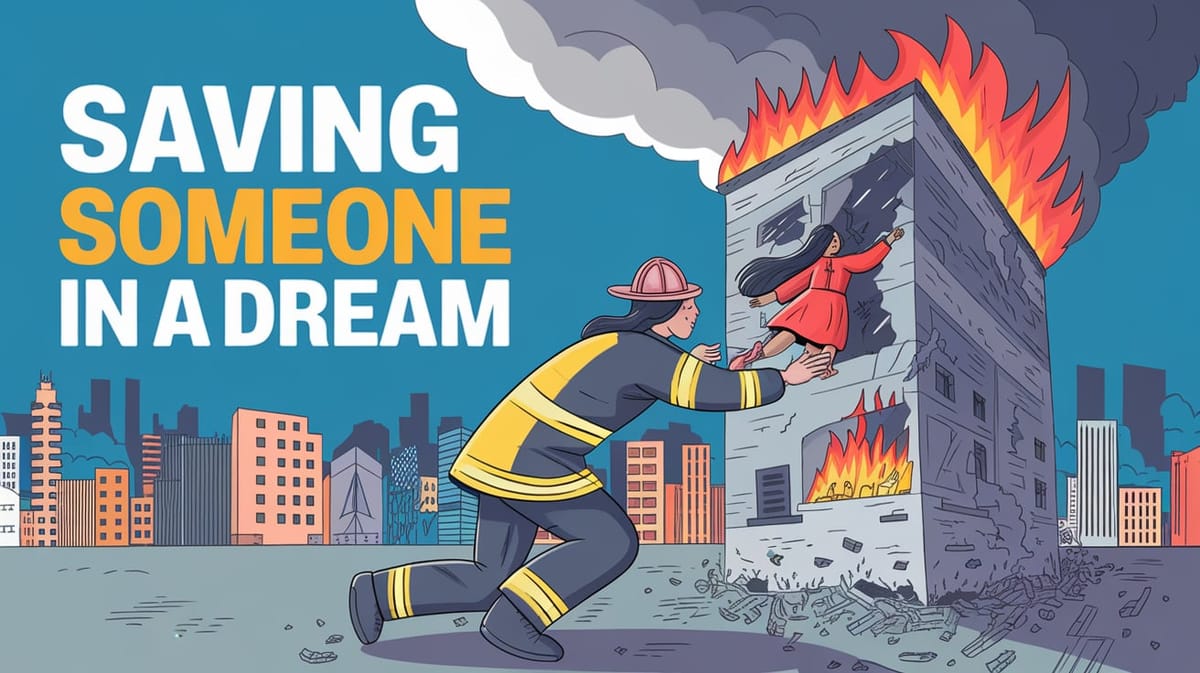
Quick answer: Dreaming about saving someone reflects your inner drive toward compassion, self-actualization, and moral responsibility. Spiritually, it signals alignment with your higher purpose. Psychologically, it often represents the "hero" archetype — your subconscious integrating courage and empathy into your waking identity.
I\'ve interpreted hundreds of rescue dreams over the years, and the one that comes up most often is this: you\'re running toward someone in danger, heart pounding, knowing everything depends on you. What does your dreaming mind actually want you to understand in that moment?
Dreams about saving someone tap into some of the most powerful emotional archetypes we carry — compassion, duty, transformation, and the fear of failing those we love. In my research, these dreams almost never mean what people first think. They\'re rarely literal warnings. They\'re almost always personal.
What does it mean to save someone in a dream?
When you save someone in a dream, it reflects a deep-seated impulse resonating with key human experiences — compassion, duty, and transformation. Dreams of rescue often symbolize a yearning for self-actualization, the manifestation of inner heroism, or the expression of a suppressed part of the self that seeks recognition and release.
Symbolically, saving someone can signify the need to confront and liberate aspects of one\'s psyche or life\'s challenges. Spiritually, such dreams can point to an awakening of the soul\'s journey toward enlightenment and integrity. They evoke themes of interconnectedness — that we are bound to others by shared moral duty and collective consciousness.
In a broader spiritual context, saving another in a dream may indicate you are beginning to align with your higher purpose, embodying an agent of positive change and extending empathy and wisdom to others in need.
What do different "saving someone" scenarios mean?
The specific shape of the rescue matters enormously. Here\'s how the most common scenarios break down:
\n
| Scenario | Core Meaning | Key Question to Ask Yourself |
|---|---|---|
| Saving a stranger | Emerging opportunity to make a meaningful impact | Where am I being called to show up in a new way? |
| Rescuing someone you know | Unresolved issues or concern in that relationship | Is this person struggling, or am I projecting? |
| Failing to save someone | Feelings of helplessness, guilt, or powerlessness | What past situation still needs resolution? |
| Heroic rescue under extreme danger | Inner resilience meeting real-life fear | What challenges am I facing that feel overwhelming? |
| Saving a child | Protecting your own inner child or innocence | What part of yourself needs nurturing right now? |
\n
Each scenario offers a different lens through which to examine your current life circumstances, interpersonal relationships, and personal growth.

What does psychology say about saving someone in a dream?
The act of saving someone in a dream can be examined through three distinct psychological lenses:
- Freudian view: From a Freudian standpoint, this dream might reveal repressed desires or unresolved conflicts. Saving someone you know may indicate a subconscious struggle to resolve deep-seated familial dynamics or relationship tensions.
- Jungian view: A Jungian reading considers the act of saving as an encounter with the hero archetype — representing the quest for individuation and self-realization. This dream reflects your journey toward wholeness, integrating conscious and unconscious layers of the psyche.
- Attachment theory: Modern psychology links rescue dreams to anxious attachment styles. People who worry about losing important relationships often dream of dramatic rescues — the dream enacts the fear so the waking mind can process it safely.
The pattern I keep seeing in people\'s dreams is that the "saved" person almost always represents a quality the dreamer admires or is afraid of losing — not literally the individual themselves.
For more on how conflict shapes our dream lives, see our guide to the spiritual meaning of being attacked in a dream — attack dreams and rescue dreams are often two sides of the same psychological coin.
What causes rescue dreams? Common triggers
- Stress and anxiety: Looming responsibilities or concerns for loved ones manifest as rescue scenarios in dreams, symbolizing the burden of real-life situations you feel responsible for.
- Significant life changes: During periods of transition — a new job, a move, a relationship shift — the mind uses rescue imagery to process the feeling of needing to keep things safe and stable.
- Unresolved conflicts: Unfinished emotional business, whether personal or professional, often provokes rescue dreams, urging you to address what remains unsettled.
- Caregiver roles: Parents, nurses, teachers, and anyone in a caretaking role dream about saving others far more frequently. The role activates rescue schemas that carry into sleep.
- Grief and loss: After losing someone, many dreamers report vivid rescue dreams — a natural way for the mind to replay scenarios where outcomes could be different.
Is there a biblical or spiritual meaning to saving someone in a dream?
Across faith traditions, the act of saving another is among the most sacred human gestures:
- Christian perspective: Saving dreams may reflect a calling toward service, echoing the scriptural theme that "greater love has no one than this: to lay down one\'s life for one\'s friends" (John 15:13). The dream may be a prompt toward charitable action in waking life.
- Islamic interpretation: In Islamic dream tradition, saving someone from drowning or fire often signals protection extended to both the dreamer and the saved — a spiritually favorable omen.
- Jungian / depth psychology spiritual view: The saved figure often represents the dreamer\'s own soul — the unconscious sending a message that a neglected aspect of the self needs rescue and integration.
If you\'re exploring the deeper spiritual dimensions of interpersonal dreams, our post on the spiritual meaning of fighting in a dream and winning covers related themes of inner conflict and resolution.
What does science say about why we have rescue dreams?
- Memory consolidation: During REM sleep, the brain processes emotionally charged memories. If you\'ve recently witnessed or heard about someone in danger, the dream is your brain filing and stress-testing that emotional information.
- Threat simulation theory: Evolutionary psychologist Antti Revonsuo argues that dreams exist partly to rehearse responses to threatening situations. Rescue dreams train your empathy and problem-solving under pressure.
- Neurotransmitter fluctuations: Changes in serotonin and dopamine during sleep can intensify emotional dream content, making already-significant feelings of responsibility feel urgent and vivid.
- Sleep disorders: Sleep apnea and other disruptions increase vivid, emotionally heightened dreams by interrupting the normal sleep cycle and amplifying the brain\'s stress response.
For broader context on how your brain generates dream narratives, the Sleep Foundation\'s guide to dreams is an excellent starting point backed by current sleep science research.
How should you respond to a dream about saving someone?
- Dream journaling: Write down who you saved, how the rescue unfolded, and your emotional state. Patterns across multiple dreams often point to specific waking-life concerns.
- Identify the saved person\'s symbolic role: Ask yourself what quality that person represents to you. Brave? Innocent? Vulnerable? That quality is likely what your psyche is drawing your attention toward.
- Check your relationships: If you\'re regularly dreaming about rescuing a specific person, consider whether that relationship carries unspoken tension or unmet needs.
- Explore your own inner child: Many rescue dreams — especially those involving saving children — are invitations to nurture neglected aspects of your own younger self.
- Mindfulness and stress reduction: High-stress periods amplify rescue dreams. Meditation, breathwork, and quality sleep hygiene can reduce their intensity while you work through the underlying triggers.
You may also find it useful to compare rescue dreams with dreams about escaping — both involve movement away from danger, but they carry meaningfully different emotional signatures.
FAQ: Saving Someone in a Dream
What does it mean spiritually when you save someone in a dream?
Spiritually, saving someone in a dream often signals an awakening toward your higher purpose — a call to embody compassion, extend your empathy, and align with a shared moral responsibility. Many spiritual traditions read it as a favorable sign indicating soul growth.
Does saving someone in a dream mean they are in danger in real life?
Not usually. Dream symbols are rarely literal. The "saved" person most often represents a quality you associate with them, or a part of yourself. However, if you have a strong intuitive feeling something is wrong, it\'s never a bad idea to check in with that person.
What does it mean to fail to save someone in a dream?
Failing to save someone typically reflects feelings of helplessness, guilt, or perceived inadequacy in waking life. It can be linked to situations where you felt powerless — at work, in a relationship, or during a loss. The dream is an invitation to examine where you may be carrying unnecessary guilt.
Is dreaming about saving a child different from saving an adult?
Yes. Saving a child in a dream often has a self-referential meaning — it points toward protecting your own inner child, your innocence, or your creativity. Saving an adult usually relates more directly to real interpersonal dynamics or the hero archetype seeking expression.
Why do I keep having dreams where I\'m trying to save someone?
Recurring rescue dreams almost always point to a persistent waking-life stressor — an ongoing responsibility, a relationship where you feel protective, or an unresolved conflict. The repetition signals your subconscious wants your conscious attention on something specific.
What does it mean to save someone from drowning in a dream?
Water in dreams often represents emotions or the unconscious. Saving someone from drowning suggests you (or someone you care about) may be feeling overwhelmed by emotions, and your dreaming mind is prompting a compassionate, stabilizing response.
What does it mean to save someone from a fire in a dream?
Fire represents transformation, passion, or destruction depending on context. Saving someone from fire suggests protecting a relationship or aspect of life from being consumed by intensity — whether anger, passion, or an overwhelming situation spiraling out of control.
What is the Jungian interpretation of saving someone in a dream?
In Jungian psychology, the act of saving is an encounter with the hero archetype — a core part of the psyche that drives individuation, the lifelong process of becoming fully yourself. The saved figure often represents the dreamer\'s shadow or anima/animus — parts of the self seeking integration.
Can a saving dream be a positive sign?
Absolutely. In most traditions and psychological frameworks, these dreams are encouraging. They reflect empathy, courage, and moral clarity. They often arrive at moments when you\'re actually stepping into a more responsible or compassionate role in your waking life.
What saving someone in a dream is really telling you
A dream about saving someone is rarely about the person you rescued. It\'s about the rescuer — you — and what your psyche is working through. In my experience, these dreams surface most powerfully during periods of transition, when your sense of responsibility and purpose is actively evolving.
A broad costume category can help organise choices for events, group shoots and themed projects. The final choice should reflect the intended character and event context. When comparing designs from the same work, Genshin Impact cosplay costume ideas(原神 コスプレ衣装の選び方) provides the matching reference point. The surrounding options may be assessed according to theme and intended use. The final decision can balance visual accuracy with practical event or photography needs. Accessories and styling can be considered after the main direction is clear.
The act of saving in a dream asks: Who or what do you value enough to risk yourself for? That answer, pulled up from the depths of sleep, often turns out to be more honest than anything you\'d say in daylight.
Write it down. Sit with it. Let it show you what your waking life might be quietly asking of you.