Spiritual Meaning of Seeing a Rabbit in a Dream

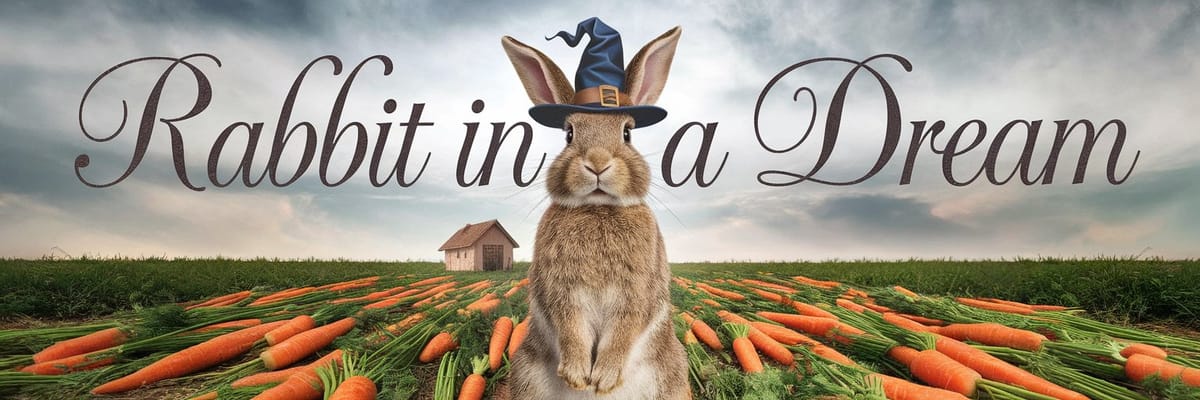
A rabbit shows up in your dream and you wake up wondering what it meant. You\'re not alone. Rabbits are one of the most frequently reported animal symbols in dreams, appearing across cultures for thousands of years — from ancient Egyptian fertility cults to modern Jungian dream analysis.
Quick answer: Seeing a rabbit in a dream most often signals luck, fertility, and new beginnings. The rabbit symbolizes abundance and renewal in most cultural traditions, though its specific meaning shifts based on the rabbit\'s color, behavior, and your emotional state during the dream. A calm white rabbit usually points to positive change; a fleeing or dark rabbit may signal avoidance or hidden fears.
What does a rabbit symbolize in dreams spiritually?
Spiritually, a rabbit in a dream represents fertility, prosperity, and intuition. Most dream traditions read it as a positive omen — a sign that growth is coming, either in your finances, relationships, or creative life.
The rabbit carries four core symbolic meanings across traditions:
- Fertility and abundance — Rabbits reproduce rapidly, so they naturally became symbols of abundance in agrarian cultures. Dreaming of one often coincides with periods of real-life growth or a subconscious desire for it.
- Intuition and instinct — Rabbits sense danger before it arrives. In a dream, this translates to a message: trust your gut. Your subconscious may be flagging something your conscious mind is ignoring.
- Cunning and evasion — A rabbit that dodges and darts represents sharp thinking under pressure. It can also point to avoidance — yours or someone else\'s.
- Mystery and the unknown — Rabbits vanish into burrows. This disappearing act symbolizes things hidden below the surface: secrets, repressed feelings, or unexplored parts of your psyche.
Many dreamers report that rabbit dreams cluster around times of major transition — job changes, relationship milestones, or the start of a new creative project. That\'s consistent with the rabbit\'s core symbolism of new beginnings and forward momentum.
What do different rabbit dream scenarios mean?
The scenario matters as much as the animal. Here\'s what common rabbit dream situations typically signal:
- Rabbit running away or hiding: You\'re avoiding something. It might be a difficult conversation, a decision you\'ve been postponing, or an opportunity you\'re letting slip. The dream is a nudge to stop running.
- Chasing a rabbit: You\'re in active pursuit of a goal. This is motivating — but if the rabbit always stays just out of reach, ask yourself whether your target is realistic.
- Rabbit sitting still and calm: Patience is working. Something you\'ve been cultivating is about to pay off. Many dream journals describe this as the most reassuring rabbit scenario.
- Holding a rabbit: You have something valuable in your hands right now. Don\'t let it go. This often appears during periods when people underestimate what they\'ve already built.
- Rabbit attacking or biting: A situation you\'ve dismissed as harmless may have real bite to it. Check what you\'ve been underestimating.
- Dead rabbit: An opportunity or relationship has run its course. Grief is appropriate, but so is making space for what comes next.
What does the rabbit\'s color mean in a dream?
Color is one of the clearest signals in rabbit dreams. The same rabbit behaving the same way means something different depending on what it looks like.
\n
| Rabbit Color | Core Meaning | Common Context |
|---|---|---|
| White | Purity, luck, spiritual clarity | New beginnings, positive change ahead |
| Black | Hidden fears, caution, the unconscious | Something unacknowledged needs attention |
| Brown | Groundedness, earthly abundance, stability | Practical growth, home, finances |
| Grey | Ambiguity, transition, neutrality | You\'re between two states; outcome unclear |
| Multi-colored | Complexity, many possibilities | Creative potential, mixed signals |
\n
What is the biblical meaning of a rabbit in a dream?
The Bible doesn\'t reference rabbits directly as dream symbols, but Christian dream interpretation draws on the rabbit\'s broader symbolic role. In Leviticus, the hare is listed as an unclean animal — leading some Christian interpreters to read a rabbit in a dream as a warning against impurity or compromise.
Other Christian traditions take a more positive view. The rabbit\'s association with Easter (resurrection, rebirth) leads these interpreters to see it as a symbol of spiritual renewal, new life in faith, and God\'s provision. Context matters: a peaceful white rabbit leans toward renewal; a dark or frantic rabbit leans toward caution.
If you\'re coming from a Christian framework, pay attention to how the dream felt. Peace vs. unease is often your clearest guide.
What does seeing a rabbit in a dream mean in Islam?
In Islamic dream interpretation (based on the work of scholars like Ibn Sirin), a rabbit in a dream is generally read as a positive symbol. It often represents a woman — sometimes the dreamer\'s wife or a feminine figure in their life — associated with gentleness and nurturing.
A rabbit appearing in a dream can also signal incoming good news, a period of ease after hardship, or blessings arriving quietly rather than dramatically. A running rabbit may indicate that blessings are moving away — a call to act rather than wait. As with all Islamic dream interpretation, the broader emotional tone of the dream and the dreamer\'s current life circumstances shape the final reading.
What do psychologists say about dreaming of rabbits?
Psychology offers three distinct lenses on rabbit dreams, and they don\'t always agree.
Freud\'s view: Given the rabbit\'s link to reproduction, Freud would likely interpret it as an expression of repressed sexual desire or fertility-related anxiety. This reading is most relevant when the dream carries charged emotional energy.
Jung\'s view: Carl Jung saw rabbits as an archetype representing vulnerability and retreat. A Jungian interpretation would ask: where in your waking life are you shrinking back or hiding? The rabbit appears as a mirror for avoidance patterns.
Cognitive neuroscience view: More recent sleep research from the American Psychological Association suggests that animal dreams often reflect memory consolidation — your brain replaying encounters or emotional associations with rabbits from your recent experience. If you saw a rabbit video, read about one, or had a rabbit-related conversation, your brain may simply be filing it away.
All three views can coexist. Your dream may be doing all of this at once.
Are rabbits good luck or bad luck in dreams?
Mostly good luck — but with conditions. In North American, European, and most Asian traditions, rabbits are firmly in the good-luck column. The old English superstition of saying "rabbit rabbit" on the first of each month for luck points to how deep this association runs.
Bad-luck readings are rarer and usually context-specific: a dying rabbit, a black rabbit causing fear in the dream, or a rabbit that turns aggressive all carry cautionary messages. But even these aren\'t bad luck in the sense of doom — they\'re signals asking for your attention, not predictions of disaster.
For a broader look at what animals represent in the dream world, see our guide on the spiritual meaning of seeing an animal in a dream.
What does a rabbit in your house mean in a dream?
A rabbit inside your home in a dream is one of the more specific scenarios dreamers ask about. The home represents your inner world — your sense of self, safety, and domestic life. A rabbit inside it points to fertility, abundance, or new energy entering your personal life.
If the rabbit is comfortable and moving freely through the house, it suggests welcome growth — a pregnancy, a new relationship, or a creative project taking root at home. If the rabbit is frantic or trapped, it suggests something in your personal life feels constrained. You or someone close to you may be feeling caged in.
This dream is also worth considering alongside other animal dream symbols. Our post on feeding animals in a dream covers what it means to nurture animal energy in your domestic space.
FAQ: Rabbit Dream Meanings
What does it mean to see a rabbit in a dream?
Seeing a rabbit in a dream typically signals luck, abundance, fertility, or new beginnings. The exact meaning depends on the rabbit\'s behavior and color — a calm white rabbit points to positive change, while a fleeing rabbit may signal avoidance or missed opportunity.
What is the spiritual message of a rabbit?
The spiritual message of a rabbit centers on intuition, renewal, and abundance. It\'s a prompt to trust your instincts, open yourself to growth, and pay attention to opportunities that appear quietly rather than loudly.
What is the biblical meaning of seeing a rabbit in a dream?
Biblical interpretations vary. Some Christian traditions, drawing on Leviticus, treat the rabbit as a symbol of impurity and caution. Others associate it with Easter themes of resurrection and spiritual renewal. The emotional tone of the dream usually clarifies which reading applies.
What does seeing a rabbit in a dream mean in Islam?
In Islamic dream interpretation, a rabbit often represents a gentle woman, incoming good news, or a period of ease. A running rabbit can signal that a blessing is passing — a call to act. The broader context of the dreamer\'s life shapes the final meaning.
What does a white rabbit in a dream mean?
A white rabbit in a dream symbolizes purity, luck, and spiritual clarity. It\'s one of the most positive rabbit dream variants — often appearing when a genuine new beginning or positive transition is approaching in the dreamer\'s life.
What does a brown rabbit in a dream mean?
A brown rabbit represents grounded, practical abundance. It points to stability in earthly matters — finances, home, and physical wellbeing — rather than spiritual or romantic themes. Many dreamers report brown rabbit dreams during periods of slow but steady real-life growth.
What does dreaming of rabbits in your house mean?
Rabbits inside your home in a dream signal that new energy — creative, relational, or financial — is entering your personal life. A comfortable rabbit suggests welcome growth; a frantic or trapped rabbit suggests someone in your domestic circle feels constrained.
What does chasing a rabbit in a dream mean?
Chasing a rabbit reflects active pursuit of a goal or desire. It\'s motivating, but if the rabbit always stays out of reach, your subconscious may be asking whether your current ambition is actually achievable — or whether you need to adjust your aim.
Is seeing a rabbit in a dream good luck?
In most cultural traditions — North American, European, and Asian — yes, rabbits are good luck symbols. A healthy, calm rabbit in a dream is widely read as a positive omen. Dark, dying, or aggressive rabbits carry cautionary rather than unlucky meanings.
What does a black rabbit in a dream mean?
A black rabbit in a dream points to the unconscious, hidden fears, or something you\'re not yet ready to face. It\'s not a bad omen so much as an invitation to look at what you\'ve been avoiding. Many dreamers encounter black rabbits during periods of significant but unacknowledged stress.
For similar animal symbolism, read our analysis of the spiritual meaning of seeing a raccoon in a dream — another small creature with surprisingly layered dream symbolism.
How to work with rabbit dreams
Dreams don\'t arrive with instruction manuals. But rabbit dreams do give you clear starting points:
- Keep a dream journal. Write down the rabbit\'s color, behavior, and how you felt during and after the dream. Patterns across multiple dreams tell you more than any single one.
- Identify the avoidance. If the rabbit was running or hiding, name the one thing you\'ve been putting off. The dream is pointing there.
- Notice the timing. Rabbit dreams often cluster around real transitions. What\'s changing in your life right now?
- Don\'t over-interpret. Sometimes your brain just saw a rabbit somewhere and filed it. If the dream carried no strong emotion, it may not need a deep reading.
If rabbit dreams recur with emotional intensity, consider working with a therapist familiar with dream analysis — particularly if the dreams feel distressing rather than curious.
Start tonight: write down everything you remember about the dream before you do anything else in the morning. The first five minutes after waking are when detail retention is highest.
Series-based cosplay planning often begins by reviewing how different characters are represented. Different character designs may suit different settings and photography plans. When comparing designs from the same work, Demon Slayer cosplay costumes(鬼滅の刃 コスプレ衣装) provides the matching reference point. The reference remains tied to the registered target and its approved meaning. A useful comparison considers character identity, preparation time and the planned setting. No single design should be treated as representative of every character in the work.