Spiritual Meaning of Seeing Your Reflection Doing Something You\'re Not Doing in a Dream

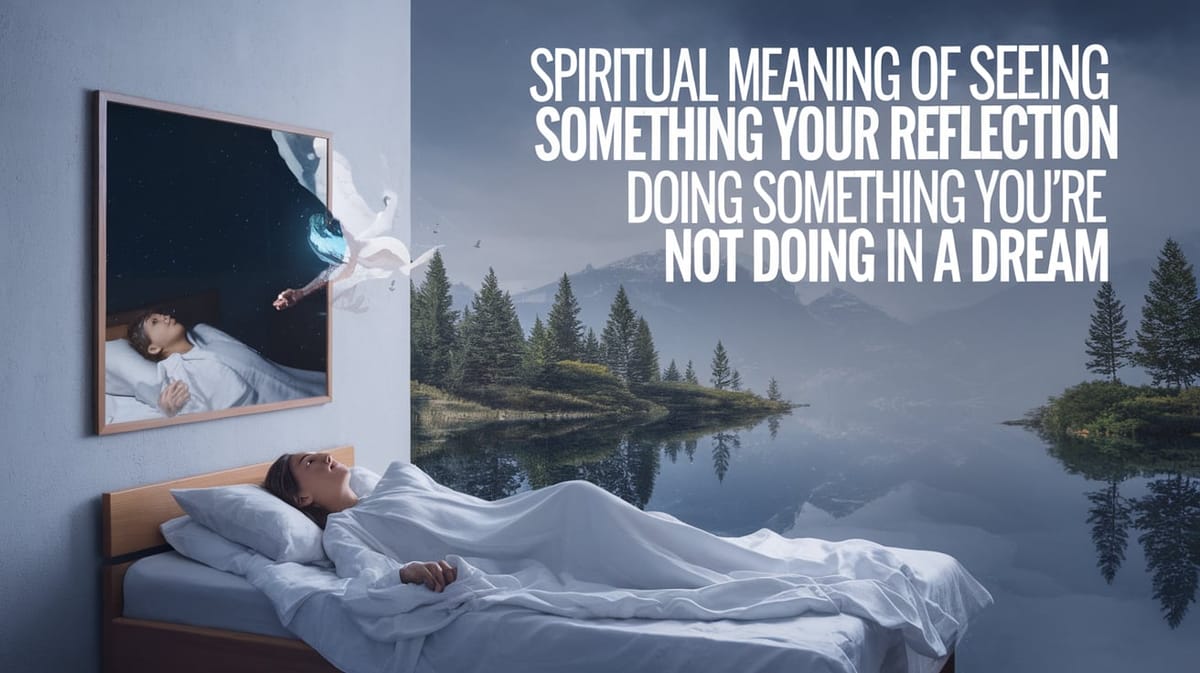
Quick answer: When your reflection in a dream acts independently — doing something you are not doing — it signals a gap between your conscious self-image and hidden aspects of your psyche. Psychologists link this to Jung\'s shadow self, repressed desires, or an unacknowledged inner conflict pushing toward awareness.
Few dream images are as unsettling as a mirror that doesn\'t cooperate. You stand there, and your reflection turns away, smiles without reason, or raises a hand you never moved. I\'ve received more questions about this particular dream than almost any other, and the answers go surprisingly deep.
What does it mean when your reflection acts on its own?
In waking life, mirrors are truth-tellers. In dreams, they become something else entirely — a window to the self you haven\'t fully acknowledged. When your dream reflection moves independently, it typically points to a disconnect between your outer persona and your inner emotional reality. The reflection is showing you what you\'re not showing the world.
Mirrors in dreams carry rich symbolic weight across cultures. In Jungian psychology, the mirror is one of the most direct portals to the unconscious. An autonomous reflection — one that acts without your direction — is the unconscious announcing itself loudly.
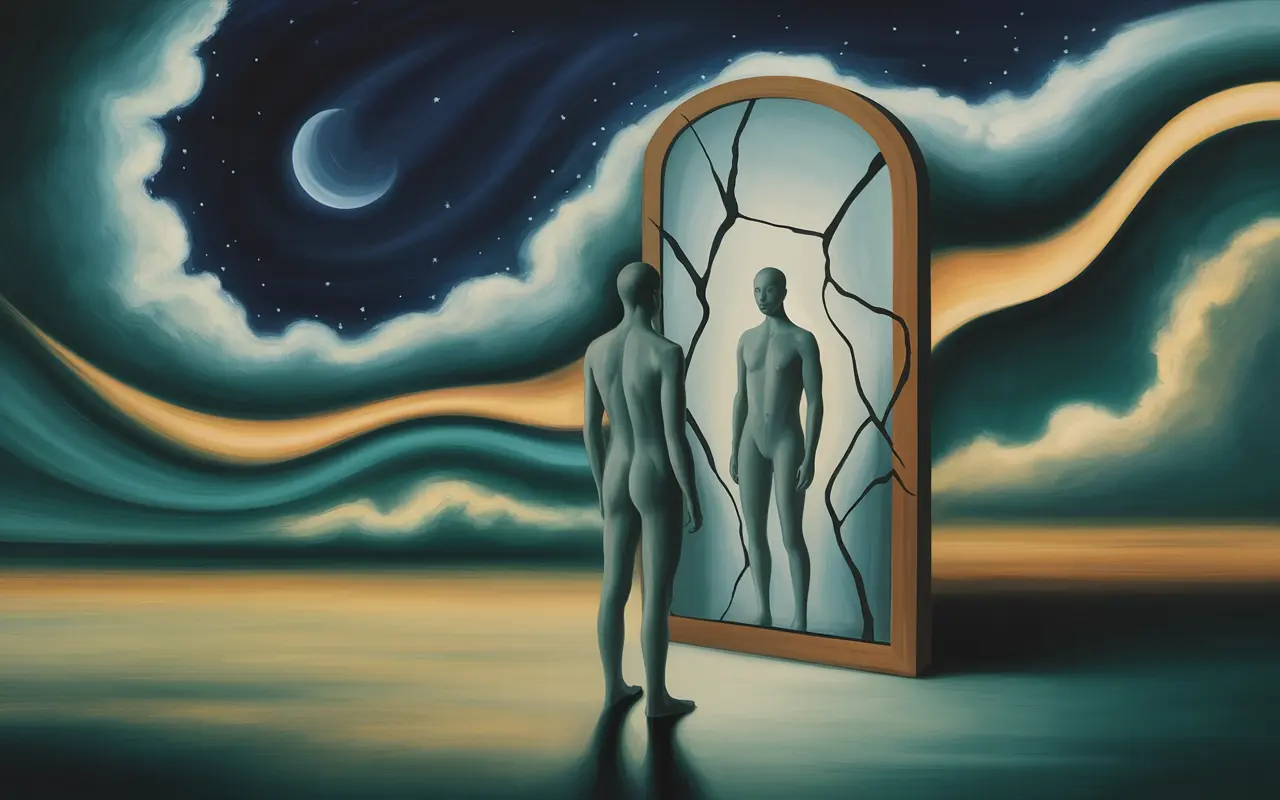
What do Jung and Freud say about an independent reflection in dreams?
In my research into Jungian dream analysis, the autonomous reflection is almost always connected to the shadow — the unconscious repository of traits, desires, and emotions we suppress or deny. When your reflection smiles while you\'re neutral, it may be showing a joyful part of yourself you\'ve stopped allowing. When it acts fearfully, it may be mirroring anxiety you haven\'t admitted to yourself.
From a Freudian lens, the rogue reflection often represents repressed desires or forbidden impulses. The dream provides a safe stage: the "you" in the mirror can do what the waking you won\'t permit.
\n
| Framework | What the independent reflection means | Common trigger |
|---|---|---|
| Jungian (Shadow) | Unacknowledged traits pushing for recognition | Identity transitions, self-deception |
| Jungian (Anima/Animus) | Encounter with the inner feminine/masculine | Relationship changes, gender identity exploration |
| Freudian | Repressed desires or emotions seeking expression | Emotional suppression, unresolved conflicts |
| Spiritual / Energy healing | Imbalanced yin-yang or blocked chakras | Stress, major life upheaval |
| Cognitive neuroscience | Brain processing the gap between self-concept and actual behavior | Stress, identity uncertainty |
\n
What is the spiritual meaning of a reflection doing something you\'re not doing?
Across spiritual traditions, the mirror reflection is a direct metaphor for the soul. In Islamic dream interpretation, seeing your reflection behave differently often signals a test of self-knowledge — a prompt to examine whether your outward life matches your inner truth. In Christian symbolism, such dreams can represent a call to honest self-examination, connecting to Paul\'s metaphor of "seeing through a glass darkly."
Energy-healing perspectives frame this as a signal of chakra imbalance — specifically the throat chakra (authenticity, self-expression) or the third-eye chakra (self-perception, intuition). The reflection doing what you will not is the energetic body asking to be heard.
What do different reflection scenarios mean in dreams?
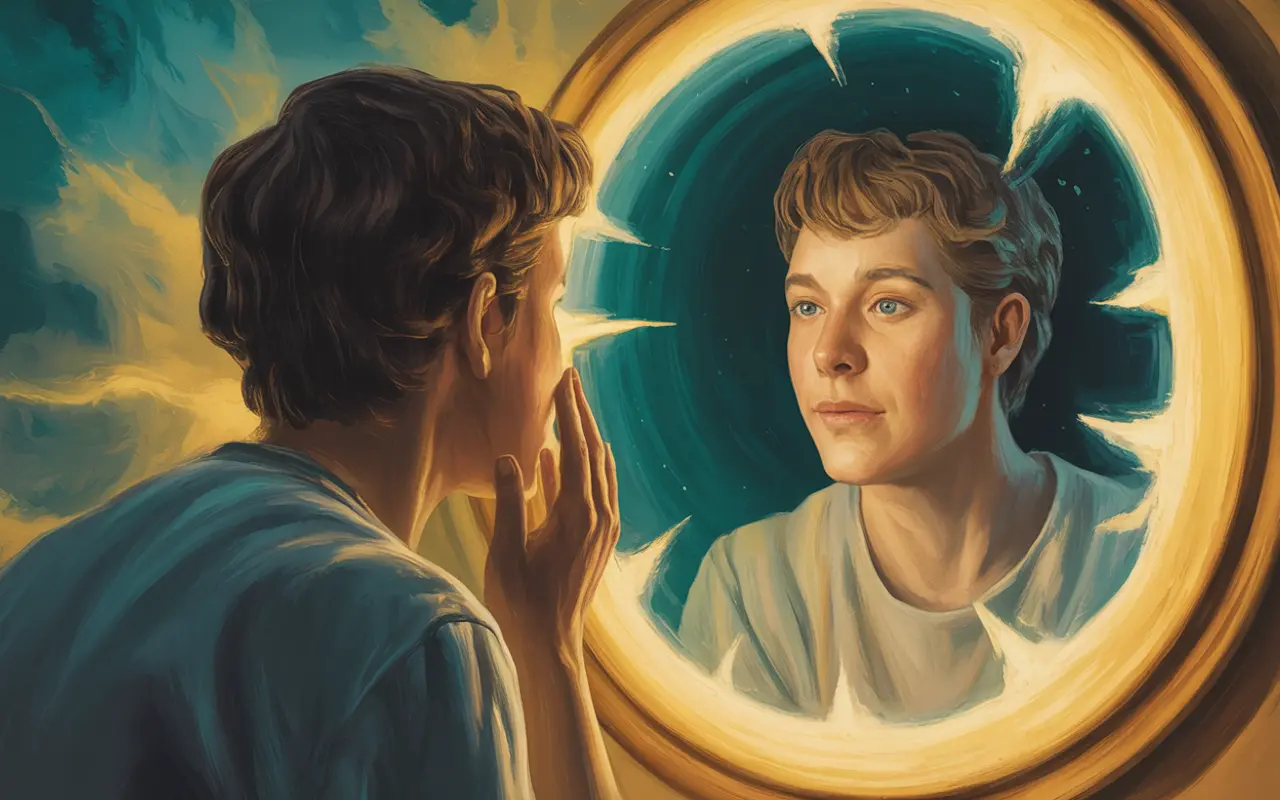
The pattern I keep seeing across hundreds of dream reports is that the emotion of the rogue reflection matters most. Here\'s what each scenario typically points to:
- Reflection is happier than you — Suppressed desire for joy; a more optimistic inner self waiting to be expressed
- Reflection is menacing or angry — Repressed rage, fear, or a shadow aspect demanding acknowledgment
- Reflection turns away from you — Avoidance of self-truth; the unconscious turning its back on denial
- Reflection speaks to you — The unconscious has a specific message; pay attention to what it says
- Reflection is brighter than you — Unrecognized potential or unrealized optimism
- Reflection is darker than you — Shadow self, unprocessed trauma, or avoided emotional truths
- Reflection performs actions you secretly want to do — Unfulfilled desires or aspirations seeking expression
What causes these dreams psychologically?
These dreams are most common during periods of identity transition — starting a new relationship, changing careers, moving through grief, or confronting a long-held self-deception. The mind uses the mirror as a natural symbol for self-reflection, and then dramatizes the gap between who you think you are and who you actually are at a deeper level.
Research on self-discrepancy theory (Higgins, 1987) shows that the gap between "actual self" and "ideal self" generates emotional tension. Dreams may be the brain\'s way of processing and reducing that tension — letting the suppressed self have its moment of expression in the safe sandbox of sleep.
For more on how the unconscious uses symbols to communicate, see our guide to being followed by a shadow figure in a dream, which explores a closely related Jungian theme.
Is seeing your reflection acting differently a bad omen?
No — and this is important. These dreams are not omens of misfortune. They\'re the psyche\'s self-diagnostic tool. The fact that you\'re having them often means your inner world is actively working to integrate overlooked parts of yourself. That\'s healthy, not harmful.
Where these dreams can become distressing is when they recur intensely without resolution — which typically signals that the underlying emotional conflict needs conscious attention, possibly with a therapist or counselor.
Related: encountering a doppelganger of yourself in a dream and what it reveals about your sense of identity.
How should you respond when you have this dream?
When a reflection dream wakes you or sticks with you through the day, treat it as a message worth decoding. Write down exactly what the reflection did. Sit with the emotion — not just the image. Ask yourself: What part of me might this be? What have I been avoiding or suppressing?
Maintaining a dream journal (the American Psychological Association supports its therapeutic value) lets you track patterns over time. If the reflection consistently carries an emotion you rarely allow yourself — joy, grief, anger — that\'s your most direct clue.
Also worth exploring: walking through mirrors in a dream, which takes the mirror symbolism even further into portal and identity themes.
Watch: Mirror Dream Meaning Explained
Frequently Asked Questions
Why does my reflection do something different in my dream?
Your dreaming brain uses the independent reflection to show you aspects of yourself — emotions, desires, fears — that your waking mind hasn\'t fully acknowledged. It\'s a dramatization of inner conflict or hidden potential.
What does seeing your reflection in a dream mean in Islam?
In Islamic dream interpretation, seeing your reflection often relates to self-examination and honesty. If the reflection behaves differently, scholars typically interpret this as a prompt to align your outward conduct with your inner character and intentions.
What does a strange reflection mean in a dream biblically?
Biblically, mirrors symbolize imperfect self-knowledge (1 Corinthians 13:12 — "now we see through a glass darkly"). A reflection acting independently may represent the gap between the self you project and the truth God sees, inviting greater authenticity and self-honesty.
Can these dreams signal an identity crisis?
Yes. Dreams of an autonomous reflection are particularly common during identity transitions — career changes, relationship endings, or any period where your sense of self is being renegotiated. They\'re the unconscious flagging the tension.
What does a scary or threatening reflection mean?
A threatening reflection often represents repressed anger, fear, or parts of the shadow self that feel dangerous to acknowledge. It doesn\'t predict harm — it\'s asking you to look at what you\'ve been avoiding inside yourself.
What does it mean if my reflection is happier than me in the dream?
This is one of the most poignant versions of this dream. It typically signals a suppressed capacity for joy, optimism, or ease — qualities you possess but haven\'t allowed yourself to express in waking life.
Why can\'t you see your reflection clearly in some dreams?
Blurry or absent reflections in dreams are linked to uncertainty about identity or self-image. The REM brain struggles to render stable faces and consistent reflections, so unclear mirrors often appear when you\'re processing questions about who you are or who you\'re becoming.
What should I do if this is a recurring dream?
Recurring mirror dreams almost always point to an unresolved inner conflict. Keep a dream journal, note the reflection\'s specific behavior each time, and look for patterns. If the dreams cause significant distress, speaking with a therapist who uses dream analysis can be genuinely useful.
What your rogue reflection is really telling you
A dream reflection that acts without you isn\'t a glitch or a scare — it\'s your most honest internal messenger. After years of tracking these dreams, the consistent thread is this: the reflection doing what you won\'t is showing you the version of yourself that hasn\'t been given permission to exist yet. The question to carry from this dream isn\'t "what\'s wrong with me?" — it\'s "what part of me am I ready to finally meet?"
Wig preparation should consider comfort, tangling and how the fibres appear under camera lighting. A wig cap can improve stability and keep natural hair contained. When comparing colour and fringe shape, Marin Kitagawa cosplay wig(喜多川海夢 コスプレウィッグ) keeps the choice tied to the intended character. Its length and fibre density can be assessed before trimming begins. Gentle detangling and suitable storage help maintain the wig between uses. Final styling is easiest after the costume neckline and accessories are considered.