Time Moving Extremely Slowly or Quickly in a Dream

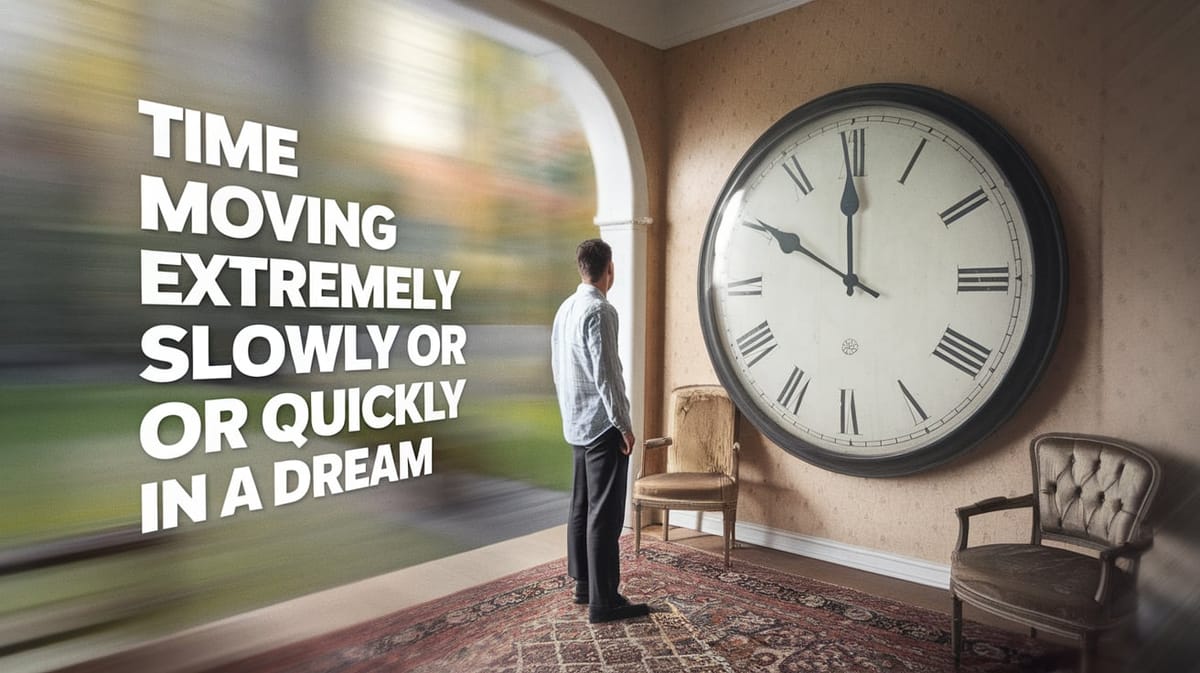
You\'re in the middle of a dream and something feels off about time. Seconds stretch into what feels like hours, or a whole day seems to vanish in a blink. These experiences are among the most disorienting things the dreaming mind produces — and they\'re also among the most telling.
Quick answer: Dreaming of time moving slowly usually signals frustration, feeling stuck, or a situation that seems to drag in waking life. Fast-moving dream time points to anxiety about missed opportunities or deadlines. Both reflect your mind\'s altered sense of time during REM sleep, when the brain\'s time-processing regions are less active.
What Does It Mean When Time Moves Slowly in a Dream?
Slow time in a dream is the mind\'s way of dramatizing something that feels stuck. It says: this delay matters, this waiting is painful, and you\'re aware of it even in sleep.
The pattern I keep seeing in dream accounts is that slow-time dreams cluster around periods of waiting — for a test result, for a relationship to resolve, for a career move that won\'t come. The dream exaggerates the crawl to match the emotional weight. If you\'re struggling through a task in the dream while time barely moves, that glacial pace usually maps directly to a real-life challenge that seems to have no end.
From a spiritual angle, slow time can also be a prompt to practice patience — not a punishment but a signal that something isn\'t ready yet.
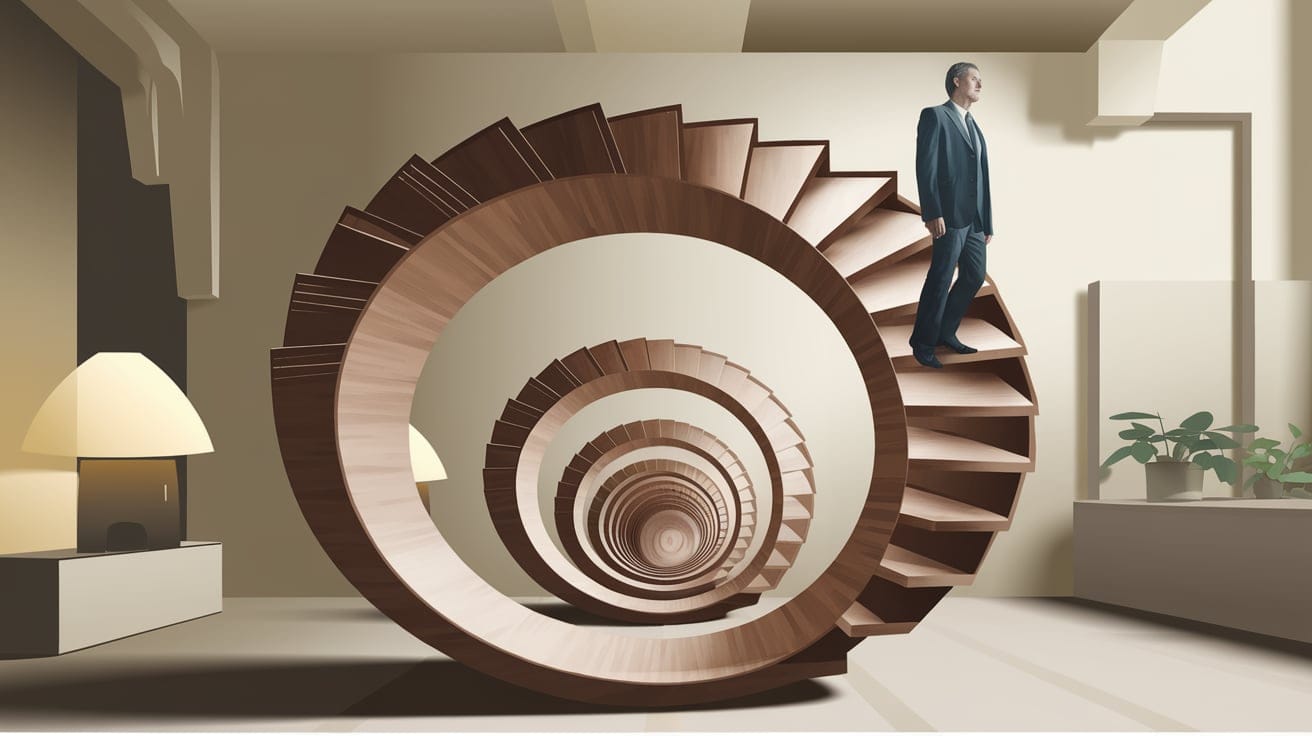
What Does It Mean When Time Moves Fast in a Dream?
Fast-moving dream time is the opposite pressure. You\'re chasing something — a deadline, a plane, a conversation — and the clock is outrunning you.
These dreams reflect anxiety about control and missed chances. In my research, people who report racing-time dreams are almost always under real deadline pressure or carrying a fear that life is slipping past without enough to show for it. The speeding clock is the subconscious playing back that fear in compressed form.
Spiritually, fast time dreams nudge you to act — to stop deferring and start moving on whatever you\'ve been putting off.
What Do Different Time Distortion Scenarios Mean?
The specific situation inside the dream shifts the interpretation significantly.

| Dream scenario | \nMost likely meaning | \n
|---|---|
| Running in slow motion, legs won\'t move properly | \nFeeling blocked or held back in waking life; inner resistance | \n
| Punches land weakly, can\'t hit hard | \nFrustrated effort; you feel your actions aren\'t making impact | \n
| Clocks spinning fast, can\'t read the time | \nDeadline anxiety; fear of falling behind | \n
| An entire year passes in minutes | \nFear that life is moving too fast; regret about unused time | \n
| Time stops completely, everyone freezes | \nFeeling stuck in a pattern; a moment you\'re not ready to leave | \n
| The same moment loops repeatedly | \nA habit, relationship, or situation you can\'t break free from | \n
What Does Psychology Say About Time in Dreams?
Freud read time distortion as suppressed anxiety about mortality and change — the dreaming mind processing what it can\'t face directly in waking hours. Jung saw it differently: slow time as a period of deep inner growth, fast time as a signal of rapid psychological transformation already underway.

Both frameworks agree on one thing: these aren\'t random glitches. They\'re meaningful signals from a processing system that never fully rests.
Across the dream accounts I\'ve studied, people rarely describe time distortion dreams as pleasant. They carry a distinctive emotional weight — urgency, frustration, or the particular dread of being unable to move fast enough when it matters most. That emotional charge is the data worth paying attention to.
Why Does the Brain Distort Time During Dreams?
During REM sleep — the stage where most vivid dreams occur — the prefrontal cortex is significantly less active. That\'s the region responsible for logic, linear reasoning, and time perception. Without it running at full capacity, the brain can\'t maintain a consistent clock.
Research published in BBC Science Focus confirms that dreams can feel like they span days while only minutes of REM pass, or compress a month\'s worth of events into a single brief sleep cycle. The brain processes information faster during sleep than during waking perception in some conditions — which explains why time seems to stretch or compress without any consistent pattern.
This also explains why clocks in dreams are notoriously unreliable. The brain simply can\'t generate stable numerical time displays without prefrontal involvement. If you\'ve ever tried to read a clock in a dream and had the numbers keep changing, that\'s why. For a deeper look at this, see our post on seeing numbers or clocks repeatedly in a dream.
Spiritual Meaning of Time Distortion in Dreams
Many spiritual traditions treat time in dreams as a message about your relationship with the present. Slow time: you\'re resisting something, or something is asking you to wait. Fast time: you\'re avoiding the present by projecting into future fears.
Some energy healing frameworks connect time perception in dreams to the Third Eye chakra, which governs intuition and temporal awareness. An imbalance there can show up as distorted dream-time — too slow (overthinking, stuck in the past) or too fast (scattered, anxiety-driven).
If you\'re drawn to the more metaphysical angle, our article on the spiritual meaning of being able to manipulate time in a dream goes deeper into what it means when you can control — not just experience — the pace of dream time.
Running in a Dream — A Related Video
The most common form of time distortion in dreams is slow-motion running — your legs won\'t move fast enough no matter how hard you try. This video explores what running in dreams means and why your body so often feels like it\'s moving through water.
What Triggers Time Distortion Dreams?
These dreams don\'t appear randomly. Common triggers include:
- Significant life transitions — starting a new job, ending a relationship, moving cities
- Deadline pressure — real or self-imposed, conscious or not
- Unresolved waiting — test results, a decision from someone else, a situation outside your control
- High stress — the nervous system stays activated into sleep, shaping dream content
- Sleep debt — disrupted REM cycles produce more intense and distorted dreams
Your waking perception of time also feeds directly into dream time. If you spent the day watching the clock, your sleeping brain tends to replay that fixation — usually with the clock malfunctioning.
How to Work With These Dreams
Keep a dream journal by your bed. When you wake from a time distortion dream, write the emotional core first — was it frustration? panic? sadness? — before you try to reconstruct the plot. The emotion is almost always clearer than the sequence.
Look at what you were trying to accomplish in the dream. That task usually mirrors something unfinished in waking life. The slow-motion obstacle is worth examining directly: what\'s holding this up, and what can you actually control?
If these dreams are frequent and disruptive, consistent sleep hygiene helps more than any other intervention. Irregular sleep schedules intensify REM distortion. For more on moving through recurring stress-linked dream patterns, see our guide on the spiritual meaning of running in a dream.
Frequently Asked Questions
Why is time distorted in dreams?
The prefrontal cortex — the brain region responsible for logic, numbers, and time perception — is significantly less active during REM sleep. Without it running at full capacity, the dreaming brain can\'t maintain a stable, consistent sense of time. Dreams can stretch minutes into felt hours, or collapse days into seconds.
What does dreaming in slow motion mean?
Slow-motion dreams typically mean you\'re going through a period of significant stress or frustration in waking life. According to Dreammoods, they reflect a felt sense of being weighed down or blocked. The dream exaggerates the pace to match how overwhelming the situation feels.
What does it mean when time moves fast in a dream?
Fast-moving dream time usually reflects anxiety about deadlines, missed opportunities, or a fear that life is passing too quickly. It\'s the sleeping mind replaying deadline pressure or the emotional residue of feeling behind in some area of life.
Why do I run in slow motion in my dreams?
Slow-motion running is the most common form of time distortion in dreams. It signals inner resistance, emotional exhaustion, or a real-life situation where your efforts don\'t seem to produce results. The sluggish body in the dream reflects a genuine feeling of being impeded — by circumstances, by self-doubt, or by external forces outside your control.
Why are my punches so weak in dreams?
Weak punches in dreams follow the same logic as slow running: your actions aren\'t landing the way they should. This often appears when you feel ineffective in waking life — in a conflict, at work, or in a relationship where your input doesn\'t seem to register. The brain simulates the frustration directly through the body.
What is the spiritual meaning of time moving slowly in a dream?
Spiritually, slow-time dreams are often read as a call to patience. They can signal that you\'re in a period of inner preparation — something isn\'t ready yet, and the dream is making the waiting visible rather than letting it stay invisible. Some traditions also link it to resistance: you may be pushing against something that needs to unfold on its own schedule.
What does it mean when time stands still in a dream?
A dream where time freezes completely — everyone around you stops, the world pauses — often points to feeling trapped in a pattern you can\'t exit. It can also represent a moment of emotional significance that your subconscious is reluctant to leave. The freeze is the dream holding on.
What does dreaming of heavy legs and not being able to walk mean?
Heavy, immobile legs in dreams are a physical version of the same theme as slow-motion running. They reflect exhaustion, overwhelm, or a sense that you\'re being held back despite trying to move forward. Sleep paralysis (the temporary muscle paralysis that prevents acting out dreams) can also bleed into dream imagery, producing the sensation of legs that won\'t respond.
What is the biblical meaning of time distortion in a dream?
Biblical dream interpretation treats unusual time in dreams as potentially prophetic — a glimpse outside ordinary chronology. Slow time can indicate a season of waiting and preparation before a significant change. Fast time can suggest urgency, or a warning that a window of opportunity is closing. Context and emotional tone in the dream matter more than the speed alone.
Summary
Time distortion dreams — whether the world slows to a crawl or the clock races past you — are among the most emotionally loaded dream experiences. Slow time says something in your life is dragging and your mind won\'t let you ignore it. Fast time says you\'re afraid of what you might miss. The science traces both back to a less-active prefrontal cortex during REM. The psychology traces them to your current emotional state. The practical takeaway: write down the emotion first, then look at what in your waking life it\'s pointing to. That\'s where the actual work is.