
What Does It Mean When You\'re Chanting in a Dream?

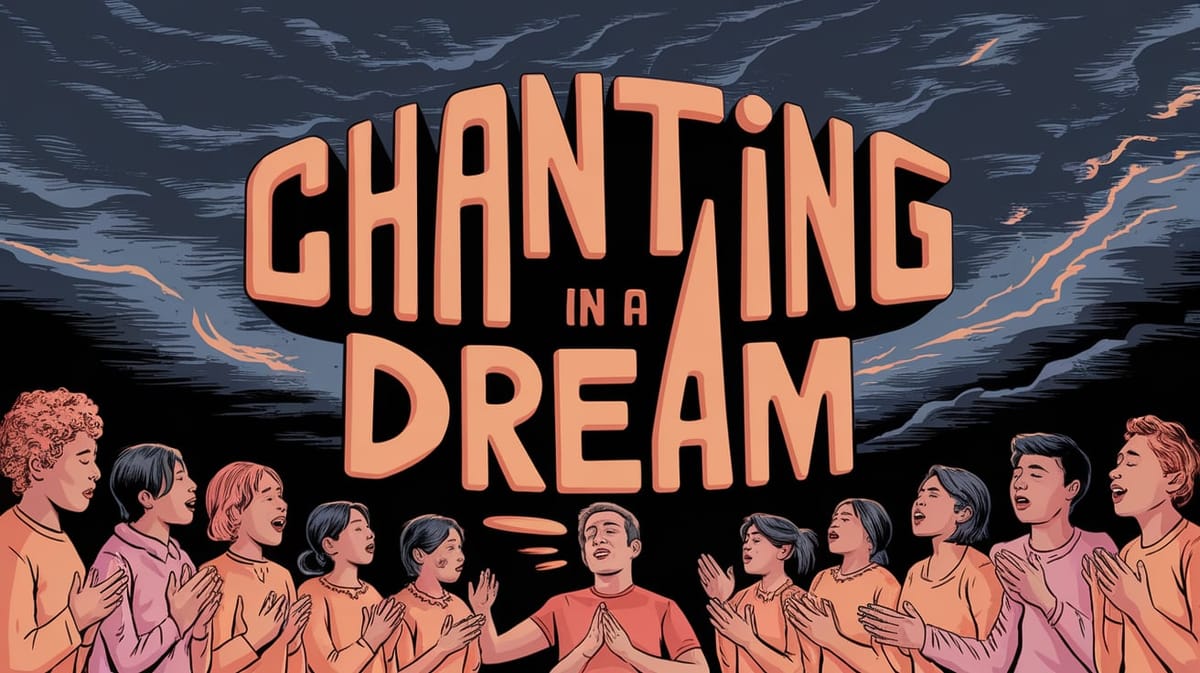
Quick answer: Chanting in a dream usually signals your mind\'s search for rhythm, spiritual grounding, or emotional release. It points to a need for connection — whether with community, a higher power, or buried parts of yourself that want to be heard.
What Does It Mean to Chant in a Dream?
Dreaming of chanting is one of those experiences that sticks with you after waking. The sound, the rhythm, the feeling of your voice (or someone else\'s) repeating words in a pattern — it can feel equal parts sacred and strange. In my research, I\'ve found that chanting dreams typically reflect a deep pull toward spiritual alignment or emotional processing that your waking mind hasn\'t fully addressed.
These dreams show up in several forms:
- Mantras or sacred phrases — repeating syllables like "Om" or prayers, pointing to a desire for inner stillness
- Group chanting — joining voices with others, reflecting your need for belonging or shared purpose
- Chanting in an unknown language — speaking words you don\'t recognize, suggesting contact with unconscious wisdom
- Ritualistic or ceremonial chanting — participating in a structured practice, often tied to personal transformation
Why Does Your Brain Create Chanting Dreams?
Your temporal lobe — the part of the brain responsible for processing sound and language — becomes highly active during REM sleep. This activity can generate rhythmic, musical dream content that feels vivid and real. Research published in Frontiers in Psychology suggests that emotionally charged auditory experiences from waking life frequently replay in dreams, which explains why people who meditate, pray, or listen to music regularly are more likely to dream of chanting.
Common triggers include:
- Active spiritual practice or recent meditation
- Major life transitions that shake your sense of identity
- Emotional stress you haven\'t processed verbally
- Exposure to religious or ceremonial settings
- A growing interest in self-exploration or mindfulness

What Does Jungian Psychology Say About Chanting Dreams?
Carl Jung would see chanting dreams as direct contact with the collective unconscious — the shared pool of archetypes, symbols, and ancestral experiences that all humans carry. The repetitive nature of chanting mirrors what Jung called the mandala principle: cyclical patterns that bring the psyche toward wholeness.
I keep seeing a pattern in these dreams that supports Jung\'s view. When someone chants in a dream, they\'re often at a crossroads — not lost, but searching. The rhythm itself is the psyche\'s attempt to organize chaos into something manageable.
Freud, on the other hand, interpreted repetitive dream content as the mind circling around unresolved conflicts. From that angle, a chanting dream may represent thoughts or desires you suppress during the day, surfacing as rhythmic echoes at night.
\n\n| Dream Scenario | Likely Meaning | Emotional Tone |
|---|---|---|
| Leading a chant | Readiness for spiritual leadership or initiative | Empowered, purposeful |
| Unable to join in | Feeling spiritually disconnected or excluded | Isolated, frustrated |
| Hearing distant chants | Guidance trying to reach you that you haven\'t accepted | Curious, yearning |
| Chanting in unknown tongue | Accessing deeper unconscious wisdom | Mysterious, awe |
| Aggressive or threatening chants | Inner conflict or suppressed anger surfacing | Anxious, confrontational |
| Chanting with a group | Need for community, shared belief, or validation | Warm, connected |
What Do Different Chanting Dream Scenarios Tell You?
When you dream of leading a chant, it often signals that you\'re ready to step forward in some area of life — not necessarily religious, but anywhere that calls for initiative or moral conviction. If you find yourself unable to join the chanting, pay attention to where you feel shut out or unworthy in your waking life.
Hearing chants from a distance is one of the more common variations. In my experience reviewing these dreams, this typically means guidance or insight is available to you, but you haven\'t quieted down enough to receive it. The distance in the dream mirrors emotional or psychological distance from your own intuition.
Chanting in a language you don\'t speak — sometimes called xenoglossy in dream research — is surprisingly common. Rather than actual foreign language acquisition, it represents tapping into symbolic or pre-verbal layers of your mind.

What Is the Spiritual Meaning of Chanting in a Dream?
Across traditions, chanting dreams are treated as significant. In Buddhist practice, dreaming of chanting sutras or mantras is seen as a sign of spiritual progress — your mind continuing its practice even during sleep. Hindu traditions often link chanting dreams to kundalini energy moving through the chakras, especially if the chant carries a physical vibration in the dream.
In Christian mysticism, hearing hymns or psalms in dreams has historically been interpreted as divine communication. Indigenous traditions across cultures treat chanting dreams as messages from ancestors or spirits, particularly when the chant sounds unfamiliar.
If you\'re exploring dream symbolism from other spiritual traditions, you may also find meaning in reading the Bible in a dream or reading the Quran in a dream, which share similar themes of sacred communication during sleep.
How Can You Work with Chanting Dreams?
If these dreams keep showing up, here\'s what actually helps:
- Record the chant immediately — even fragments. Hum it into your phone or write phonetics in a dream journal before the memory fades.
- Practice waking meditation — especially before bed. This primes the brain for deeper, more vivid dream content in REM cycles.
- Explore chanting traditions — Gregorian chant, kirtan, Tibetan throat singing, or simple breath mantras. See what resonates.
- Look for the emotional residue — the feeling you wake up with matters more than the specific words. Peaceful? Unsettled? Energized? That feeling is the real message.
- Connect the theme to your waking life — where do you need rhythm, structure, or community right now?
For related dream themes about spiritual communication, see also speaking with Jesus in a dream.
Why Do You Feel Energized After a Chanting Dream?
Many people report waking up unusually refreshed after chanting dreams. This likely has a physiological basis: rhythmic neural activity during REM can synchronize brainwaves in a way similar to deep meditation. The dream essentially gives your brain a "tuning" session, producing the same calm alertness that real-world chanting practitioners describe.
If the dream felt disturbing instead — aggressive chanting, threatening tones — that points to unresolved inner conflict rather than external threat. The aggression in the dream is yours, projected outward.
Frequently Asked Questions
What does chanting mean in a dream?
Chanting in a dream typically reflects a need for spiritual connection, emotional processing, or inner harmony. The rhythmic repetition mirrors your brain\'s attempt to create order from emotional or psychological chaos, and it often appears during periods of transition or self-reflection.
Is chanting in a dream a spiritual sign?
In many traditions, yes. Buddhist, Hindu, Christian, and Indigenous cultures all treat chanting dreams as spiritually meaningful — ranging from signs of progress in practice to messages from ancestors or divine sources. The specific meaning depends heavily on your personal beliefs and the context of the dream.
Why do I keep hearing the same chant in my dreams?
Recurring chants carry significant personal messages. Your subconscious is emphasizing something it considers important. Record what you can remember of the chant — even approximate sounds — and reflect on what it might connect to in your waking life. The repetition itself is the signal.
Can chanting dreams predict the future?
While some spiritual traditions consider chanting dreams prophetic, it\'s more useful to treat them as reflections of your current emotional state and unmet needs. They show you where you are psychologically, not where you\'re going literally.
What does chanting in an unknown language in a dream mean?
Chanting in a language you don\'t recognize — sometimes called dream xenoglossy — is common. It usually represents accessing pre-verbal or symbolic layers of the unconscious mind rather than actual language knowledge. Think of it as your psyche communicating in its own native tongue.
How can I encourage more chanting dreams?
Practice meditation or listen to chanting music before sleep. Keep a dream journal to strengthen recall. Set a clear intention before falling asleep — something like "I want to remember the sounds in my dreams." A quiet, dark sleeping environment also helps the brain produce more vivid REM content.
Should I worry about aggressive chanting in my dreams?
Aggressive or threatening chants usually reflect inner conflict — suppressed anger, frustration, or emotional tension — not external danger. If these dreams cause significant distress or happen frequently, speaking with a therapist who specializes in dreamwork can help you unpack what\'s driving them.
What\'s the difference between hearing chants and performing them in a dream?
Being an active chanter suggests you\'re taking charge of your own spiritual or emotional processing. Passively hearing chants indicates you\'re receiving information or guidance — your unconscious is offering something rather than asking you to act. Both are valuable, but the active version shows more agency.
How is chanting in a dream different from hearing music?
Chanting is repetitive and intentional by nature, while music dreams can be more free-form. Chanting dreams almost always carry a sense of purpose or ritual — there\'s a "why" behind the sound, even if you can\'t name it. Music dreams are more about emotion or memory playback.