
Dream About Losing Your Voice: Why You Can't Speak or Scream


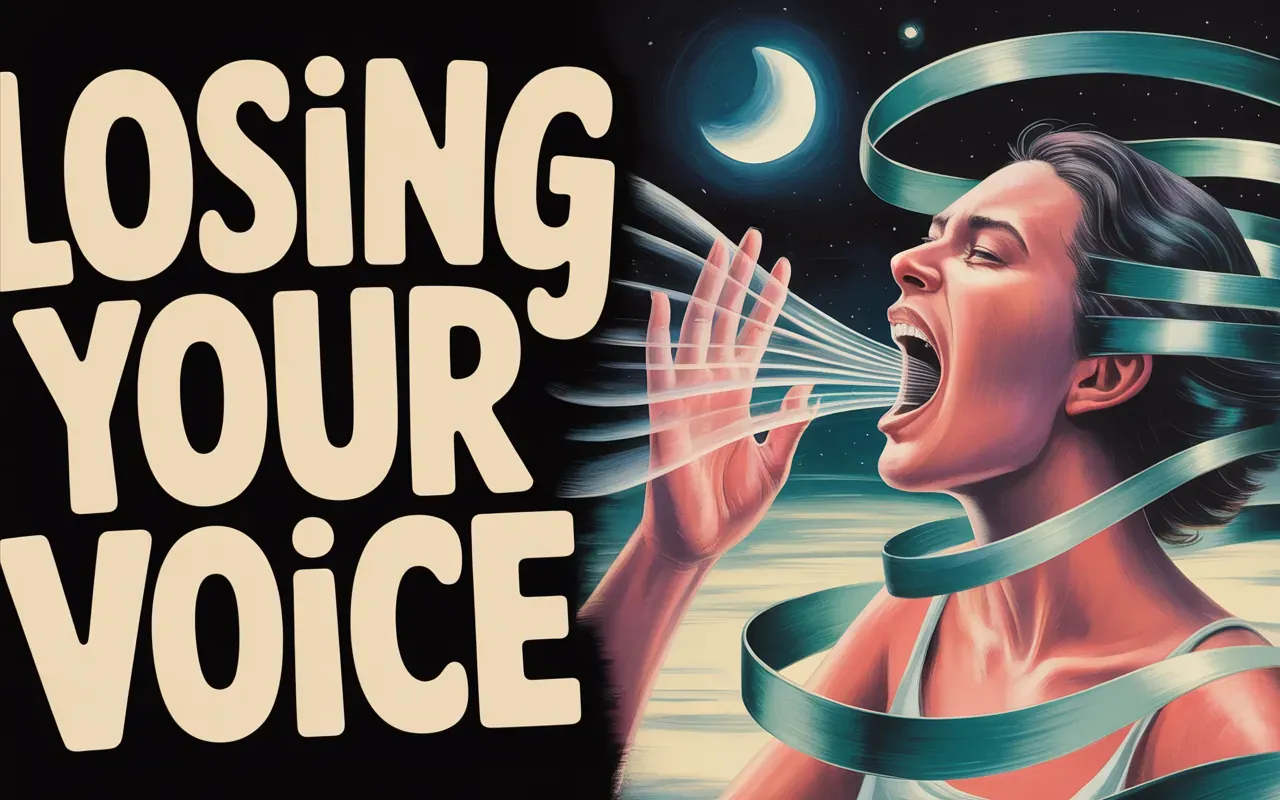
You open your mouth to scream, to warn someone, to call for help — and nothing comes out. Not a whisper. Not a croak. Just silence where your voice should be. I've heard this dream described hundreds of times, and it never stops being unsettling for the dreamer. That helpless feeling of being muted at the worst possible moment stays with you long after waking.
Quick answer: Dreaming about losing your voice typically reflects a waking-life situation where you feel unheard, powerless, or unable to express yourself. It often surfaces during periods of suppressed emotion, conflict avoidance, or when you sense that speaking up could carry real consequences.
What Does It Mean to Lose Your Voice in a Dream?
Your voice in dreams is a direct symbol of personal agency and self-expression. When it disappears, the dream is pointing at a place in your life where you've gone quiet — either by choice or because something forced you into silence.
I've found that these dreams rarely appear at random. They tend to cluster around specific life circumstances: workplace tension where you bite your tongue, relationships where your needs go unspoken, or social situations where you feel invisible. The dream takes an emotional reality (feeling silenced) and turns it into a physical one (literally losing your voice).
Unlike dreams where you choose not to speak, the voice-loss dream removes the option entirely. That distinction matters — it suggests the silence feels imposed rather than voluntary.
Common Scenarios of Voice Loss in Dreams
| Dream Scenario | Likely Meaning |
|---|---|
| Trying to scream but no sound comes out | Feeling powerless in a threatening or urgent situation; unprocessed fear |
| Losing voice during an argument | Conflict avoidance; fear that speaking your truth will make things worse |
| Unable to call for help | Isolation anxiety; feeling unsupported when you need it most |
| Voice comes out as a whisper | Diminished self-confidence; feeling your opinion doesn't carry weight |
| Speaking but nobody hears you | Feeling ignored or dismissed in waking relationships |
| Voice taken by someone else | Someone in your life is dominating or controlling your expression |
| Trying to warn someone but muted | Frustration about unheeded advice or intuition others dismiss |
| Losing voice before a speech or performance | Performance anxiety; fear of public judgment or failure |
| Voice replaced by an animal sound | Primal emotions demanding expression; rage or grief that won't stay contained |
The Psychology Behind Voice-Loss Dreams

From a Jungian perspective, losing your voice in a dream connects directly to the shadow self — the parts of your personality you've repressed or refused to acknowledge. Carl Jung believed that when we consistently deny a part of ourselves expression, it shows up in dreams as a loss of function. Your voice vanishing is the psyche's way of dramatizing what you've already been doing: silencing yourself.
Freud, on the other hand, linked speech-inhibition dreams to repressed desires. In his framework, the voice disappears because the unconscious mind is blocking something you desperately want to say but consider too dangerous, shameful, or socially unacceptable.
Modern dream researchers like Deirdre Barrett at Harvard connect these dreams to the broader category of frustrated-action dreams — the same family as running in slow motion or being unable to throw a punch. The dreaming brain creates scenarios where your intended action fails, often reflecting real-life situations where effort doesn't produce results.
Why You're Having This Dream Right Now

Timing matters with voice-loss dreams. In my research, they spike during these situations:
- Workplace conflicts — You disagree with a decision but don't feel safe pushing back
- Relationship imbalances — Your partner, friend, or family member consistently talks over you or dismisses your feelings
- Major life transitions — Starting a new job, moving cities, or entering a new social group where you haven't established your voice yet
- Grief and loss — Words that were never said to someone who's gone
- Identity shifts — Questioning beliefs, values, or roles you've outgrown but haven't vocalized
- Social media pressure — Self-censoring online out of fear of judgment or cancellation
If you've been swallowing words, stuffing anger, or keeping the peace at your own expense — this dream is the receipt.
The Science of Why You Can't Speak in Dreams
There's a physiological layer to this dream that most interpretation sites skip. During REM sleep, your body enters a state called muscle atonia — a temporary paralysis that prevents you from acting out your dreams. Your vocal cords are part of this shutdown. When your dreaming mind tries to make you speak or scream, it receives feedback from a body that physically cannot produce sound.
This creates a feedback loop: the brain sends a "speak" command, the body can't comply, and the dream narrative incorporates that failure as a storyline. You're not just dreaming about losing your voice — your voice is genuinely offline.
Research from the National Institutes of Health also links frequent nightmare-type dreams (including frustrated-action dreams) to elevated cortisol levels. Stress doesn't just trigger these dreams — it makes them more vivid and harder to shake off.
Related Dream Themes You Might Recognize
Voice-loss dreams often appear alongside other expression-related dreams. If this resonates, you might also want to explore:
- Being Blind in a Dream — another loss-of-function dream tied to feeling unable to perceive your situation clearly
- Being Unable to Run or Move in a Dream — the physical-paralysis cousin of voice-loss dreams
- Being Chased in a Dream — often paired with the inability to scream for help
- Communicating Telepathically in a Dream — the opposite polarity, where communication transcends speech entirely
What to Do After This Dream

This dream is asking you to examine where you've gone silent and whether that silence is serving you.
- Name the silence. Write down who or what you're not speaking up about. Be specific — "I haven't told my manager that the workload is unsustainable" is better than "I feel unheard."
- Separate safety from habit. Sometimes silence is genuine self-protection. Other times it's just a pattern you fell into. Ask yourself: am I staying quiet because it's truly unsafe, or because it's uncomfortable?
- Start small. You don't need to deliver a monologue. Express one honest opinion tomorrow. Order what you actually want at dinner. Correct one small misunderstanding. Reclaiming your voice is incremental.
- Track the pattern. If this dream repeats, keep a brief log of what happened the day before each occurrence. The trigger usually becomes obvious within three entries.
- Use your body. Suppressed expression often lodges in the throat and jaw. Humming, singing (even badly), or doing neck stretches before bed can help release that tension and reduce dream recurrence.
Frequently Asked Questions
What does it mean when you try to scream in a dream but no sound comes out?
This is the most common form of voice-loss dream. It typically reflects a waking situation where you feel powerless or unable to express urgent emotions — fear, anger, or a need for help. The dream amplifies the frustration of being unable to make yourself heard when it matters most. REM muscle atonia (temporary sleep paralysis) also contributes to the physical sensation of failed vocalization.
Is losing your voice in a dream a sign of anxiety?
Often, yes. Voice-loss dreams correlate strongly with generalized anxiety, social anxiety, and periods of high stress. They belong to the "frustrated-action" category of anxiety dreams, alongside being unable to run, find your classroom, or dial a phone. If they occur regularly, they're worth noting as a signal that your stress levels need attention.
What is the spiritual meaning of losing your voice in a dream?
In many spiritual traditions, the voice represents your connection to your throat chakra (Vishuddha), which governs truth, communication, and authentic self-expression. Losing your voice in a dream may indicate a blockage in this energy center — you're living out of alignment with your truth. Some traditions see it as a call to meditate on honesty and authentic expression.
What does it mean in Islam when you can't speak in a dream?
In Islamic dream interpretation, the inability to speak can signify being tested in patience and faith. Some scholars interpret it as a warning against backbiting or false speech — the silence is a reminder to guard the tongue. It can also indicate that the dreamer is holding back from making dua (supplication) or expressing gratitude, and the dream serves as a nudge toward more open spiritual communication.
Why do I keep having recurring dreams where I can't talk?
Recurring voice-loss dreams point to an unresolved, ongoing situation. The dream will keep returning until the underlying issue shifts. Common culprits include a chronically unsatisfying relationship, a job where you feel muzzled, or long-held secrets. The repetition is your subconscious saying: this hasn't been addressed yet.
Can sleep paralysis cause dreams about losing your voice?
Yes. During REM sleep, your body naturally paralyzes your muscles — including those that control speech. People who experience sleep paralysis episodes are especially prone to voice-loss dreams because they're partially conscious during this paralysis, creating a vivid awareness of being unable to move or speak. The dream and the physical state feed into each other.
What does it mean when someone takes your voice in a dream?
When a specific person steals or silences your voice in a dream, look at your relationship with them. This dream typically reflects a dynamic where that person (or someone they represent) has disproportionate control over your self-expression. It could be a domineering boss, a critical parent, or a partner who shuts down conversations. The dream externalizes an internal power imbalance.
Does dreaming about losing your voice mean you're being silenced in real life?
Not always literally, but the correlation is strong. The dream reflects your perception of being silenced — which can come from external pressure (someone actively shutting you down) or internal censorship (you deciding your voice doesn't matter). Both produce the same dream. The key question is whether the silence is imposed or self-imposed.
How do I stop having dreams about not being able to speak?
Address the root cause in waking life. Practice assertive communication — even in low-stakes situations. Journal before bed, especially about things left unsaid. If the dreams are frequent and distressing, consider therapy to explore what you're suppressing. Reducing overall stress through exercise and sleep hygiene also helps, since these dreams thrive on elevated cortisol.
Losing your voice in a dream is one of the most direct messages your unconscious will ever send you. It's not subtle, and it's not random. Somewhere in your waking life, words are stuck — and your sleeping mind has decided you need to feel exactly what that silence costs. The good news is that this dream isn't a verdict. It's an invitation to speak.