Seeing a Demon in a Dream: Interpretations & Meanings

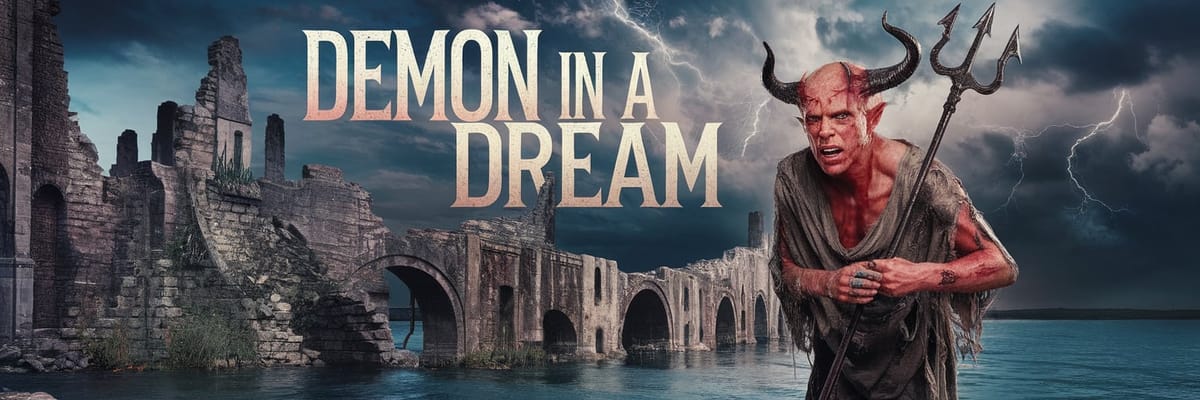
You\'re asleep. Then suddenly you\'re face-to-face with a demon — and you wake up shaking, wondering what just happened. Dreams about demons are among the most reported and most unsettling dream types across cultures. They\'re not random noise. The pattern I keep seeing, across hundreds of dream accounts, is that demon dreams almost always appear during periods of real psychological pressure.
Quick answer: Seeing a demon in a dream typically signals unresolved fears, repressed emotions, or inner conflict. Psychologically, the demon is your shadow self — the parts of your personality you suppress. Spiritually, it can represent temptation, moral struggle, or a call to confront something you\'ve been avoiding in waking life.
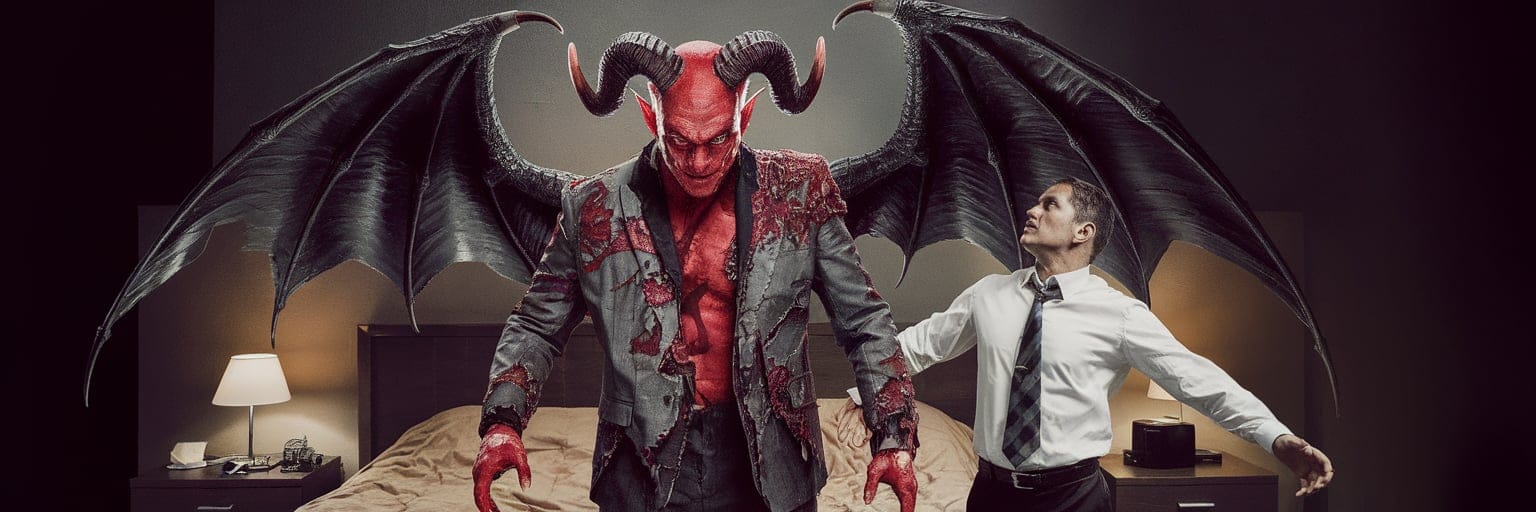
What does seeing a demon in a dream mean?
A demon in a dream is your psyche\'s way of giving form to something formless — usually fear, guilt, anger, or a suppressed desire. The demon isn\'t a prediction or a warning from the outside world. It\'s a projection from inside yours. Across the dream accounts I\'ve studied, people who dream of demons are almost never in physical danger. They\'re in psychological conflict.
Spiritually, demons have represented the duality of human nature for thousands of years — from ancient Babylonian folklore to modern religious traditions. They embody the tension between who we want to be and the parts of ourselves we\'d rather not look at. Carl Jung called this the shadow archetype: the unconscious repository of everything we reject, deny, or hide about ourselves.
Demon dream scenarios and what they mean
The specific scenario matters as much as the demon itself. Here\'s what the most common variations usually indicate:
\n
| Scenario | What it typically signals |
|---|---|
| Confronting the demon | You\'re ready to face a fear or problem you\'ve been avoiding. A sign of inner readiness. |
| Running from the demon | Active avoidance of something in waking life — a relationship, decision, or emotional truth. |
| Befriending the demon | Acceptance of your own shadow. You\'re making peace with a difficult part of yourself. |
| Being attacked by a demon | Feeling overwhelmed, pressured, or under threat — emotionally or situationally. |
| Someone you know as a demon | Unresolved conflict or feelings of betrayal toward that person. |
| Casting out / rebuking a demon | Active resistance to something negative — often linked to a desire for control or spiritual authority. |
| Talking to a demon | Negotiating with a part of yourself you normally suppress. Could indicate an attempt to understand a difficult impulse. |
| Demon in your house | The threat feels close to home — family tension, domestic stress, or invasion of personal space. |
\n
Psychological interpretations of demon dreams
Three major psychological frameworks explain demon dreams, and each hits a different angle:
Freudian view. Freud saw dream demons as a manifestation of the repressed unconscious — desires or fears the waking mind won\'t allow. The more forcefully you push something down, the more distorted it becomes in dreams. A demon is a heavily distorted version of something real.
Jungian shadow theory. Jung\'s framework is, in my view, the most useful for understanding these dreams. The demon is the shadow — every trait, impulse, or memory you\'ve rejected and locked away. It appears threatening because you haven\'t integrated it. The dream is an invitation, not a punishment. People who turn to face the demon in their dreams, rather than flee, tend to wake up feeling oddly calm. That\'s the integration process starting.
Somatic / body-based explanations. Sleep paralysis produces some of the most realistic demon-like experiences: a dark figure in the room, pressure on the chest, the inability to move or speak. This is a neurological event — the body is still in REM atonia while the brain has half-woken. It\'s terrifying, but it\'s physiology, not the supernatural. Researchers estimate sleep paralysis affects around 8% of the general population (Wikipedia: Sleep paralysis).
Biblical and spiritual meaning of seeing a demon in a dream
In biblical interpretation, dreaming of a demon doesn\'t automatically mean spiritual attack. Context matters. The Bible addresses demonic activity in waking life and in spiritual warfare, but dream interpretation in scripture is more about the message than the symbol.
In my research into biblical dream traditions, the relevant passages cited most often are Luke 10:19 ("I have given you authority to trample on snakes and scorpions and to overcome all the power of the enemy") and James 4:7 ("Resist the devil, and he will flee from you"). Christian dream interpreters generally read demon dreams as calls to prayer, spiritual vigilance, or confronting sin — not as literal demonic visitation.
In Islamic dream tradition, a demon (shaitan) appearing in a dream is often read as a warning against temptation or a signal that something in your waking life needs correction. In Hinduism, demons (asuras) in dreams can represent ego, attachment, or desires pulling you away from dharma.
If you\'re also experiencing dreams about the spiritual counterpart of darkness, read our guide on seeing angels in a dream for the full picture.
What causes demon dreams?
These dreams don\'t appear randomly. The triggers I see most consistently:
- Chronic stress or anxiety. The nervous system is already in threat-detection mode. Dreams amplify that into symbolic form.
- Unresolved guilt or shame. The psyche externalizes internal judgment into a threatening figure.
- Major life transitions. Job loss, relationship breakdown, moving, grief — all generate the kind of subconscious turbulence that becomes demonic imagery in dreams.
- Media exposure before sleep. Horror content, disturbing news, or violent games right before bed directly influences dream content.
- Sleep disorders. Sleep paralysis, REM sleep behavior disorder, and hypnagogic hallucinations all produce demon-like experiences with a physiological explanation.

How to stop recurring demon dreams
If these dreams keep coming back, that\'s a signal worth taking seriously. A few approaches that actually help:
- Dream journaling. Write down the dream immediately after waking. Giving the experience language reduces its emotional charge over time.
- Identify the waking stressor. Ask: what am I avoiding right now? What feeling does the demon evoke — shame, anger, fear? That emotion is the lead.
- Reduce pre-sleep stimulation. Cut screens 30–60 minutes before bed, especially violent or horror content.
- Therapy. For recurring nightmares tied to trauma, Image Rehearsal Therapy (IRT) has strong clinical evidence. You rehearse an alternative ending to the nightmare while awake.
- Prayer or ritual (if spiritually relevant to you). For those with a faith background, prayer before sleep provides genuine psychological comfort, which does reduce nightmare frequency.
What stands out to me is that people who do the inner work — whether through therapy, journaling, or spiritual practice — report that demon dreams either stop or transform into something less threatening over time. The demon softens when you stop running from it.
For related themes, see our deep-dives on sensing evil in a dream and being attacked in a dream — both carry overlapping symbolism.
FAQ: Demon dreams
What does it mean to see a demon in a dream?
It typically signals an unresolved internal conflict — repressed fear, guilt, anger, or shame that your subconscious is trying to surface. Psychologically, the demon is a shadow archetype: a part of yourself you\'ve rejected but haven\'t dealt with. The dream is not a threat; it\'s a diagnostic.
What do demons represent in dreams psychologically?
In Jungian psychology, demons represent the shadow — the unconscious cluster of traits, memories, and impulses you suppress. In Freudian terms, they\'re repressed emotions forcing their way through. Either way, the demon stands for something internal, not external.
What does the Bible say about dreaming of demons?
The Bible doesn\'t directly address demon dreams as a category. Christian interpreters generally apply passages like James 4:7 ("Resist the devil") and Luke 10:19 (authority over the enemy) to these dreams, reading them as invitations to prayer, spiritual alertness, or confronting temptation.
What does it mean to dream about demons chasing you?
Being chased by a demon points to active avoidance. Something in your waking life — a decision, a conversation, an emotion — is pursuing your attention, and you\'re refusing to turn around and face it. The longer the avoidance, the more intense the chase dream tends to become.
What does it mean to fight demons in a dream?
Fighting demons indicates active psychological engagement with an inner conflict. If you win, it often reflects confidence and readiness to resolve a real problem. If you\'re losing the fight, you may feel overwhelmed or ill-equipped to handle something you\'re currently facing.
What does dreaming about demons attacking you mean?
A demon attacking you in a dream usually reflects feeling overwhelmed — by stress, a relationship, guilt, or circumstances outside your control. It\'s your subconscious flagging that something is threatening your sense of safety or identity.
What does it mean to dream about demons in your house?
The house in dreams represents the self. A demon in your house means the threat or conflict feels deeply personal — close to your core identity, family, or home life. This dream type is especially common during periods of domestic stress or family tension.
How do you stop demonic dreams spiritually?
From a spiritual perspective, prayer before sleep, Scripture meditation (particularly Psalms), and deliberate acts of forgiveness or confession are the most commonly recommended approaches. From a psychological angle, resolving the underlying stressor is the most reliable long-term fix.
What is the demon associated with dreams?
The succubus (female) and incubus (male) are demons from European folklore specifically associated with dreams — believed to appear during sleep to seduce or torment. Sleep paralysis is now the most credible physiological explanation for historical succubus/incubus experiences.
What to do after a demon dream
Don\'t dismiss it and don\'t catastrophize it. Write down exactly what happened — the demon\'s appearance, what it did, how you felt, and what you did in response. Then ask one question: what in my waking life does this feeling match? That single question will tell you more than any dream dictionary. If the dreams persist for more than two weeks or are disrupting your sleep, bring them to a therapist — specifically one trained in nightmare treatment. Demon dreams are treatable, and they almost always get quieter once you stop avoiding what they\'re pointing at.
A cosplay costume should be assessed through sizing, construction and the pieces included in the set. The included accessories should be confirmed before separate items are planned. For a closer costume review, Space Ereshkigal cosplay costume(スペースエレシュキガル コスプレ衣装) identifies the matching character outfit. It can be evaluated for movement, changing and storage needs. Comfort, movement and fabric care are as important as the visual design. Photo tests help confirm how the material behaves under direct light.
If you\'re exploring spiritually dark dream territory, also read our guide on seeing Jesus in a dream for the counterpoint perspective.